The Book That Shook a Nation: Uncle Tom's Cabin Hits Shelves
Published March 20, 1852, Harriet Beecher Stowe's anti-slavery novel Uncle Tom's Cabin sold 10,000 copies in its first week and helped push America toward civil war.
Harriet Beecher Stowe hoped the book would earn her enough money to buy a new dress. Instead, it changed the course of American history.
Stowe was a 40-year-old mother of six living in Brunswick, Maine, where her husband taught at Bowdoin College. She was also the daughter of the famous preacher Lyman Beecher — and she was furious. The Fugitive Slave Act of 1850, which required Northerners to help capture escaped enslaved people, had radicalized her. She set out to write a story that would make slavery's cruelty impossible for comfortable Northern readers to ignore.
She serialized the novel in the abolitionist newspaper The National Era, in forty weekly installments from June 1851 to April 1852, and readers devoured it. Boston publisher John P. Jewett rushed it into book form: on March 20, 1852, the two-volume Uncle Tom's Cabin; or, Life Among the Lowly went on sale. The first printing of 5,000 copies sold out within days. Ten thousand copies sold in the first week. Within a year, more than 300,000 had sold in the United States — and over a million in Britain, where Queen Victoria herself sent Stowe a note of thanks. By 1860 the novel had been translated into more than twenty languages.
The South was apoplectic. Southern states banned the book, Southern writers churned out 'anti-Tom' novels defending slavery, and critics called it vicious propaganda. Stowe answered in 1853 with A Key to Uncle Tom's Cabin, documenting the real cases behind her fiction. Her follow-up antislavery novel, Dred (1856), never matched its success — but by then she hardly needed it. By the eve of the Civil War she was, by one account, the most famous writer in the world, and the book had sold some 4.5 million copies. Leo Tolstoy praised it as great literature 'flowing from love of God and man.' And according to legend, when President Abraham Lincoln met Stowe at the White House in 1862, he greeted her as 'the little woman who wrote the book that started this great war.'
Historians still debate how much any single book can cause a war. But no one disputes that Uncle Tom's Cabin did what Stowe intended: it turned an abstract political argument into weeping, flesh-and-blood human beings — the enslaved mother Eliza fleeing across the ice, little Eva, the martyred Tom — and made millions of readers feel slavery as a personal horror. Its characters gave the English language lasting phrases, and the book's very title became shorthand for debates about race that continue today. In its first decade it became, by one reckoning, the most popular novel ever written by an American. A new dress, indeed.
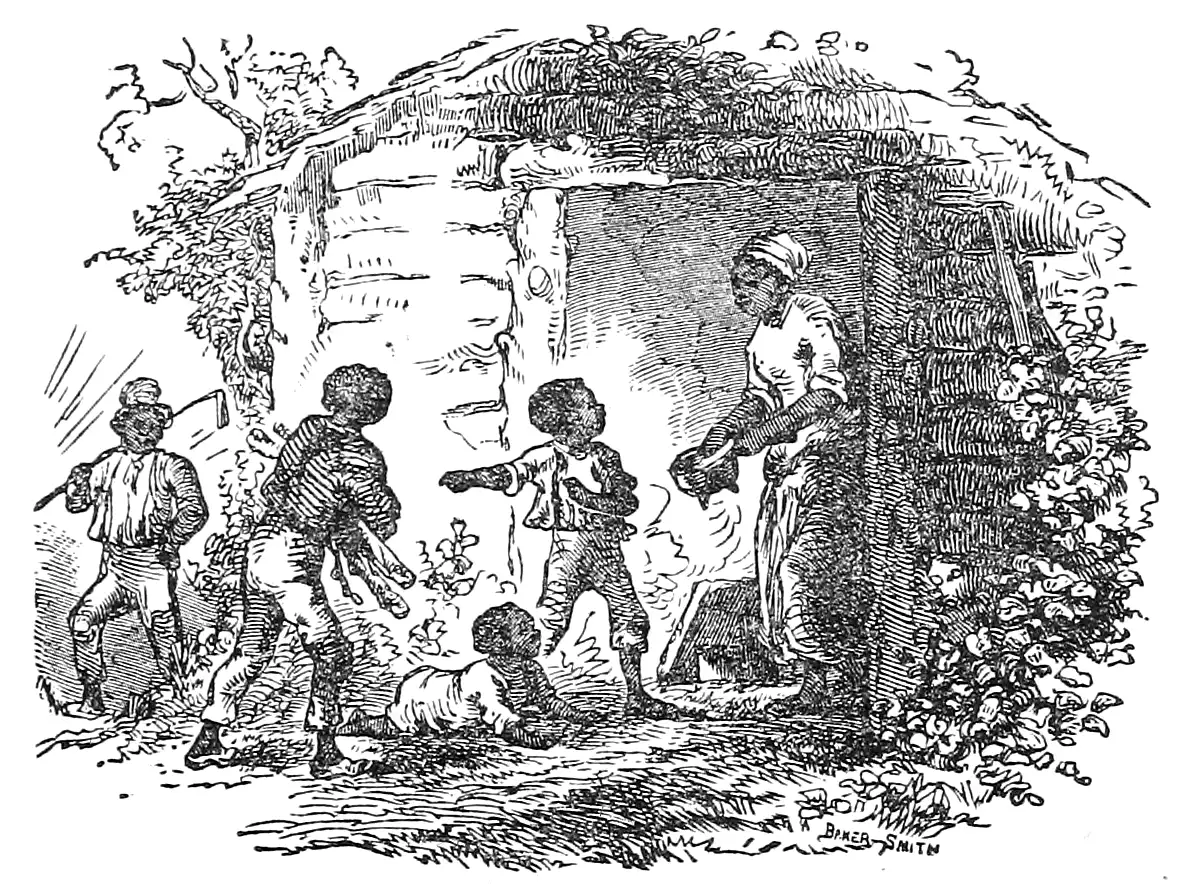
Photo: illustration by Hammatt Billings from the 1852 first edition, public domain.