The Bible That Launched the Printing Revolution
According to tradition, Johannes Gutenberg completed his great Bible on February 23, 1455, the first major Western book printed with movable type.
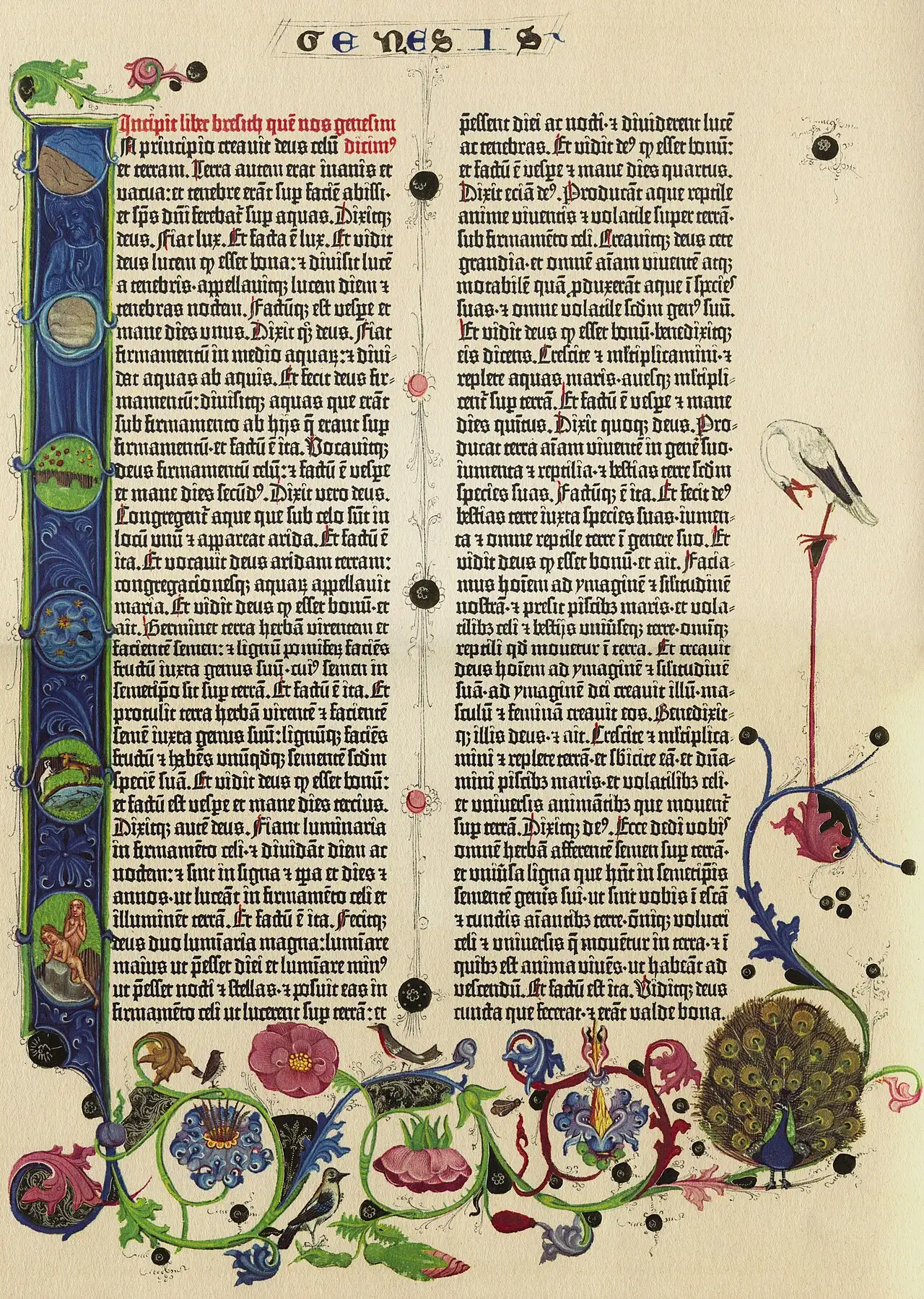
For a thousand years, every book in Europe was copied by hand. A single scribe could spend months — even years — on one volume, which is why books belonged almost entirely to churches, universities, and the very rich. According to tradition, that changed on February 23, 1455, when a goldsmith from Mainz named Johannes Gutenberg completed his masterpiece: a Bible produced not by pen but by machine. It was the first great book of the printed age. Scholars debate the exact date, but the tradition is old, and the timing is right.
Gutenberg's real invention was not the press itself but the system. He cast individual letters as reusable movable metal type in molds, mixed a durable oil-based ink, and adapted a wooden screw press to stamp inked type onto paper. Type, ink, and press together — that combination was his genius. To show it off, he chose the most important book in Christendom: the Latin Vulgate Bible.
The result was magnificent. The Gutenberg Bible — called the 42-line Bible for the 42 lines of text in each column — ran to 1,282 pages in two volumes. The black lettering was so crisp that spaces were left for artists to paint decorated initials by hand afterward, making each of the roughly 180 copies unique. In March 1455, the future Pope Pius II saw sample pages displayed at the Frankfurt fair and wrote home that either 158 or 180 copies had been printed.
The price tells the story of the revolution. A Gutenberg Bible sold for 300 florins — about three years' wages for an average clerk. That was a fortune, but it was a fraction of what a handwritten Bible cost. About 49 copies survive today, roughly 20 of them complete, treasured in libraries from the Library of Congress and the British Library to the Morgan Library in New York, which holds three.
Gutenberg himself barely profited. He had borrowed heavily to build his workshop, partnered with the printer Peter Schoeffer and the financier Johann Fust, and within a year lost his equipment in a lawsuit brought by Fust. He died in 1468 without great wealth. But the idea had escaped the workshop: within decades, printing presses were operating across Europe, and the Gutenberg Revolution was underway.
Why it matters is hard to overstate. Movable type made books reproducible, affordable, and identical — the same text, everywhere, for the first time. That changed everything built on text: the spread of the Reformation, the circulation of scientific ideas, the slow rise of literacy. One monk copying a Bible by hand could take twenty years. Gutenberg's machine could turn out the same book in weeks — and the world has never stopped printing since.
Scan: public domain (via Wikimedia Commons).