Roe v. Wade: The 7–2 Decision That Reshaped American Law
On January 22, 1973, the U.S. Supreme Court ruled 7–2 that the Constitution protects a woman's right to choose an abortion, a landmark that stood for nearly 50 years.
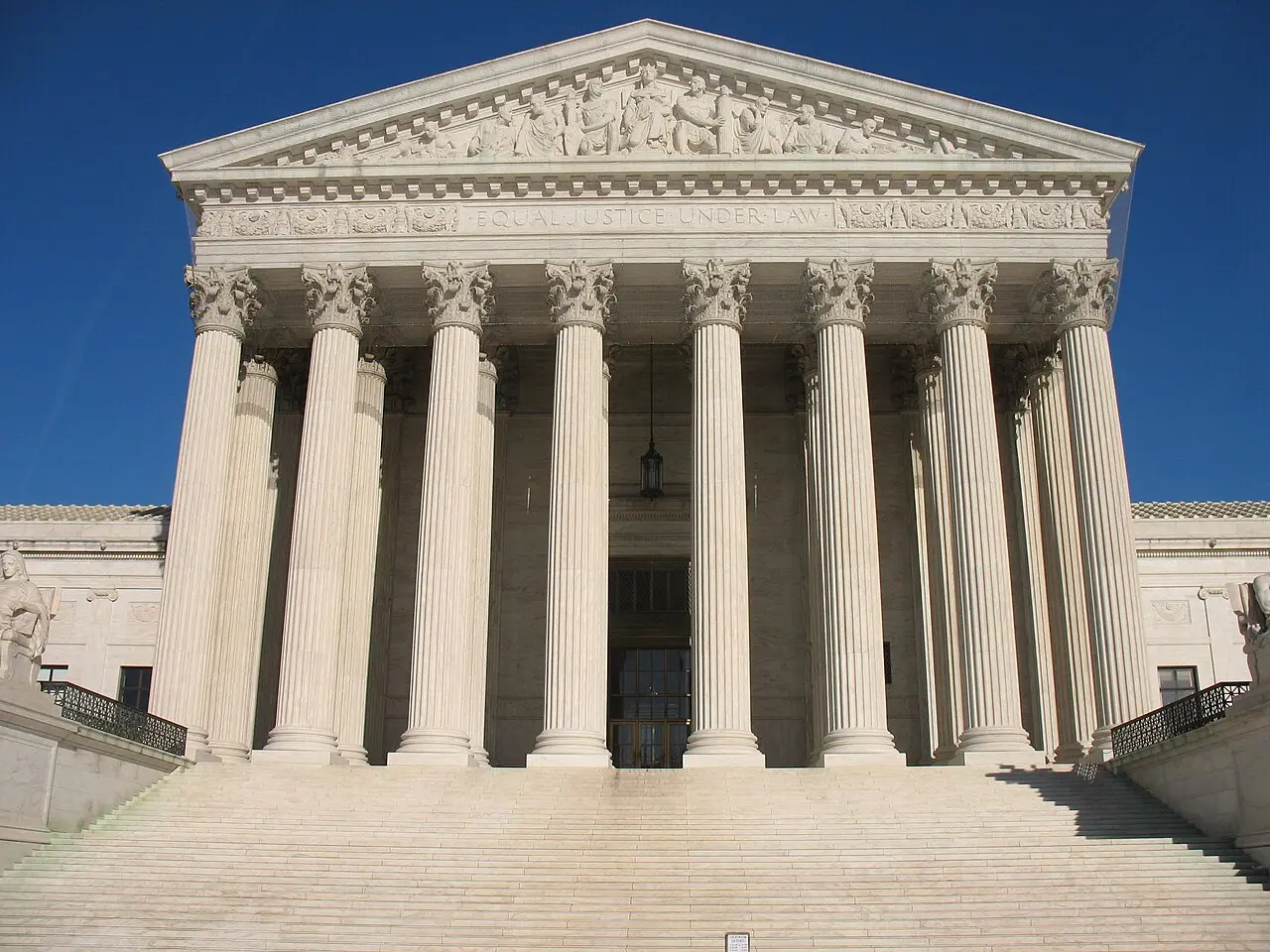
On the morning of January 22, 1973, the nine justices of the U.S. Supreme Court handed down a decision that would divide American politics for the next half century. In a 7-to-2 ruling in Roe v. Wade, the Court struck down a Texas law banning abortion, declaring that a woman's decision to end a pregnancy was protected by a constitutional right to privacy.
The case began three years earlier in Dallas, Texas, where abortion was illegal except to save the mother's life. A young woman, identified in court papers only as "Jane Roe" to protect her privacy, challenged the law with the help of two Texas attorneys, Linda Coffee and Sarah Weddington. They sued Henry Wade, the district attorney of Dallas County, who was responsible for enforcing the ban. A federal court in Texas had already declared the law unconstitutional, but Wade said he would keep prosecuting doctors anyway, so both sides appealed to the nation's highest court.
The Supreme Court heard arguments twice, in December 1971 and again in October 1972, an unusual step that signaled how seriously the justices took the case. Weddington, only 26 when she first argued before the Court, told the all-male bench that pregnancy was one of the most determinative events in a woman's life, disrupting her body, her education, her work, and her family, and that the choice should belong to the woman.
Justice Harry Blackmun wrote the majority opinion. He concluded that the right to privacy, rooted in the Fourteenth Amendment's guarantee of liberty, was broad enough to cover a woman's decision whether to bear a child. But the Court did not make the right absolute. It divided pregnancy into three trimesters: in the first, the choice belonged to the woman and her doctor; in the second, states could regulate abortion to protect the mother's health; in the third, after the point of viability, states could ban abortion except when the mother's life or health was at stake.
The ruling effectively legalized abortion nationwide and immediately became one of the most debated decisions in American history. Supporters called it a milestone for women's equality and personal freedom. Opponents called it a grave moral error and an overreach by unelected judges, and they began organizing a movement that would shape American elections for decades. The same day the decision came down, former president Lyndon B. Johnson died at his Texas ranch, a coincidence that tied the ruling forever to the end of an era.
Roe stood as the law of the land for nearly 49 years, reaffirmed in modified form by the Court in 1992. Then, on June 24, 2022, the Supreme Court overturned it in Dobbs v. Jackson Women's Health Organization, ruling 6-to-3 that the Constitution does not confer a right to abortion and returning the question to the states.
Why does it matter? Whatever one's view of its outcome, Roe v. Wade is a landmark in how Americans understand the relationship between the individual, the state, and the Constitution. It showed how a single lawsuit, filed by an unknown young woman and two determined lawyers in Texas, could reach the highest court and redraw the legal landscape of an entire nation, for a generation and beyond.
Photo: Kjetil Ree, CC BY-SA 3.0 (via Wikimedia Commons). The building shown is the modern U.S. Supreme Court in Washington, D.C.