Two New Nations Become One
On April 26, 1964, the newly independent nations of Tanganyika and Zanzibar merged into a single country: Tanzania.
Two countries that had just won their independence decided the best way to keep it was to stop being two countries.
Tanganyika, on Africa's east coast, had become independent from Britain on December 9, 1961, under the leadership of Julius Nyerere, a teacher turned politician who founded the Tanganyika African National Union and believed deeply in Pan-African unity. Zanzibar, the spice-trade archipelago off Tanganyika's coast, gained independence in December 1963 as a constitutional monarchy under its sultan. Weeks later, in January 1964, a revolution overthrew the sultan's Arab-led government; Abeid Amani Karume, leader of the Afro-Shirazi Party, became president of the new People's Republic of Zanzibar.
The revolution left Zanzibar unstable, and Nyerere moved fast. Within weeks he proposed a union — partly to steady the islands, partly because he worried their turmoil could draw Cold War rivalries into East Africa, and partly from genuine conviction that Africans should build larger, united states. Karume agreed. Negotiators drew up the Articles of Union, and on April 26, 1964, the two republics formally merged into the United Republic of Tanganyika and Zanzibar. Nyerere became president, with Karume as first vice president — while Zanzibar kept its own government and considerable local autonomy.
Six months later, on October 29, the new country got a new name: Tanzania, a blend of Tanganyika and Zanzibar that had never existed before. Nyerere would lead it until 1985, when he voluntarily stepped down — a rarity among the era's African leaders. His government promoted Ujamaa, or "familyhood," a distinctly African form of socialism, and made Kiswahili the national language to bind hundreds of ethnic groups into one nation.
Voluntary mergers of sovereign states are rare in modern history, and this one has lasted more than six decades. Every April 26, Tanzania celebrates Union Day in memory of the merger — a reminder that two brand-new nations once chose, freely and peacefully, to become one.
Nyerere gave the union an ideology two years later with the Arusha Declaration of 1967, committing Tanzania to Ujamaa — self-reliance, nationalized industry, and village collectives where farmers worked communal land. The policy's economic record is debated, but its social aims were real: free primary education and health care expanded dramatically, and Kiswahili — promoted as the national language — gave hundreds of ethnic groups a shared tongue, a nation-building achievement few African states matched.
In 1974 the government named the central town of Dodoma the future capital, though Dar es Salaam remained the working capital for decades. When Nyerere voluntarily retired in 1985, handing power to Ali Hassan Mwinyi, it was a rarity among the era's African leaders — and the union he built has now lasted more than six decades.
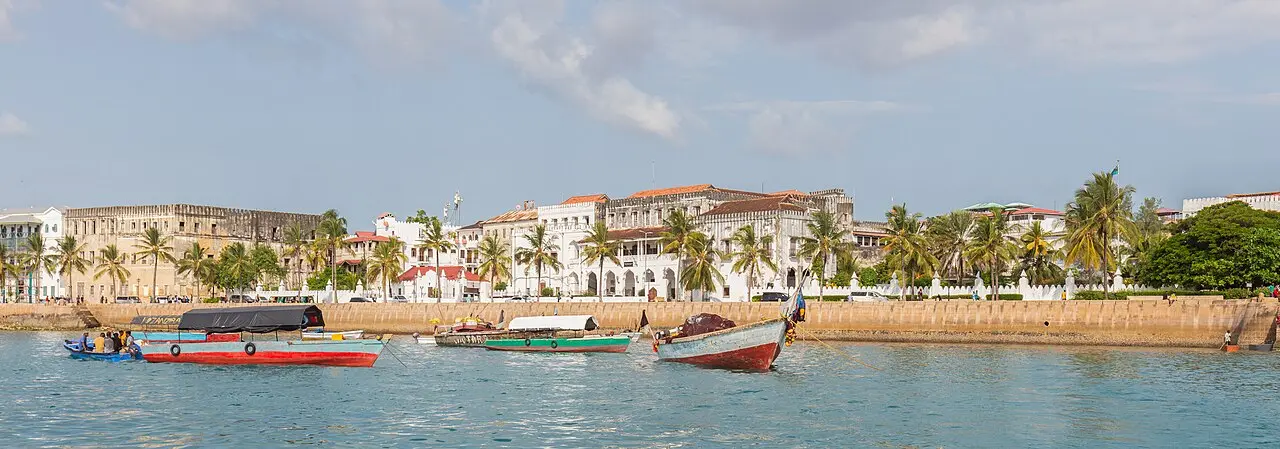
Photo: Diego Delso, CC BY-SA 4.0 (via Wikimedia Commons).