The World Turned Upside Down: The Surrender at Yorktown
On October 19, 1781, nearly 7,100 British troops laid down their arms at Yorktown, Virginia — effectively winning America its independence.
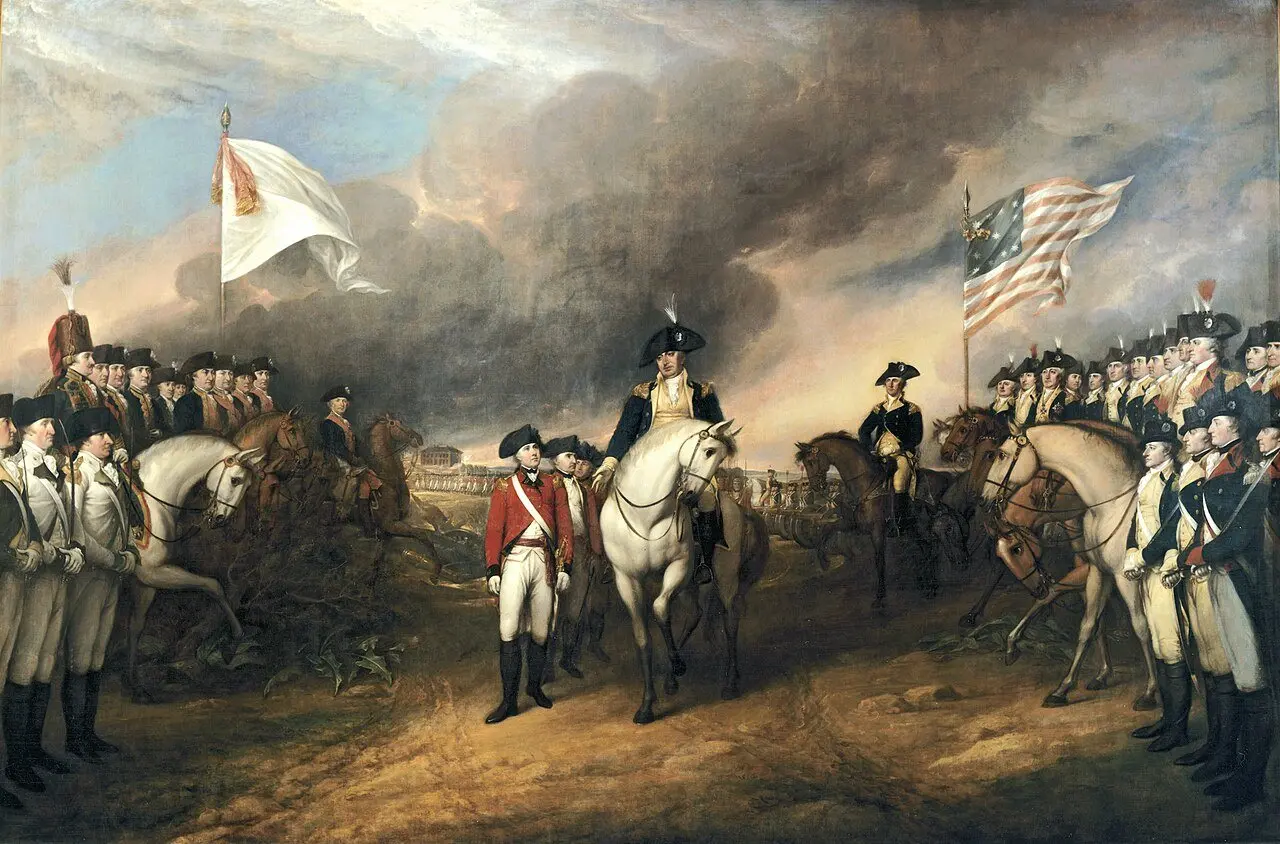
As the British soldiers marched out between the waiting American and French armies, their bands struck up a tune whose title was the perfect verdict on the day: "The World Turned Upside Down." Behind them lay a three-week siege. Ahead of them lay captivity. And behind both lay the end of an empire's hold on America.
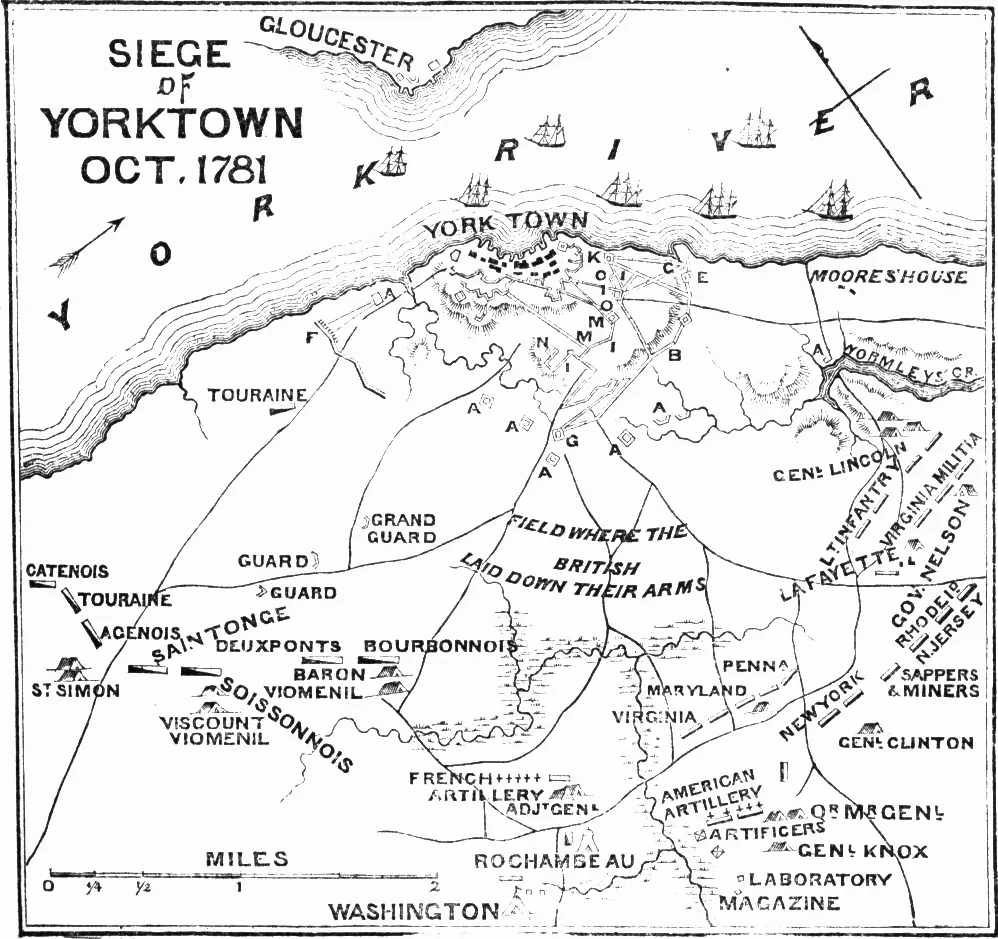
The trap had been closing for months. In the summer of 1781, British General Charles Cornwallis had dug his army into the little Virginia port of Yorktown, expecting rescue by sea. But on September 5, a French fleet under Admiral de Grasse defeated the British squadron at the Battle of the Virginia Capes — and Cornwallis's escape route vanished. Meanwhile, George Washington and the French commander, the Comte de Rochambeau, slipped away from New York and marched some 200 miles south in 15 days, joining the Marquis de Lafayette's forces to complete the encirclement on September 28.
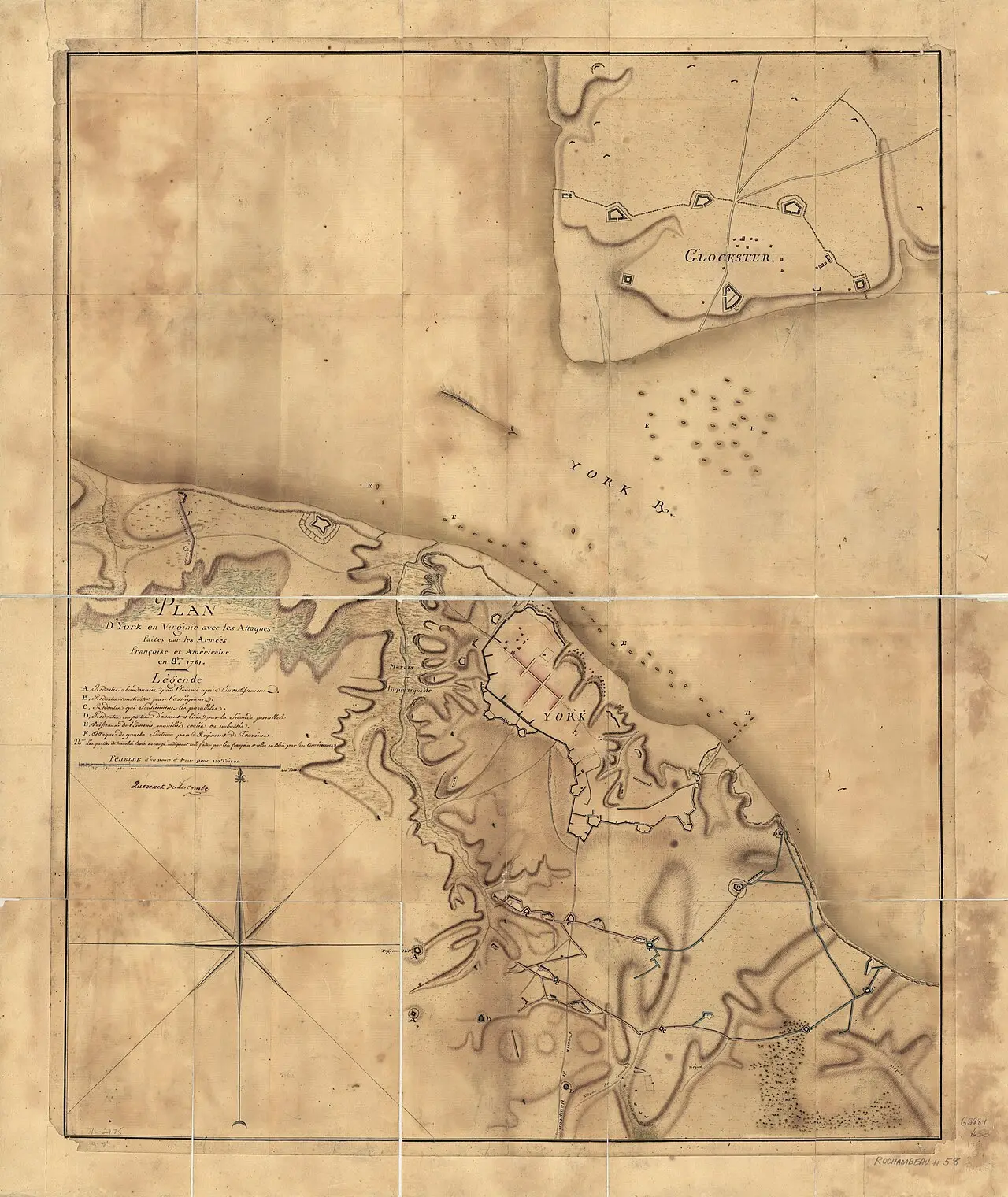
What followed was a siege of classic 18th-century warfare: parallel trenches dug ever closer, artillery pounding the British lines, and a night assault in which American and French columns stormed two British redoubts. With his position hopeless and his defenses crumbling, Cornwallis had no choice left. On October 17 a British drummer appeared on the parapet, followed by an officer waving a white handkerchief. The guns fell silent.
The surrender itself came on the 19th — and it came with a deliberate snub. Claiming illness, Cornwallis refused to appear, sending his second-in-command, General Charles O'Hara, with the sword. O'Hara first tried to present it to the French commander Rochambeau, who directed him to Washington. Washington, in turn, directed O'Hara to his own second-in-command, Benjamin Lincoln — the very officer the British had humiliated at Charleston the year before. The symbolism was unmistakable: Washington was giving the British the same harsh terms they had given Lincoln.
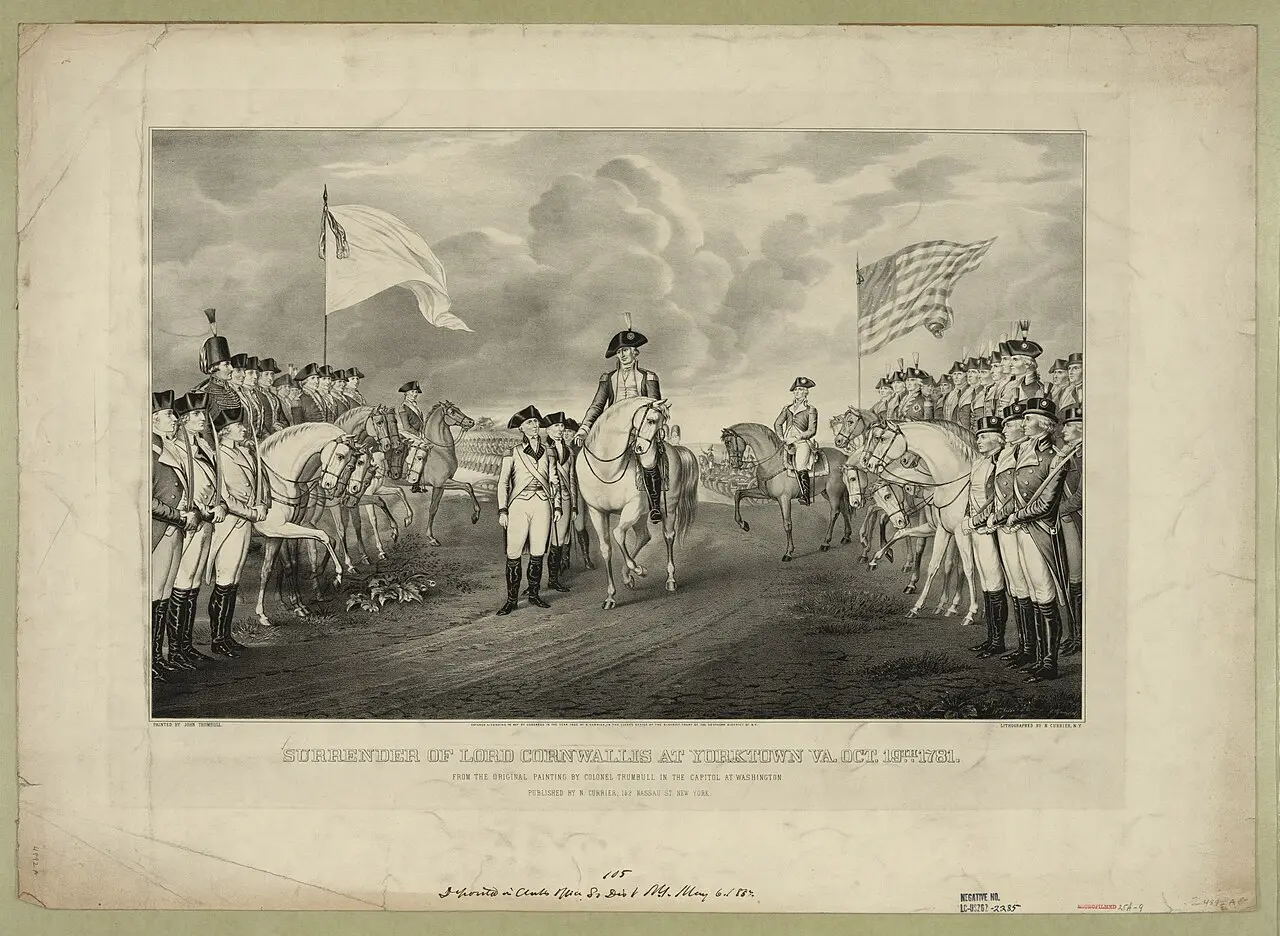
Washington's diary entry for the day is terse and businesslike — he had the articles of capitulation copied in the early morning and "sent word to Lord Cornwallis that I expected to have them signed at 11 Oclock." At noon the allied armies lined the roads, and two hours later the British marched out with their flags furled. In all, Cornwallis surrendered 7,087 officers and men, along with 900 seamen, 144 cannons, and dozens of ships.
Yorktown was the last major battle of the American Revolution. Fighting sputtered on for months, but Britain had lost the will for the war; negotiations followed, and the 1783 Treaty of Paris made American independence official. John Trumbull's great painting of the surrender — the image above — was hung in the U.S. Capitol in 1820, where it still hangs today. As for Cornwallis, history gave him a second act: he went on to become Britain's governor-general of India.
Painting: John Trumbull (1820), public domain (via Wikimedia Commons).
More images (via Wikimedia Commons, public domain): a French map of the siege of Yorktown (Querenet de La Combe); a print of the surrender at Yorktown (Popular Graphic Arts, Library of Congress); a plan of the battle (S. G. Goodrich, 1875).