The Day Wall Street Lost 22 Percent
On October 19, 1987, the Dow Jones Industrial Average plunged 508 points — 22.6 percent — in a single session, the worst one-day crash in Wall Street history.
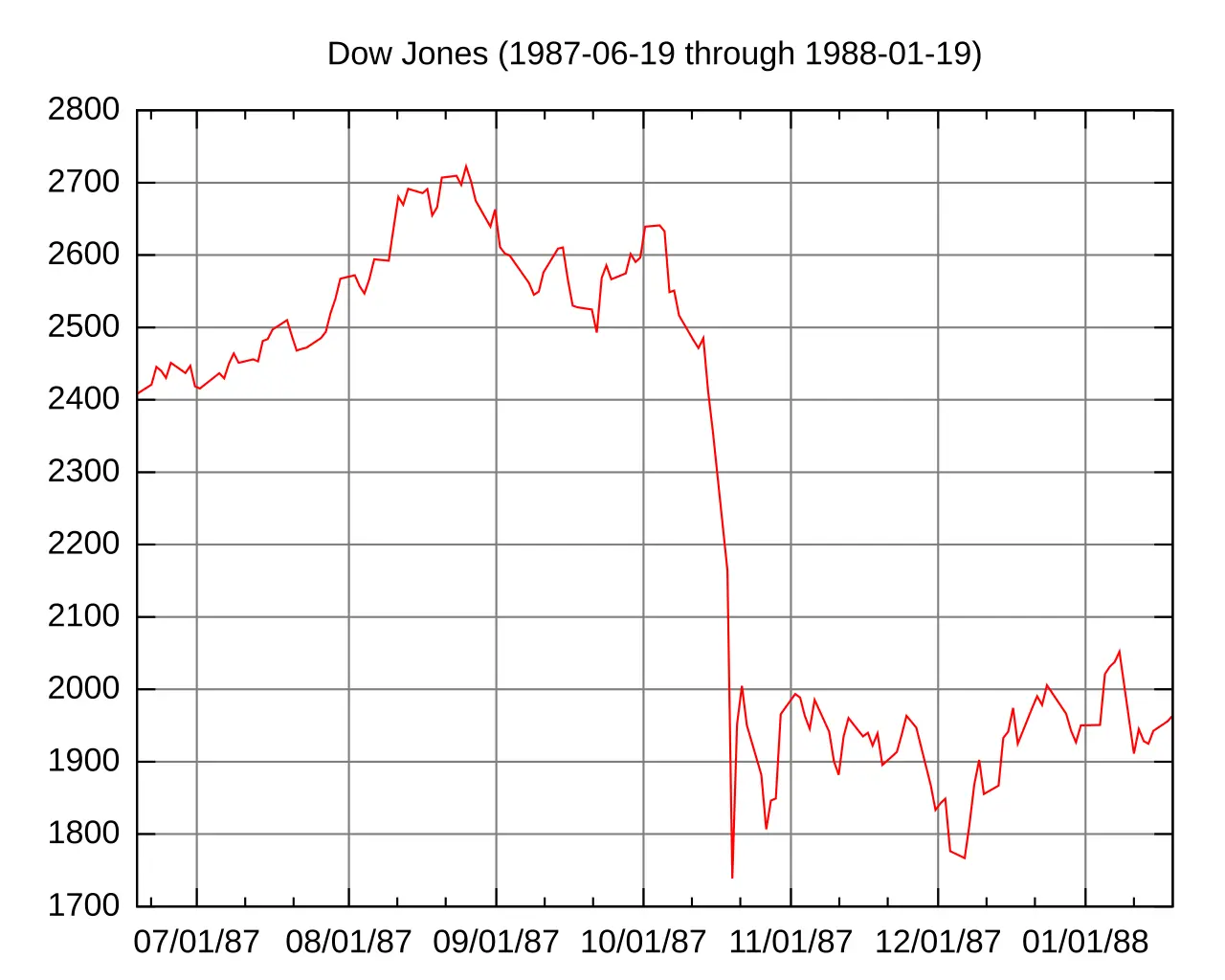
On the morning of Monday, October 19, 1987, stock markets around the world were already falling. Hong Kong had dropped sharply overnight. By the time the opening bell rang in New York, panic was in the air — and by the closing bell, the Dow Jones Industrial Average had lost 508 points, a staggering 22.6 percent of its value, in a single session.
The numbers were historic. The Dow closed at 1,738.74. Roughly $500 billion in market value on the New York Stock Exchange vanished in one day. Worldwide, an estimated $1.71 trillion in paper wealth disappeared. It remains the worst one-day percentage decline in the Dow's history — worse than any single day of the 1929 crash.
No single cause explains it. Economists and investigators pointed to a tangle of factors: rising interest rates, trade tensions, and an overvalued market ripe for a fall. But the sheer speed of the collapse came from the market's own machinery. Computer-driven "program trading" and a strategy called portfolio insurance triggered waves of automated selling — machines selling because other machines were selling, each wave pushing prices lower and setting off the next.
On the floor of the New York Stock Exchange, the scene was chaos: phones ringing unanswered, traders shouting, prices falling faster than anyone could track them. Yet unlike 1929, the crash did not drag the economy into a depression. The Federal Reserve moved quickly to reassure markets, and within two years the Dow had recovered its losses.
The crash left a permanent mark on how markets work. In 1988, the New York Stock Exchange introduced trading curbs — automatic pauses, now called circuit breakers, that halt trading when prices plunge too fast, giving panic a moment to cool. Those safeguards, refined over the decades, are still in use today.
The crash had been building all week. Markets in Asia and Europe fell hard on Friday, October 16, and the Dow dropped 108 points that day — then a record. Over the weekend, anxiety spread among investors, and when trading resumed Monday, sell orders piled up faster than buyers could absorb them. The automated systems did the rest, turning a steep decline into a historic rout before lunch.
Why it matters: Black Monday was the moment the world learned that modern markets — global, instant, and increasingly automated — could fall faster than any human could react. The reforms it forced have steadied every crash since.
Photo note: this chart of the Dow's plunge on October 19, 1987 was created by Wikimedia Commons contributor Autopilot and released under a Creative Commons/GFDL multi-license, via Wikimedia Commons.