The War That Started on the Holiest Day
On October 6, 1973, Egypt and Syria attacked Israel on Yom Kippur, starting a war that redrew the Middle East.
At 2 p.m. on October 6, 1973, air-raid sirens sounded across Israel — on Yom Kippur, the holiest day of the Jewish year, when the entire country had ground to a halt. The war that nobody in Jerusalem believed was coming had begun.
Egypt and Syria had launched a coordinated surprise attack. Egyptian infantry and armor stormed across the Suez Canal in an operation codenamed Badr, smashing through Israel's Bar-Lev Line of fortifications and digging in on the canal's eastern bank. In the north, Syrian tanks poured into the Golan Heights, driving toward the Sea of Galilee. The timing cut across two calendars at once: Yom Kippur — and the tenth day of Ramadan.
Israel had been warned, only just in time. That morning, Prime Minister Golda Meir was woken by an urgent call: the chief of the Mossad, Zvi Zamir, had met a trusted source in London who reported that the Egyptian and Syrian armies were about to attack that very evening. In a stroke, the intelligence estimate flipped from "low probability" of war to near-certainty, and the army began a frantic call-up of its reserves.
Across the country, the solemn holiday shattered. Radio broadcasts, silent for Yom Kippur, crackled back to life. Soldiers rushed from synagogues straight to their bases; by the following morning, most reservists had reached the front lines.
The shock was total because the confidence had been total. Six years earlier, Israel had crushed its neighbors in the Six-Day War of 1967, seizing the Sinai Peninsula, the Gaza Strip, the West Bank, and the Golan Heights in less than a week. Many Israelis had come to see their army as invincible. Egypt's Anwar Sadat and Syria's Hafez al-Assad were determined to prove otherwise — and to take back by force what years of stalemate had not returned.
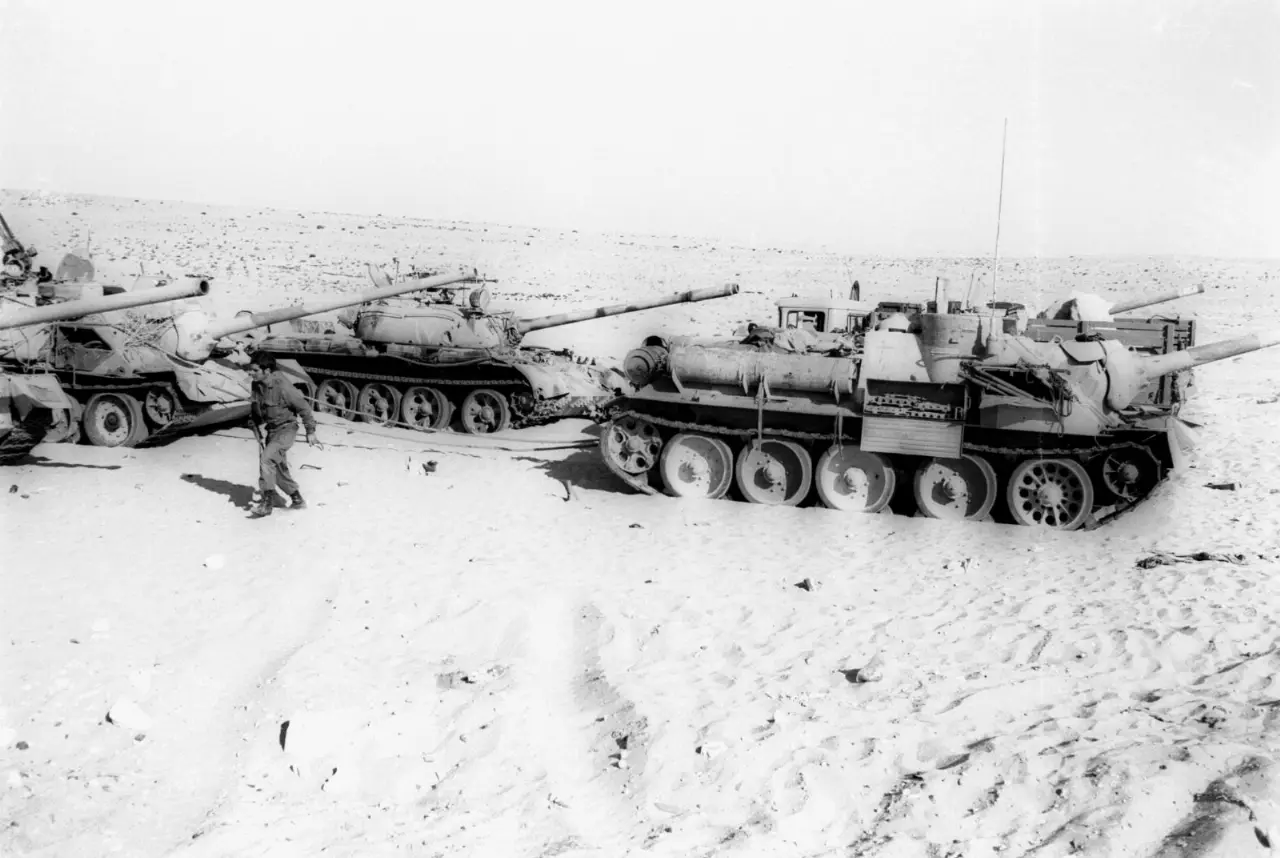
The first days belonged to the attackers. Egyptian troops pushed roughly 15 kilometers into the Sinai; an Israeli counterattack on October 8 failed with heavy losses. But Israel's reserves kept arriving, and the tide turned. On October 16, Israeli forces crossed the Suez Canal themselves, drove deep into Egypt, and encircled an entire Egyptian army. In the north they threw the Syrians back and advanced to within about 40 kilometers of Damascus; in the south, to within about 100 kilometers of Cairo.
The superpowers were pulled in behind their clients. The Soviet Union airlifted arms to Egypt and Syria; the United States, after more than a week of hesitation, answered with a giant airlift of its own to resupply Israel. On October 26 — twenty days after it started — a ceasefire sponsored by Washington and Moscow, UN Security Council Resolution 338, was accepted by all sides.
The war killed thousands of soldiers on both sides — more than 2,600 Israelis among them — and left Israel traumatized. An official inquiry laid bare catastrophic failures of intelligence and leadership. Yet out of the wreckage came a paradox: Egypt's strong opening gave Sadat the stature to do what no Arab leader had ever done. Five years later, the Camp David Accords produced a peace treaty between Egypt and Israel — the first time any Arab state recognized the Jewish state.
The two sides still remember October 6 differently. In Egypt it is a celebrated national triumph, its date stamped on bridges, a city, and a grand war museum: the "6th of October." In Israel it remains a day of mourning and hard questions — a warning that overconfidence can be as dangerous as any army.
The Yom Kippur War redrew the Middle East. It shattered Israel's sense of invincibility, pulled Egypt out of the Soviet orbit and toward Washington, triggered an Arab oil embargo that rattled the world economy — and, by the unlikeliest of roads, opened the way to the first Arab-Israeli peace.
Photo: David Weisfish, CC BY 4.0 (via Wikimedia Commons).