The German Mayflower
On October 6, 1683, the ship Concord landed 13 German families at Philadelphia — the 'German Mayflower' voyage that founded Germantown and opened two centuries of German immigration to America.
On October 6, 1683, a small ship called the Concord dropped anchor at Philadelphia after seventy-four days at sea. Aboard were thirteen families — thirty-three men, women, and children — Mennonites and Quakers from the Rhineland city of Krefeld. They had crossed an ocean to worship as they pleased and farm in peace. History would remember their vessel as the "German Mayflower" — and their settlement, Germantown, as the seed of German America.
The voyage had been arranged with the help of William Penn, the English Quaker who had founded Pennsylvania as his "holy experiment" in religious tolerance. Penn's agents recruited in the Rhineland, where Mennonites and other dissenters faced pressure to conform. A Frankfurt lawyer named Francis Daniel Pastorius sailed ahead to prepare the way; when the Concord's passengers came ashore, he was waiting to lead them to their new home.
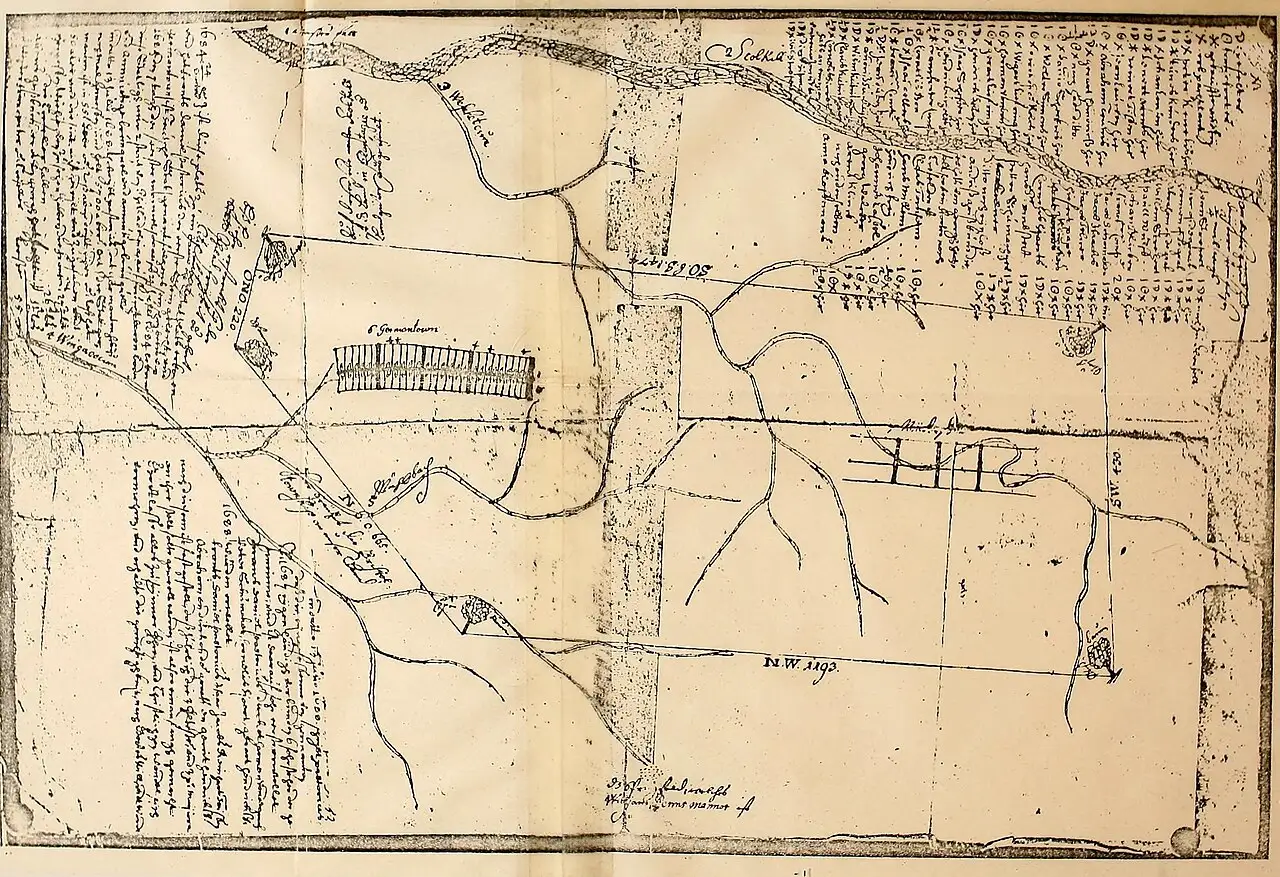
What they found was wilderness. Weeks later, Pennsylvania's surveyor laid out their township lots, and the families drew for parcels of land. They built quickly — winter was coming — raising timber houses, planting crops, and setting up the linen-weaving trade many had practiced in Krefeld. Within a few years Germantown was a thriving village; within a generation it was the gateway through which a steady stream of German immigrants poured into Pennsylvania.
The settlers brought more than crafts. In 1688, Pastorius and three fellow Germantown residents signed the first written protest against slavery in the American colonies — the Germantown Quaker Petition Against Slavery — arguing, in essence, that there was no moral difference between enslaving Black people and enslaving white ones. It was a stunning document for its time, and it planted a seed that Quaker abolitionists would nurture for the next 180 years.
The Concord's thirteen families were only the beginning. German immigration to Pennsylvania continued for the rest of the colonial era, and by the American Revolution roughly a third of the colony's population was of German descent. Their influence runs through American life to this day — in Christmas trees and kindergarten, in pretzels and place names, in millions of family stories.
America is often described as a nation of immigrants, but the German chapter tends to be overlooked — it came early, quietly, and in family groups rather than dramatic waves. It began on October 6, 1683, with thirty-three people stepping off a small ship into an unknown continent, carrying little more than their faith, their tools, and a deed to land they had never seen.
Photo: Early hand-drawn survey map of Germantown's lots, reproduced in a 1908 biography of Francis Daniel Pastorius, public domain, via Wikimedia Commons.