The Tower That Touched the Sky: Burj Khalifa Opens
On January 4, 2010, Dubai opened the 828-meter Burj Khalifa, the tallest building ever built — and renamed it mid-ceremony for the Abu Dhabi ruler whose billions had bailed the emirate out.
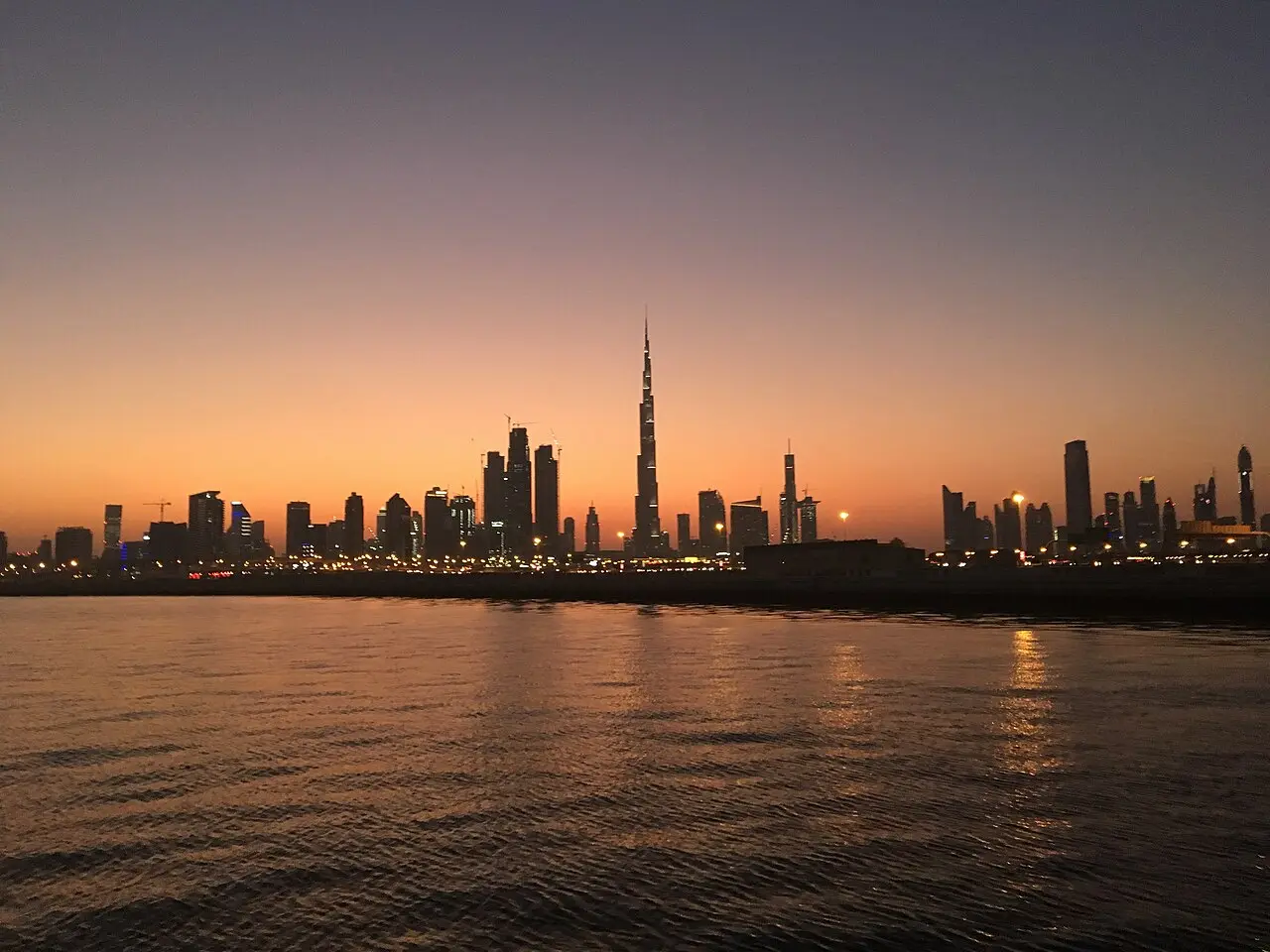
On the evening of January 4, 2010, ten thousand fireworks erupted from every side of a needle of glass and steel rising half a mile into the desert sky. More than six thousand guests had gathered in downtown Dubai, and millions more watched around the world, as the tallest building ever constructed was officially opened — and given a brand-new name in the middle of the ceremony.
For six years it had been called Burj Dubai. Construction had begun in January 2004, in the white-hot middle of Dubai's boom, and the tower climbed with astonishing speed: just 1,325 days passed between the start of excavation and the moment it became the tallest free-standing structure on Earth, surpassing Chicago's Sears Tower and Taipei 101 along the way. Its final height — 828 meters, or 2,716 feet 6 inches — was kept a closely guarded secret by the developer, Emaar, until opening night.
The design came from Chicago architect Adrian Smith of Skidmore, Owings & Merrill, with structural engineer Bill Baker solving the puzzle of how to keep such a slender tower standing. Their inspiration was the Hymenocallis, a desert flower whose spiraling petals became the tower's stepped, Y-shaped footprint — beautiful, and brilliantly resistant to wind. Building it took 22 million man-hours, with some 12,000 workers on site at the peak: 330,000 cubic meters of concrete, 39,000 tonnes of steel, and 103,000 square meters of glass.
The opening ceremony was pure Dubai spectacle. A 72,000-watt projector lit the tower like a beacon; fountains danced to illustrate the desert flower at the heart of the design; skydivers plunged past the facade; and then the fireworks — ten thousand of them — turned the whole half-mile structure into a pillar of fire and light. It was said the tower was so tall that a visitor could watch the sun set twice: once from the ground floor, and again, two minutes later, from the observation deck near the top.
Then came the surprise. Sheikh Mohammed bin Rashid, the ruler of Dubai, announced that the tower would not be called Burj Dubai after all. It would be Burj Khalifa — named for Sheikh Khalifa bin Zayed Al Nahyan, the president of the United Arab Emirates and ruler of neighboring Abu Dhabi. The reason was no secret: the global financial crisis had hammered Dubai's debt-fueled boom, and oil-rich Abu Dhabi had ridden to the rescue with billions in aid. The world's tallest building was, in effect, named after its lender.
Guinness World Records certified the tower on opening night, along with a cascade of other records: the most floors in a building (163), the tallest elevator (504 meters), the highest restaurant from ground level. It remains, more than a decade and a half later, the tallest building on the planet — a hotel, offices, and hundreds of residences stacked into what its promoters call a "vertical city."
The Burj Khalifa is more than an engineering marvel. It is a monument to ambition — and to the price of it. Dubai built the impossible during a boom, nearly lost it in a bust, and kept it by renaming its proudest achievement after the neighbor who paid the bill. The tower's name tells the whole story of the crisis, written half a mile high in steel and glass.
Photo: Sergei Gussev, CC BY 2.0 (via Wikimedia Commons). A 2017 photograph of the Burj Khalifa over the Dubai skyline at sunset.