The Poem Written on Top of Pikes Peak
On July 22, 1893, Wellesley professor Katharine Lee Bates rode a wagon to the summit of Pikes Peak and wrote the verses that became 'America the Beautiful.'
She had never been west of Chicago.
Katharine Lee Bates was a 33-year-old English professor at Wellesley College in Massachusetts, a scholar of American literature, a poet, and an outspoken reformer who cared deeply about immigrants, the working poor, and women's suffrage. In the summer of 1893, she accepted a three-week teaching assignment at Colorado College — and on July 1 she boarded a train in Chicago, bound for Colorado Springs. Born and raised in New England, she had never seen the American West.
The train ride mesmerized her. She watched the farms and prairies of the heartland roll past her window, and when she arrived, she spent her free time exploring: the Garden of the Gods, where she once heard a coyote howling on a moonlit night, and the vast plains stretching toward the Rockies.
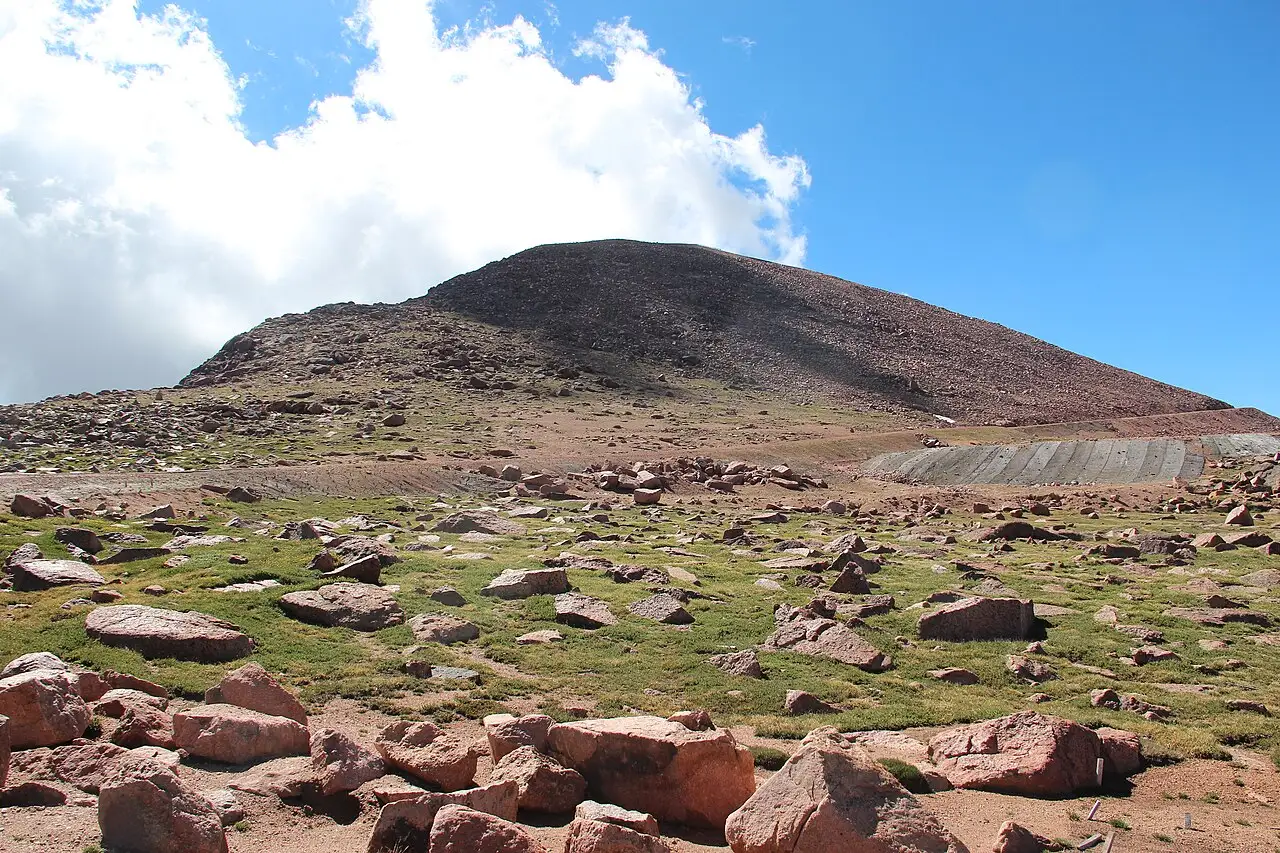
Then, on July 22, 1893, her fellow visiting professors invited her on an excursion to the top of Pikes Peak. It was a long, rough journey in a horse- and mule-powered wagon, and Bates arrived at the summit exhausted. But when she saw the view, she later wrote, she "felt great joy. All the wonder of America seemed displayed there, with the sea-like expanse." Below her lay the Great Plains shimmering like an ocean; above her, the sky at 14,000 feet.
That night, back at her lodgings, she wrote down a few verses that had sprung to mind as she witnessed what she called "the most glorious scenery I ever beheld." She titled the poem "Pikes Peak."
Bates kept working on the words for more than a year. On July 4, 1895, the poem was published in The Congregationalist, a widely read church weekly, under the title "America." It was immediately popular, and several composers set it to music. The melody that stuck had been written years earlier, in 1882, by Samuel A. Ward, a church organist in Newark, New Jersey, as the tune for a hymn. The two never met. In 1910, Ward's melody and Bates's words were published together for the first time under the title "America the Beautiful." Bates revised the poem once more, publishing the version we sing today in 1911. Ward did not live to see the song's success; he died in 1903.
"O beautiful for spacious skies, for amber waves of grain" — the opening lines still describe that view from Pikes Peak. But the song was never just a postcard. Bates's later verses plead for America to be made better: "confirm thy soul in self-control, thy liberty in law," and a prayer that the country might crown its good "with brotherhood." It was written by a woman who loved her country enough to demand more of it — a patriot and a protester at once.
Why it matters: "America the Beautiful" endures because it is not a song about conquest or might, but about a landscape and an aspiration. It has been proposed as the national anthem, sung at inaugurations and sporting events, and carried by demonstrators demanding justice. A poem scribbled after a wagon ride up a mountain became one of the most beloved expressions of American ideals — proof that a single afternoon of wonder can echo for more than a century.
Photo: The rocky summit of Pikes Peak, Colorado, the view that inspired Katharine Lee Bates on July 22, 1893. Photograph by Thomson200, dedicated to the public domain (CC0) via Wikimedia Commons.