
The One-Eyed Pilot Who Flew Solo Around the World
On July 22, 1933, one-eyed aviator Wiley Post landed his Lockheed Vega, the Winnie Mae, in New York — completing the first solo flight around the world in 7 days, 18 hours, 49 minutes.
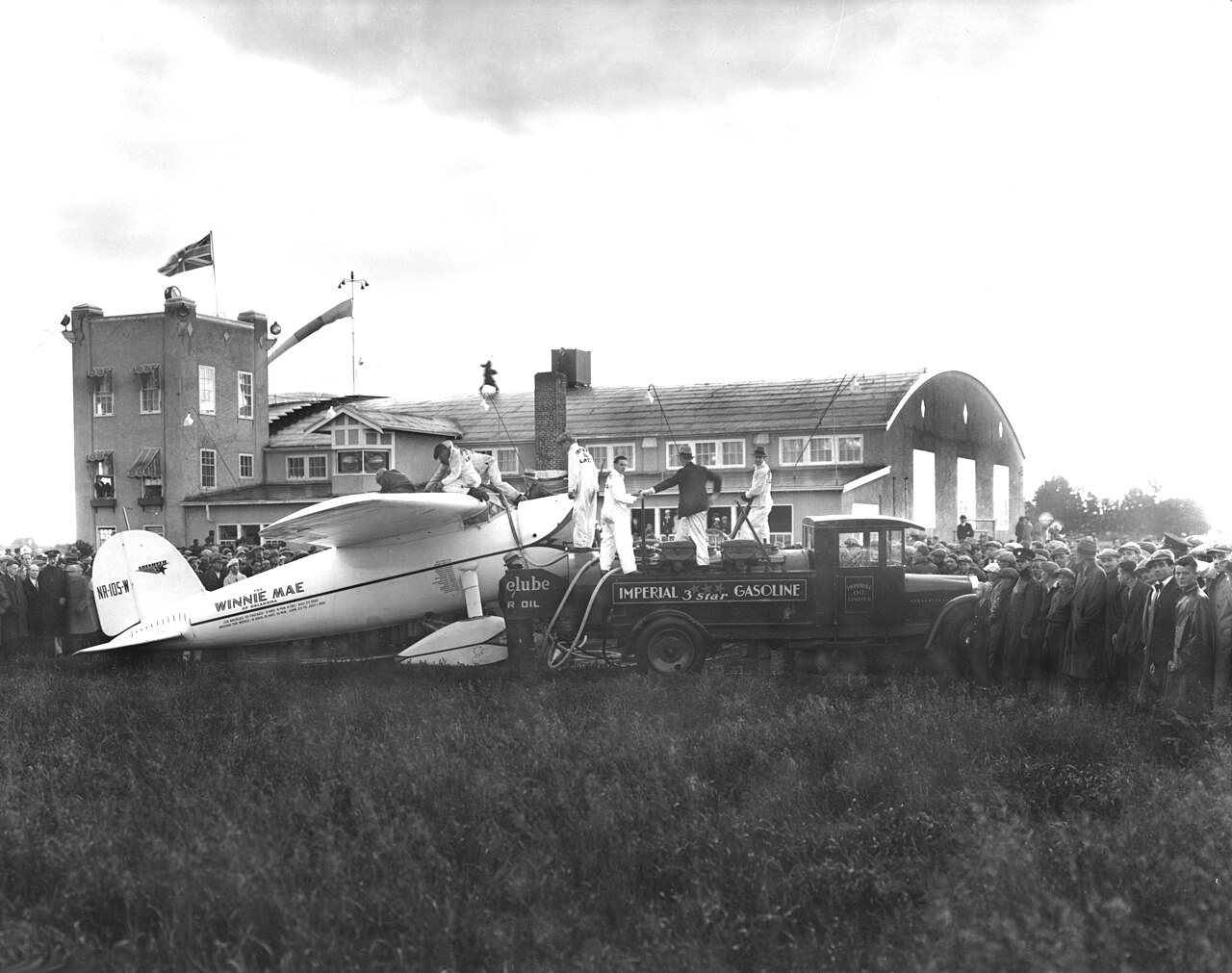
He could barely see out of one eye, and he was about to fly farther alone than anyone in history. On July 22, 1933, Wiley Post touched his Lockheed Vega, the Winnie Mae, down at Floyd Bennett Field in Brooklyn, New York — completing the first solo flight around the world.
Post had taken off from New York on July 15, flying eastward. Over the next 7 days, 18 hours, and 49 minutes, he covered more than 15,500 miles alone, stopping only for fuel and repairs — including servicing his autopilot in Berlin, Moscow, and Irkutsk. Tens of thousands of New Yorkers were waiting when he landed, and the city threw him a ticker-tape parade.
What made the flight extraordinary wasn't just the distance. It was that Post flew it entirely alone — pilot and navigator both. Two years earlier he had circled the globe in 8 days, 15 hours, and 51 minutes with Australian navigator Harold Gatty aboard. This time, he replaced Gatty with two newfangled devices: an autopilot that held the plane on course while he rested, and a radio direction finder that homed in on radio beacons along the route. The Smithsonian's National Air and Space Museum calls it a flight that demonstrated several significant aviation technologies.
Post was an unlikely hero. The son of poor Oklahoma farmers, he had worked the oil fields until a 1926 accident cost him the sight in his left eye. He used the settlement money to buy his first airplane, learned to fly, and became the personal pilot of oilman F. C. Hall — whose daughter the Winnie Mae was named for.
The solo flight beat Post's own 1931 record by about 21 hours. But he wasn't done. He went on to pioneer high-altitude flight, working with the B.F. Goodrich Company to develop an early pressure suit — a forerunner of the suits astronauts wear today. His story ended just two years after his moment of glory: on August 15, 1935, Post and his close friend, the humorist Will Rogers, died when their plane crashed near Point Barrow, Alaska.
Why it matters: Post's lonely 15,500-mile loop proved that long-distance air travel could work — and that machines could do some of the navigating for us. The autopilot he proved over seven and a half days is the great-grandfather of the systems that guide today's airliners.
Photo: The Winnie Mae being refueled at Edmonton, Alberta, during Post's 1933 solo flight, Provincial Archives of Alberta, no known copyright restrictions (via Wikimedia Commons).