The Flag Adopted 23 Days Before Freedom
On July 22, 1947, India's Constituent Assembly adopted the tricolor — saffron, white and green with the Ashoka Chakra — as the flag of a nation still weeks from independence.
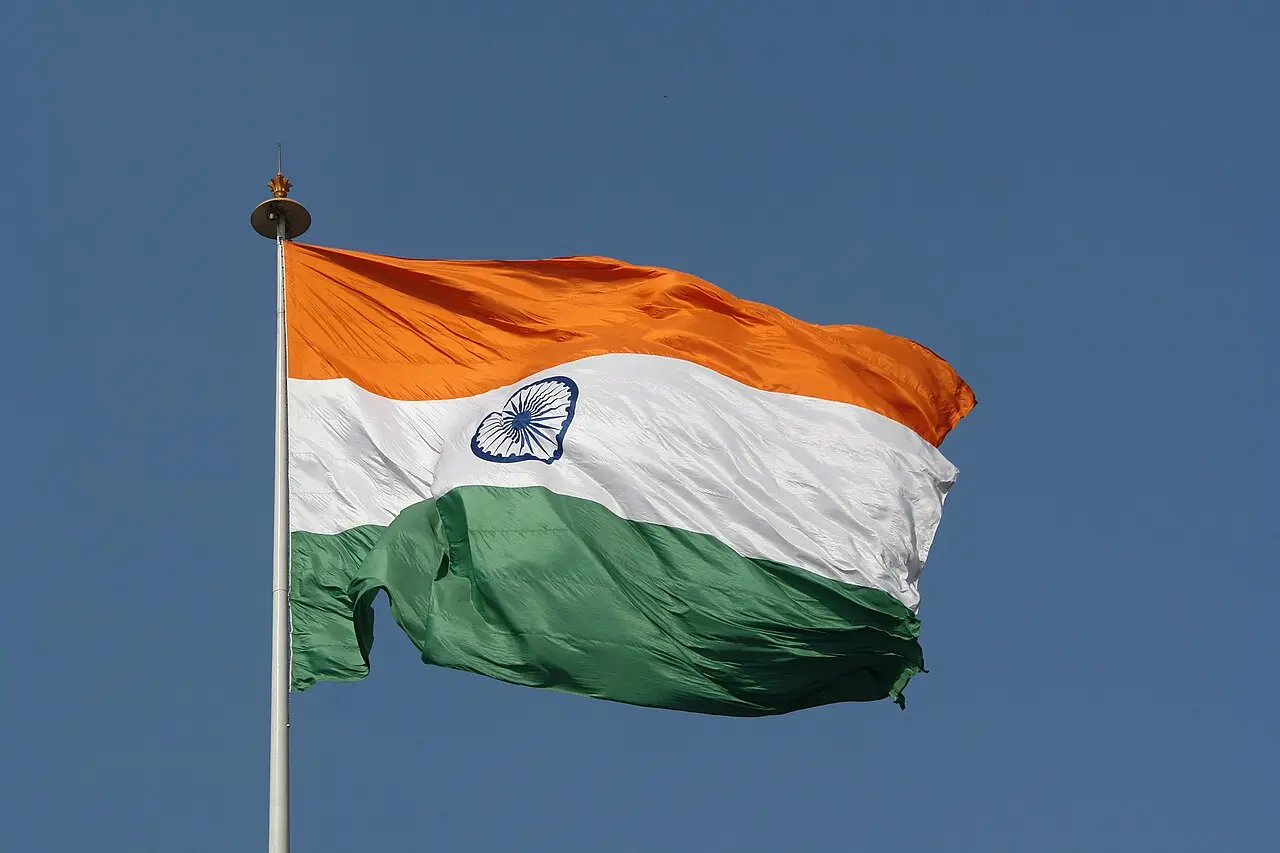
Twenty-three days before independence, India chose its flag.
On July 22, 1947, the Constituent Assembly — the body writing the constitution of the soon-to-be-free nation — met in New Delhi and adopted the design that would become one of the world's most recognized symbols: a horizontal tricolor of deep saffron at the top, white in the middle, and dark green at the bottom, with a navy-blue wheel at its center.
The design was largely the work of Pingali Venkayya, a freedom fighter and follower of Mahatma Gandhi, who had spent years refining a flag for the independence movement. The flag of 1947 was a deliberate evolution of the banner the Indian National Congress had adopted in 1931 — saffron, white, and green with a spinning wheel, the charkha, at its heart. The charkha was Gandhi's emblem of self-reliance and the Swadeshi movement, the call for Indians to spin their own cloth and boycott British goods.
But in 1947, as the Assembly prepared the flag of a sovereign nation rather than a protest movement, the spinning wheel was replaced. On Jawaharlal Nehru's proposal, the charkha gave way to the Ashoka Chakra — a 24-spoked wheel in navy blue, modeled on the wheel that appears on the abacus of the Lion Capital of Ashoka at Sarnath, carved more than two thousand years ago. The wheel of law, or dharma, stood for justice, motion, and the idea that a nation must always move forward.
The colors were given new, non-sectarian meanings. Saffron stood for courage and sacrifice. White stood for peace and truth. Green stood for faith, fertility, and the growth of the land. An ad hoc committee of the Assembly, headed by Rajendra Prasad, had overseen the final design.
On August 15, 1947 — Independence Day — the new flag was raised as the official flag of the Union of India, and it has flown ever since as the flag of the Republic. The flag code once required it to be made only of khadi, the hand-spun cloth Gandhi had championed, woven by hand as an act of independence in itself.
Why it matters: a national flag is never just decoration. In 1947, India's leaders needed a symbol that could hold together a vast, diverse, newly free country — one that honored the freedom struggle without belonging to any single faith or faction. The tricolor they adopted on July 22 did exactly that. Nearly eighty years later, the saffron, white, and green still flies over a democracy of more than a billion people, a daily reminder of the day a nation chose what it wanted to stand for.
Photo: The Indian national flag flying in New Delhi. Photograph by Yann Forget, licensed under CC BY-SA 4.0 via Wikimedia Commons.