The Pilot Who Punched a Hole in the Sky
On October 14, 1947, Chuck Yeager flew faster than sound with two broken ribs and a sawed-off broom handle — then the world wasn't told for months.
It started with a horse and ended with a broomstick.
Two days before the most famous flight in aviation history, 24-year-old Air Force Captain Chuck Yeager went horseback riding with his wife Glennis on a moonlit California night. He was thrown from the horse and cracked two ribs. Admitting it would have gotten him grounded and replaced on the flight of his life, so he confided in almost no one. His friend and fellow test pilot Jack Ridley quietly sawed nine inches off a broom handle so Yeager could use it as a lever to seal the X-1's stubborn hatch from the inside.
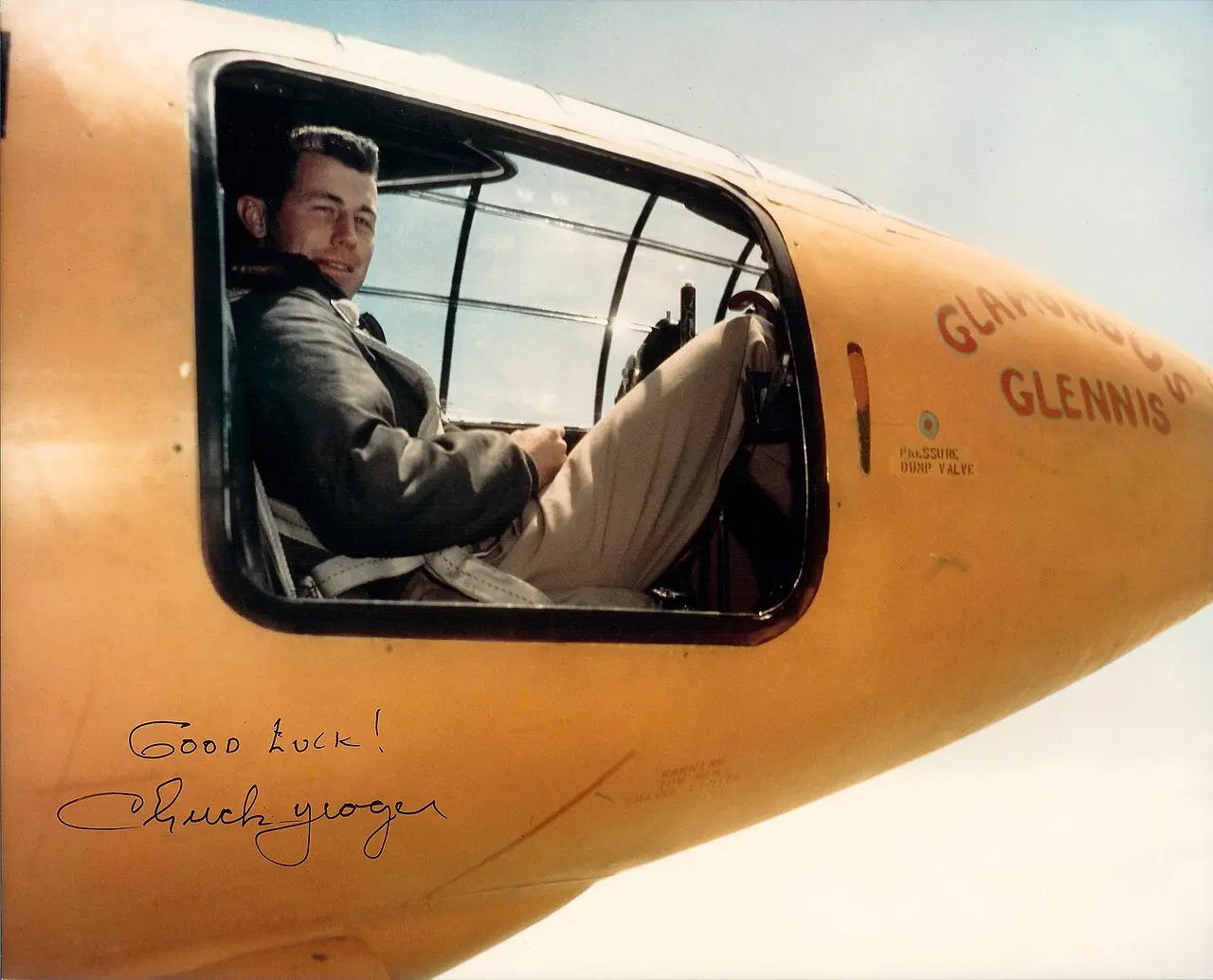
The airplane waiting for him was a bright-orange, bullet-shaped rocket called Glamorous Glennis, named for his wife. The Bell X-1 was built for one purpose: to answer the question no one could answer. Pilots called the speed of sound the "sound barrier," and many feared that an airplane approaching it would shake itself apart or become uncontrollable. Yeager had been inching toward that line on a series of test flights, and on the morning of October 14, 1947, he was ready to cross it.
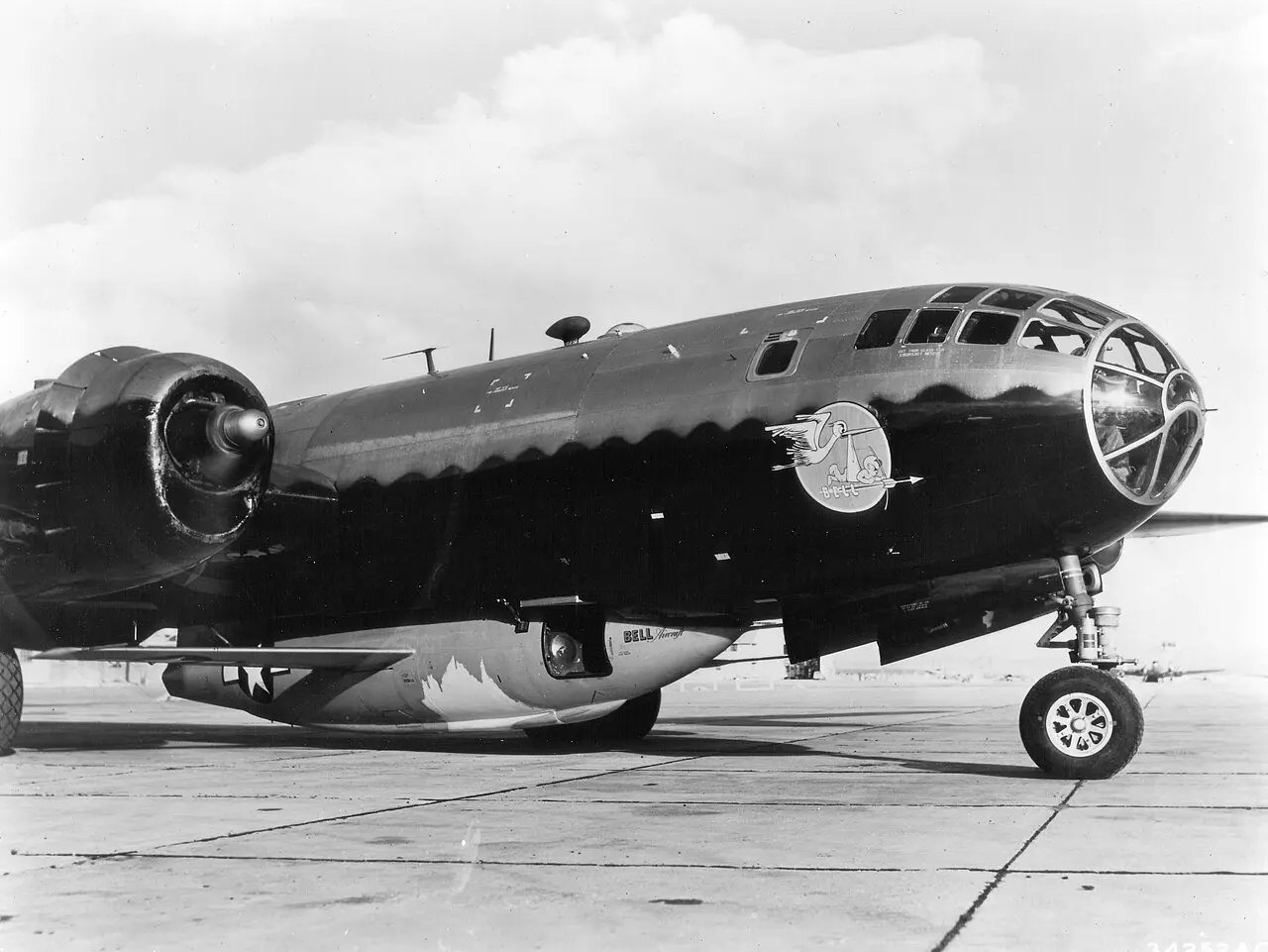
The X-1 couldn't take off on its own, so a lumbering B-29 bomber carried it up to 20,000 feet over Rogers Dry Lake in the Mojave Desert and dropped it from its bomb bay. Yeager fired the rocket engine, climbed to about 43,000 feet, and pushed the nose forward. Inside the cockpit, the Mach meter jumped from 0.965 to 1.06 — 700 miles per hour, faster than sound. On the ground, observers heard the thunder of a sonic boom roll across the desert.
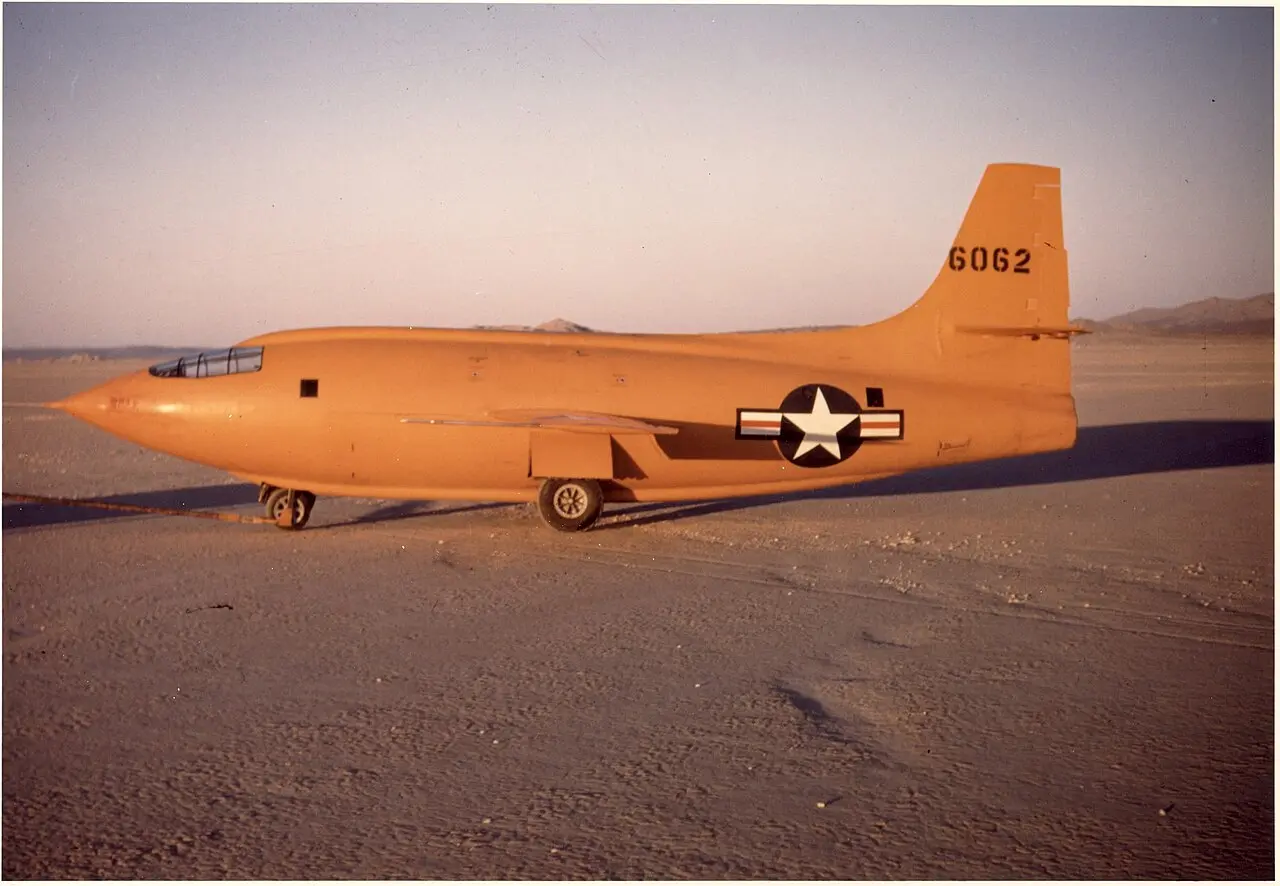
And then, remarkably, nothing happened. Pilots had expected a violent jolt, a "bump in the road" as Yeager later put it, some signal that they had punched through an invisible wall. Instead the transition was almost boring. "It was nice," he said afterward, "just like riding fast in a car." Fourteen minutes after leaving the B-29, he glided the powerless X-1 down to a smooth landing on the dry lakebed and climbed out with his two cracked ribs and his piece of broomstick.
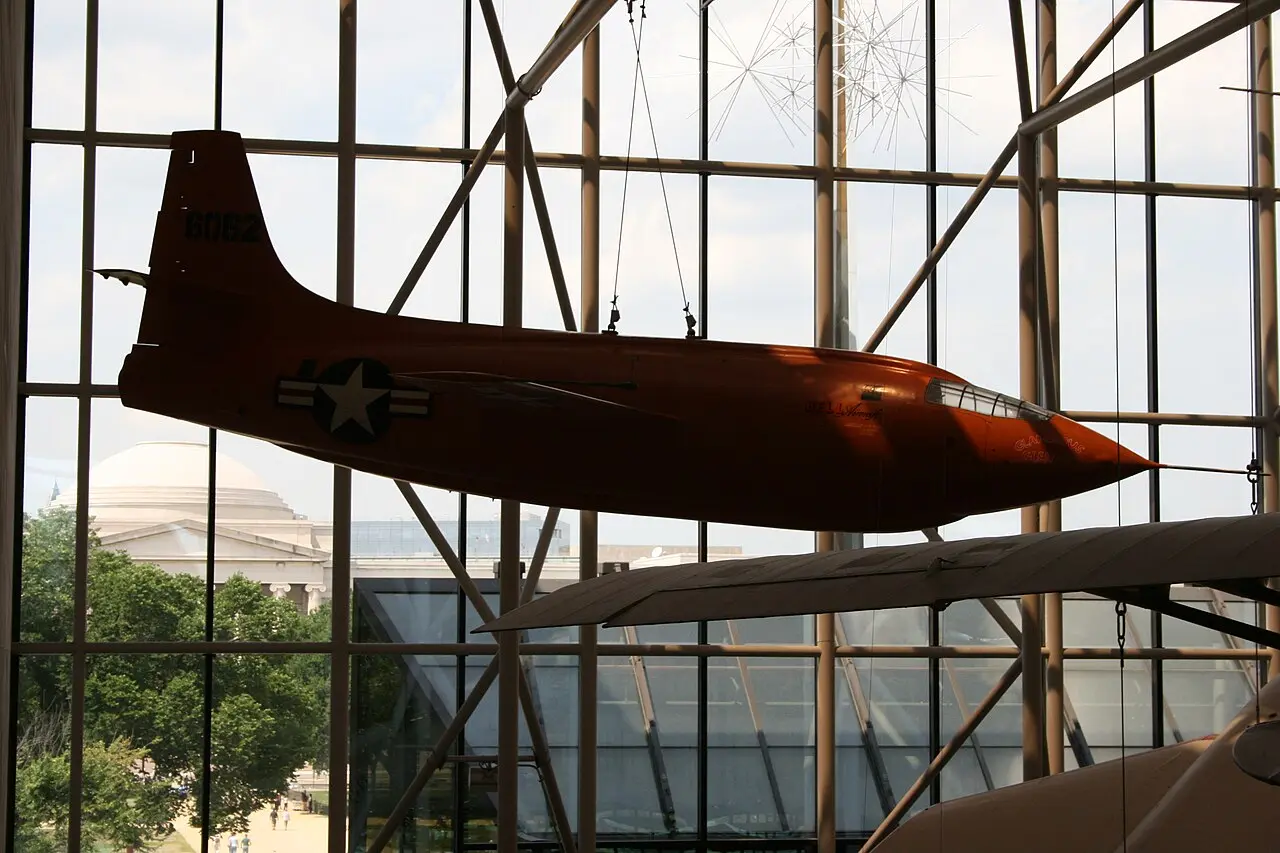
The triumph was kept top secret for nearly eight months, finally announced to the public on June 10, 1948. Yeager earned the Collier and Mackay trophies, and the little orange plane that broke the barrier was retired to the Smithsonian's National Air and Space Museum, where it hangs to this day.
Forty-four years of powered flight separated the Wright brothers' hop at Kitty Hawk from that October morning over the Mojave. Yeager proved the "barrier" was never a wall at all — just a gap in human knowledge. Every supersonic fighter, every lesson learned about high-speed flight, stands on the data gathered over that dry California lakebed. Sixty-five years later, on October 14, 2012, Yeager marked the anniversary the only way he knew how: at 89 years old, he climbed into the back seat of an F-15 and broke the sound barrier over the Mojave all over again. He died in 2020 at age 97, still the fastest legend in the sky.
Photo: U.S. Air Force photo, public domain (via Wikimedia Commons).
More images (via Wikimedia Commons): Chuck Yeager in the Glamorous Glennis cockpit (Jack Ridley, public domain); the Bell X-1 on the desert lakebed (Bell Aircraft Corp, CC0); the Bell X-1 at the National Air and Space Museum (Gary Todd, CC0).