The Penny That Invented the Post Office: Penny Black, 1840
On May 1, 1840, Britain's Penny Black went on sale — the world's first adhesive postage stamp, making mail affordable for ordinary people for the first time.
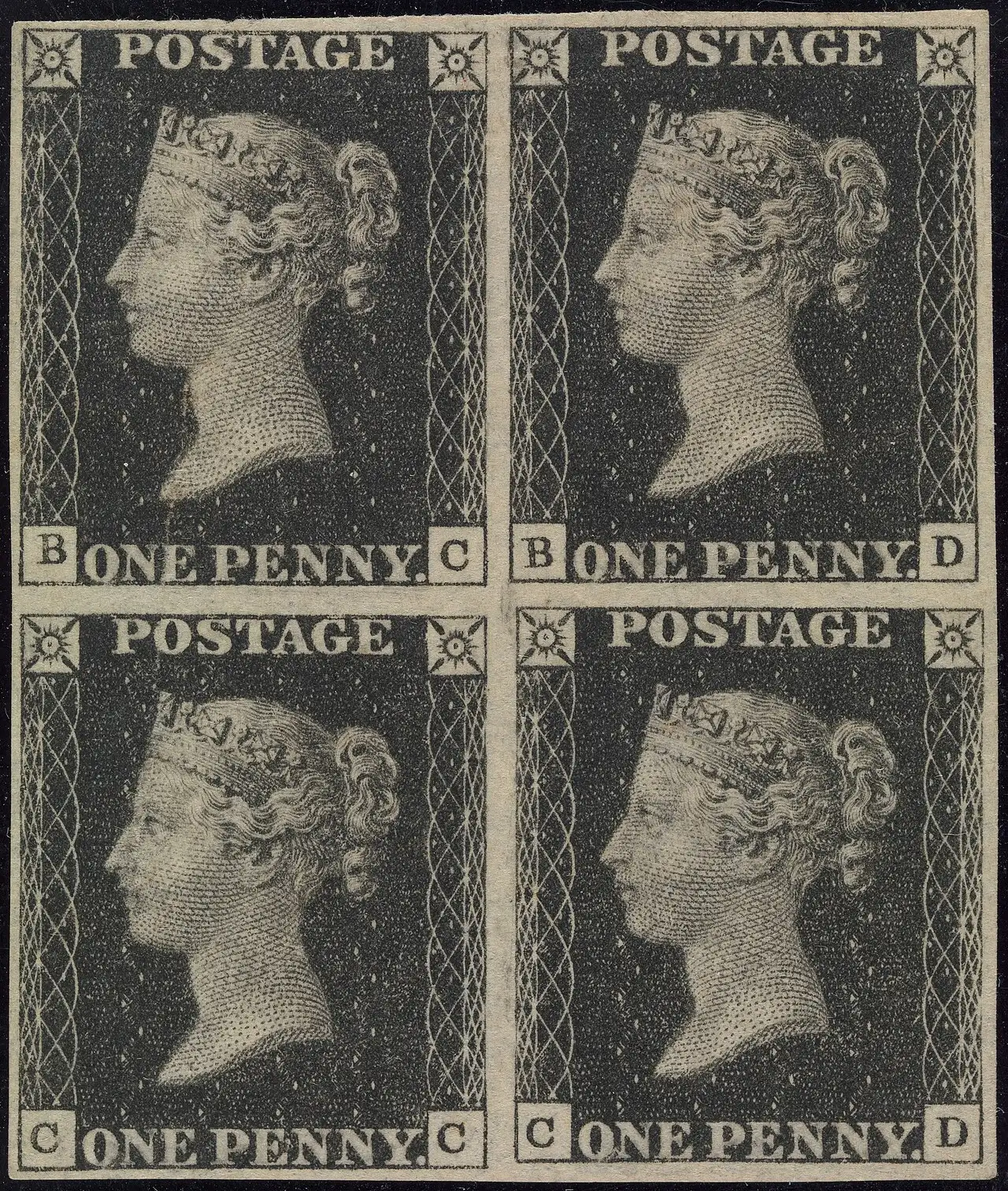
Before 1840, sending a letter in Britain was a luxury — and a gamble. Postage was charged by the sheet and by the distance it traveled, and it was the recipient, not the sender, who paid on delivery. A letter from London to Edinburgh could cost more than a laborer earned in a day, and many people simply refused to accept their mail. Even members of Parliament abused the system, using a "franking" privilege that let them — and the royal court — send letters for free.
A schoolteacher named Rowland Hill thought the whole arrangement was madness. In 1837 he published a pamphlet, Post Office Reform, arguing that postage should be cheap, simple, and paid in advance by the sender: a flat rate of one penny for a letter up to half an ounce, no matter how far it went. His idea of an adhesive stamp — a tiny receipt you licked and stuck to the envelope — seemed almost absurdly simple.
The government took the gamble. Hill was given a two-year contract to run the new system, and with Henry Cole he held a competition to design the stamp. Some 2,600 entries poured in — and not one was judged good enough. So they used Hill's own choice: the easily recognized profile of the former Princess Victoria, engraved by William Wyon, which Hill believed would be difficult to forge.
On May 1, 1840, the Penny Black went on sale — the world's first adhesive postage stamp used in a public postal system. It bore the words POSTAGE and ONE PENNY around the young queen's profile. The stamps were not officially valid until May 6, but some post offices could not wait: offices in Bath sold them unofficially, and one surviving envelope bears a postmark dated May 1 itself.
The effect was immediate and enormous. Suddenly anyone with a penny could send a letter anywhere in Britain. Letter-writing, once the privilege of the wealthy, became an everyday habit. More than 68 million Penny Blacks were printed in less than a year, and the idea raced around the world: within a few years, dozens of countries had issued their own stamps.
The Penny Black lasted only ten months. Its black ink made the red cancellation marks hard to see — and easy to wash off, so people could reuse the stamps. In February 1841 the Treasury switched to the Penny Red and began canceling stamps in black ink instead. Today, rare examples of the original are worth thousands of pounds.
Why it matters: that small black square quietly democratized communication. For the first time in history, an ordinary person could reach across a country for the price of a loaf of bread — the foundation of every postal system on Earth, and the beginning of stamp collecting, a hobby that still thrives today.
Photo: Engraving by William Wyon, public domain (via Wikimedia Commons). (Image shows a block of four Penny Black stamps held by the Metropolitan Museum of Art.)