
The Empty State Building: Empire State Building Opens, 1931
On May 1, 1931, the Empire State Building officially opened as the world's tallest building, lighting up Depression-era New York.
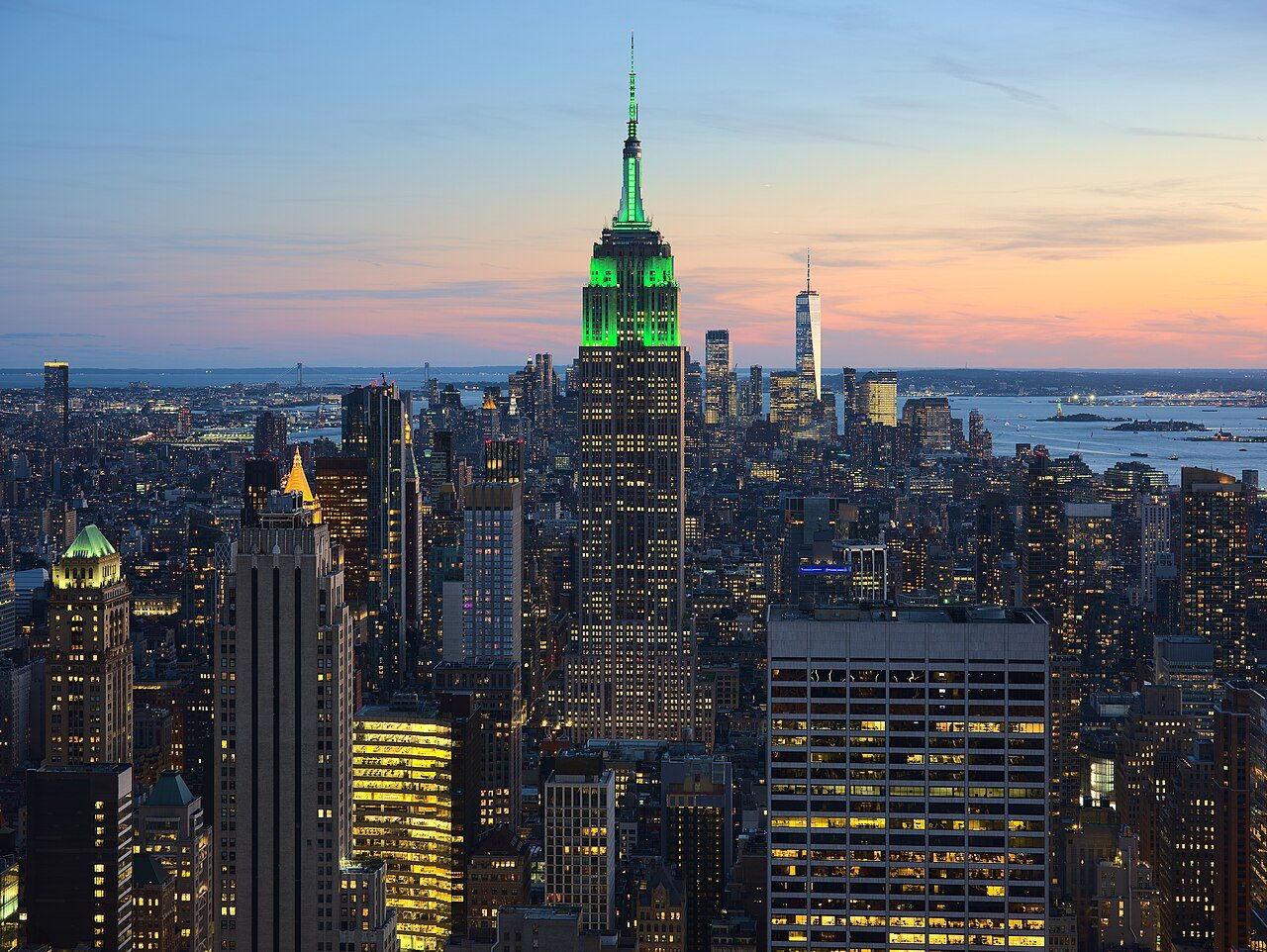
On a foggy morning in May 1931, the tallest building in the world opened its doors to a city that had almost nothing to celebrate. New York was deep in the Great Depression. Breadlines snaked through the streets. And yet, on May 1, a brand-new 102-story tower of steel and limestone rose over Fifth Avenue, gleaming through the mist — proof that people could still build something extraordinary.
The Empire State Building was born from a rivalry. John Jakob Raskob, a General Motors executive, wanted to outdo Walter Chrysler, whose Chrysler Building had just finished rising in midtown Manhattan. Raskob recruited former New York Governor Al Smith, hired the architecture firm Shreve, Lamb and Harmon, and sketched plans in Art Deco style said to be modeled on the shape of a pencil.
Then came the speed. The steel frame rose at a staggering rate of four and a half stories per week, and the entire building went up in just over a year — 45 days ahead of schedule. During certain periods, some 3,400 workers swarmed the site at once. They were called "sky boys," and they walked steel beams a quarter-mile above the street with barely any safety gear. New York magazine later wrote that "like little spiders they toiled, spinning a fabric of steel against the sky."
Opening day was pure ceremony. More than 350 guests gathered for a luncheon on the 86th floor — Governor Franklin D. Roosevelt (later to become president), Mayor Jimmy Walker, and Al Smith among them. From Washington, D.C., President Herbert Hoover pressed a ceremonial button to switch on the building's lights. His gesture was symbolic — someone in New York actually flipped the switches — but the message traveled across the country: the tower was lit.
At 1,250 feet to its roof (1,454 to the tip of its spire), it was the world's tallest building and the first to pass 100 floors. The American Society of Civil Engineers named it one of the seven greatest engineering achievements of the modern era. Yet the timing was cruel. The building opened so deep in the Depression that in 1931 only about 23 percent of its office space was leased. New Yorkers nicknamed it the "Empty State Building," and it would take nearly two decades to turn a profit.
But the tower endured. It stayed the world's tallest building until 1972, survived a 1945 plane crash into its 79th floor, and became the most famous skyline on Earth — from King Kong to the Christmas lights of today. On its 95th anniversary, it still defines New York.
Why it matters: the Empire State Building is a reminder that ambition doesn't have to wait for good times. Built in the darkest year of the Depression, it told a frightened country that the future was still worth reaching for — one rivet, one floor, one button-press at a time.
Photo: Dllu, CC BY-SA 4.0 (via Wikimedia Commons). (Modern photo of the tower, not from the 1931 opening.)