The Nine-Year-Old Boy Who Tested the First Rabies Vaccine
On July 6, 1885, Louis Pasteur gave a dying 9-year-old the first rabies vaccine ever tried on a human — and began the modern era of immunization.
On the morning of July 6, 1885, a desperate mother brought her son to a laboratory in Paris. Nine-year-old Joseph Meister, from Alsace, had been mauled by a rabid dog two days earlier — bitten fourteen times. In 1885, that was a death sentence. Once the symptoms of rabies appeared, no one survived.
Louis Pasteur had spent four years preparing for this moment without knowing it would come. Working with dried spinal cords from rabbits infected with rabies, he had built a vaccine that protected dogs — all fifty dogs he tested it on survived exposure that should have killed them. But he had never tried it on a person. And there was a problem beyond the science: Pasteur was a chemist, not a licensed physician. Injecting the boy could mean prosecution.
He consulted his colleagues, agonized, and decided. "The child's death appeared inevitable," he wrote. "I decided not without acute and harrowing anxiety, as may be imagined, to apply to Joseph Meister the method which I had found consistently successful with dogs."
Because Pasteur could not legally give the injections himself, he entrusted the boy to Dr. Jacques-Joseph Grancher. Over ten days, Meister received thirteen injections — each made from spinal cord dried for a shorter time, each carrying a stronger dose of the weakened virus. It was a controlled race: build the boy's immunity faster than the disease could take hold.
Meister never developed rabies. He became the first human being ever vaccinated against the disease.
Pasteur, cautious to a fault, kept the success quiet. Then, that September, a second chance arrived with a better story: Jean-Baptiste Jupille, a fifteen-year-old shepherd, had thrown himself at a rabid dog to let six younger boys escape — and been badly bitten for his courage. Pasteur treated him the same way, with the same result. This time, he told the world.
The news electrified the globe. In 1886 alone, Pasteur treated 350 people exposed to rabies; all but one survived. By 1890, treatment centers using his method had opened from Budapest to Chicago to Shanghai. In 1888, the Institut Pasteur opened its doors.
It matters because July 6, 1885 is the birthday of modern immunization. Pasteur's gamble on a dying child proved that vaccines could do more than prevent smallpox — they could chase down a killer already inside the body. Every rabies shot given in an emergency room today, and the entire science of vaccines that followed, descends from those thirteen injections.
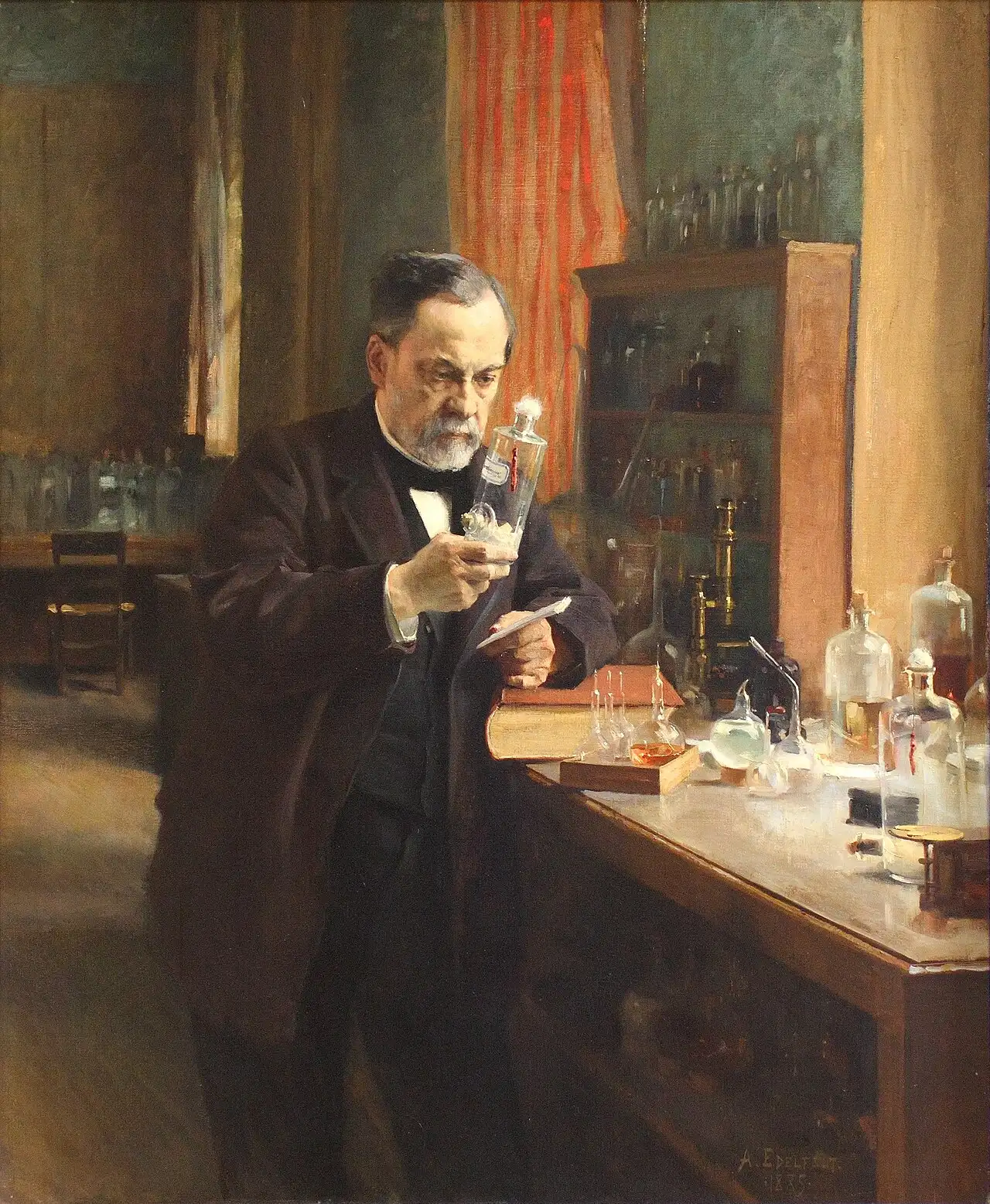
Portrait: Louis Pasteur in his Paris laboratory, painted by Albert Edelfelt in 1885 — the very year of the breakthrough. The painting is in the public domain (the artist died in 1905); image via Wikimedia Commons.