The Harlem Street Rebel Who Conquered Wimbledon
On July 6, 1957, Althea Gibson beat Darlene Hard 6–3, 6–2 to become the first Black champion in Wimbledon's 80-year history.
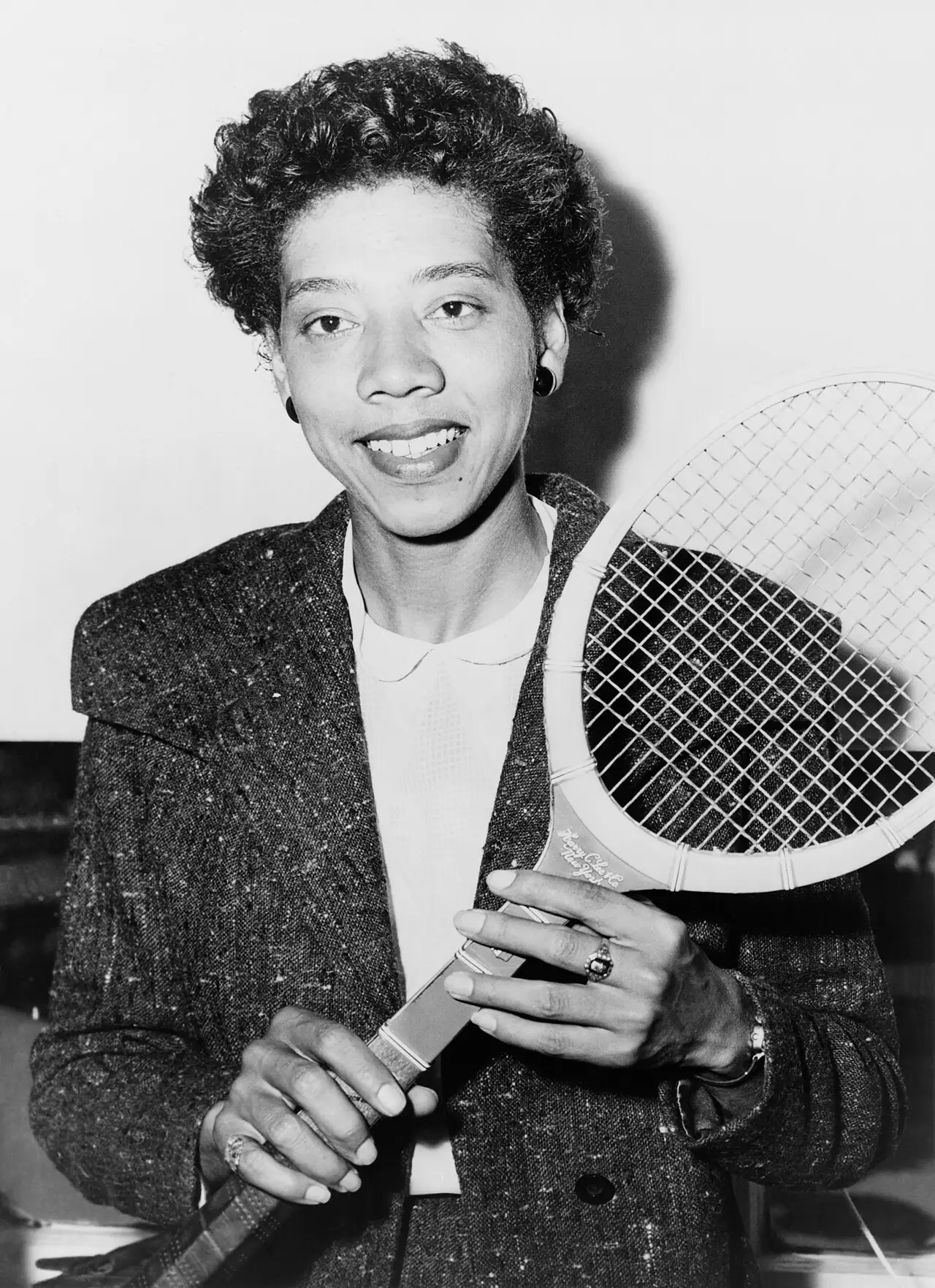
Centre Court, Wimbledon, July 6, 1957. Althea Gibson — thirty years old, six feet of coiled power — needed less than an hour to dismantle Darlene Hard, 6–3, 6–2. When the last ball landed, she had done what no Black athlete had done in the tournament's eighty years: won Wimbledon.
Then came the moment that made the photographs. Queen Elizabeth II herself presented Gibson with the champion's trophy — and that evening, at the Wimbledon Ball, the new champion danced with men's winner Lew Hoad and the Duke of Devonshire, then sang with the band. "It had been," she wrote in her memoir, "a wonderful evening and a wonderful day."
The road to that evening had started on the cracked pavements of Harlem, where Gibson — born to sharecropper parents in Silver, South Carolina, in 1927 — learned paddle tennis as a street game. Tennis in America was a segregated fortress: the United States Lawn Tennis Association simply didn't admit Black players or let them into its tournaments. Gibson came up through the parallel Black circuit, the American Tennis Association, winning ten straight national titles there.
The fortress cracked in 1950, when four-time U.S. champion Alice Marble published a blistering editorial calling the tennis establishment sanctimonious hypocrites for shutting Gibson out. Invited to the U.S. Nationals that year, Gibson became the first Black player in the event. In 1951, she broke the same barrier at Wimbledon. In 1956, she won the French Championships — the first Grand Slam singles title for a Black player, male or female.
1957 was the coronation: Wimbledon, then the U.S. Nationals in September, the world No. 1 ranking, and the Associated Press Female Athlete of the Year award — which she won again in 1958. Eleven Grand Slam titles in all.
And then the cruel footnote of the amateur era: there was no prize money. Gibson retired in 1958, essentially broke despite being the best in the world. She reinvented herself as a professional golfer — the first Black woman on the LPGA tour — and later served as New Jersey's commissioner of athletics. She died in 2003, her greatness oddly under-remembered for decades.
It matters because Gibson walked through a wall so others could run through the opening. Arthur Ashe's Wimbledon title in 1975, the Williams sisters' dominance, every Black kid who picks up a racquet today — all of it traces back to the Harlem street rebel who, on a July afternoon in London, proved that excellence doesn't ask permission.
Photo: Althea Gibson in 1956, the year before her Wimbledon triumph, photographed by Fred Palumbo for the New York World-Telegram and the Sun. Public domain (U.S. Library of Congress collection) via Wikimedia Commons; digital restoration by Adam Cuerden.