The Night the F-14s Snatched the Achille Lauro Hijackers
On October 10, 1985, U.S. Navy F-14s intercepted an EgyptAir jet over the Mediterranean and forced it to land in Sicily, capturing the hijackers of the cruise ship Achille Lauro.
On the evening of October 10, 1985, an EgyptAir Boeing 737 climbed out of Cairo carrying four men who believed they were flying to freedom. By midnight, they were surrounded by warplanes — and two of America's closest allies were pointing guns at each other.
The four men were Palestinian militants of the Palestine Liberation Front. Three days earlier, on October 7, they had seized the Italian cruise ship Achille Lauro in the Mediterranean off Egypt, taking the crew and passengers hostage — including a group of Americans — and demanding the release of 50 Palestinians imprisoned in Israel. When Syria refused to let the ship dock at Tartus, the hijackers murdered a hostage: Leon Klinghoffer, a 69-year-old Jewish-American who used a wheelchair. His body was thrown overboard. The killing, condemned worldwide, turned a hostage crisis into something darker.
On October 9 the hijackers surrendered the ship at Port Said in exchange for a guarantee of safe passage. Egypt put them, along with the operation's alleged mastermind Mohammed Abbas and several mediators, on the EgyptAir flight bound for Tunisia. The crisis, it seemed, was over.
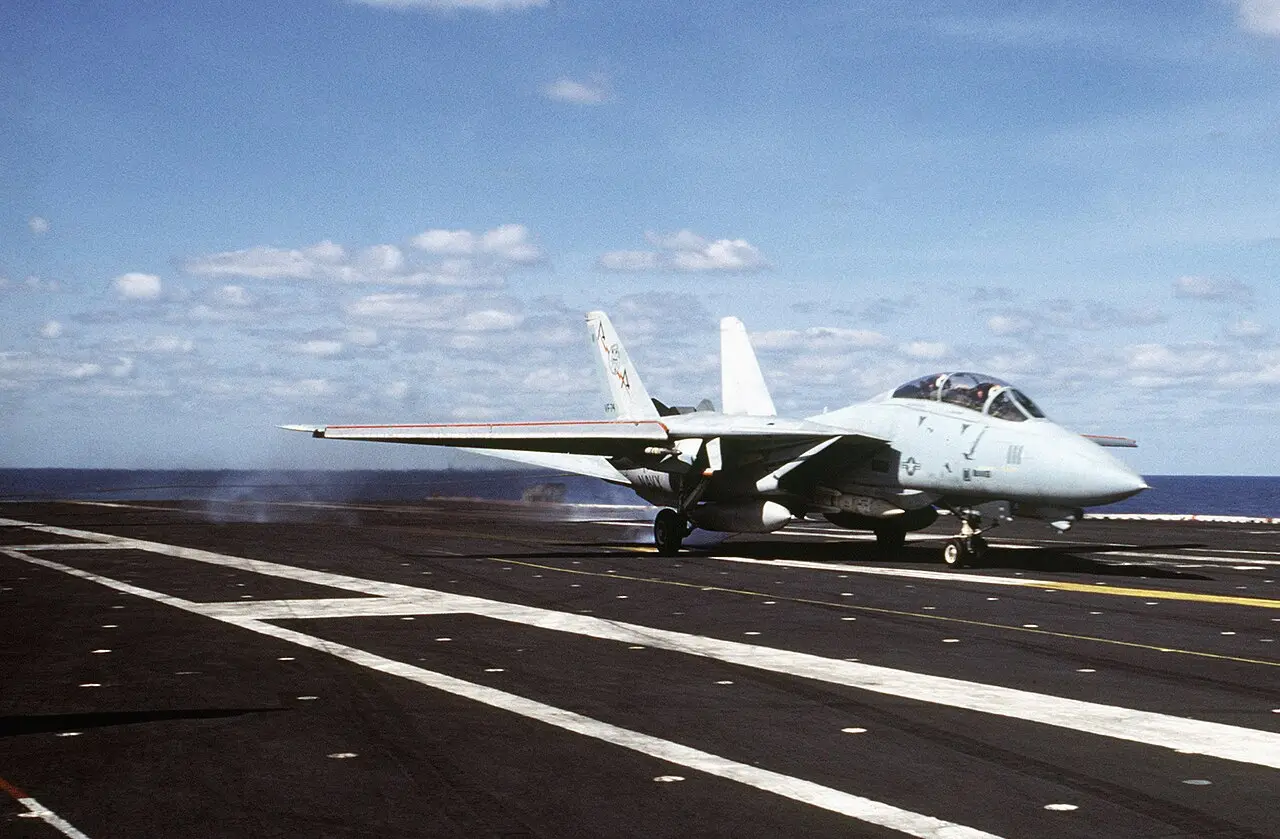
Washington disagreed. President Ronald Reagan ordered the U.S. Navy to intercept the airliner, and that afternoon F-14 Tomcat fighters launched from the aircraft carrier USS Saratoga, cruising the Mediterranean. That evening the Tomcats found the 737 about 80 miles south of Crete. When the pilot was denied landing at Tunis and then at Athens, the F-14s switched on their lights, closed in on the airliner, and ordered it to divert. The Egyptian pilot, realizing he was ringed by fighter jets, complied. At 6:45 p.m., the 737 touched down at the NATO air base at Sigonella, Sicily.
What happened next nearly became an international incident of its own. American special forces surrounded the aircraft — only to be surrounded in turn by Italian troops. The crimes had been committed on an Italian ship on what Rome considered Italian jurisdiction, and Italy's government, led by Prime Minister Bettino Craxi, refused to hand the men to Washington. For hours, armed soldiers of two allied nations stood facing each other in the dark. By the early hours of October 11, the Americans withdrew; the hijackers went into Italian custody.
The hijackers were later tried in Italy and convicted. Abbas, the alleged mastermind, was allowed to leave — a decision that infuriated Washington. The interception itself, meanwhile, became one of the most dramatic counterterrorism operations of the Cold War: a civilian airliner plucked out of the sky by naval fighters, planned and executed in a single day.
The night of October 10, 1985, matters because it drew a line. It showed that hijackers could be pursued anywhere — across international airspace, over the open sea — and it forced governments to decide, in real time, how far they would go to bring terrorists to justice. The standoff at Sigonella proved something else too: even between allies, justice has borders, and the hardest fights are sometimes the ones about who gets to deliver it.
Photo: U.S. Navy F-14A Tomcat of fighter squadron VF-74 — one of the squadrons that flew the interception — landing aboard USS Saratoga in the Mediterranean in 1985, public domain (via Wikimedia Commons).