Chicago Burns: The Great Fire That Ended on October 10, 1871
The Great Chicago Fire burned October 8 to October 10, 1871, killing an estimated 300 people and leaving 100,000 homeless — and the city rebuilt itself into a modern metropolis.
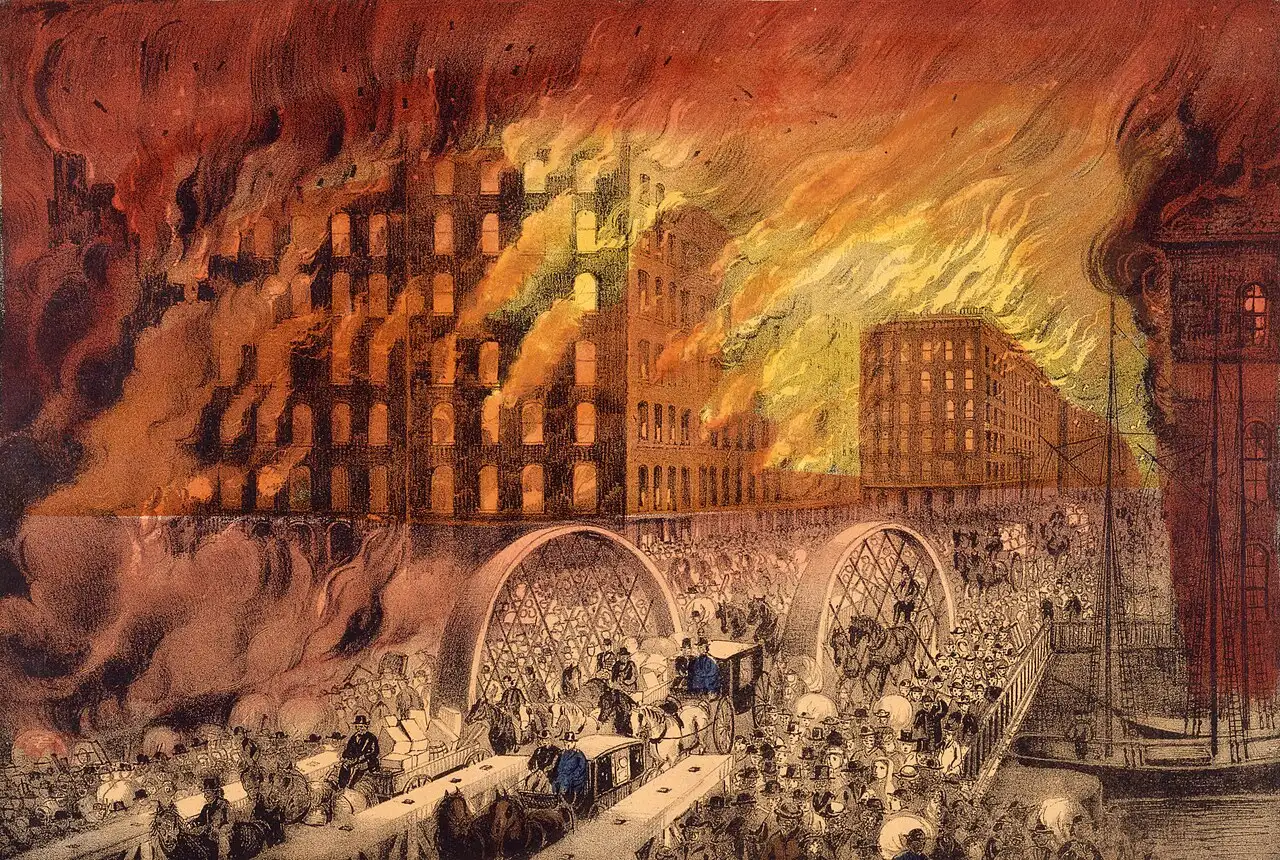
By the morning of Tuesday, October 10, 1871, Chicago had nearly finished burning. What remained was smoke, rubble, and one of the most stubborn legends in American history — a legend about a cow.
The fire had begun two nights earlier, on Sunday, October 8, at around nine o'clock, in a barn on DeKoven Street on the city's southwest side. For decades the official story blamed Catherine O'Leary and her cow: the tale went that the cow kicked over a lantern while being milked, setting the straw alight. It made for a perfect villain — an Irish immigrant woman, an easy scapegoat. But the story was a fabrication: the reporter who first printed it later admitted he had made it up, and Chicago's newspapers formally retracted it more than a century later. The true cause of the fire remains unknown.
What is known is why it spread. Chicago in 1871 was a tinderbox: a summer of drought had parched the city, most of its buildings were wood, its sidewalks were wood, even many of its streets were paved with wooden blocks. A fierce southwest wind carried embers across the Chicago River, and the fire jumped from the South Side into the downtown business district, then across the river's main stem into the North Side. Firefighters, exhausted from battling a blaze the night before, could not stop it. For two days the flames consumed roughly 3.3 square miles of the city.
The final accounting was staggering. An estimated 300 people died. More than 17,000 buildings were destroyed. Of Chicago's 300,000 residents, about 100,000 — one in three — were left homeless, camping in parks and along the lakefront as winter approached. The business district was a plain of smoking ruins.
Then came the response, and it was as remarkable as the disaster. Aid poured in from across the country and around the world. A donation from the people of the United Kingdom helped fund the establishment of the Chicago Public Library. The city rewrote its building codes to outlaw the wooden construction that had doomed it, and within years it was rising again — taller, fireproofed, and bolder. The architects and engineers who rebuilt Chicago helped invent the modern skyscraper, and the city's recovery became a template for how American cities could reinvent themselves after catastrophe.
The fire even left a legacy in safety culture: the anniversary is still marked every October by Fire Prevention Week, a reminder born from those two days of flame.
It is worth noting, too, that Chicago's fire was not the deadliest blaze of that terrible week. On the very same night of October 8, a firestorm swept through Peshtigo, Wisconsin, killing as many as 2,500 people — the deadliest wildfire in American history. It is remembered far less, overshadowed by its famous urban cousin.
The Great Chicago Fire matters because of what came after the ashes. A city that lost a third of itself in two days did not shrink or retreat — it rebuilt itself into one of the great metropolises of the world. The cow story was fiction. The comeback was real.
Photo: Currier & Ives, "Chicago in Flames" (1871), public domain (via Wikimedia Commons).