The Day the Vice President Resigned in Disgrace: Spiro Agnew, 1973
On October 10, 1973, Vice President Spiro Agnew pleaded no contest to tax evasion and resigned — the only U.S. vice president to quit under criminal investigation.
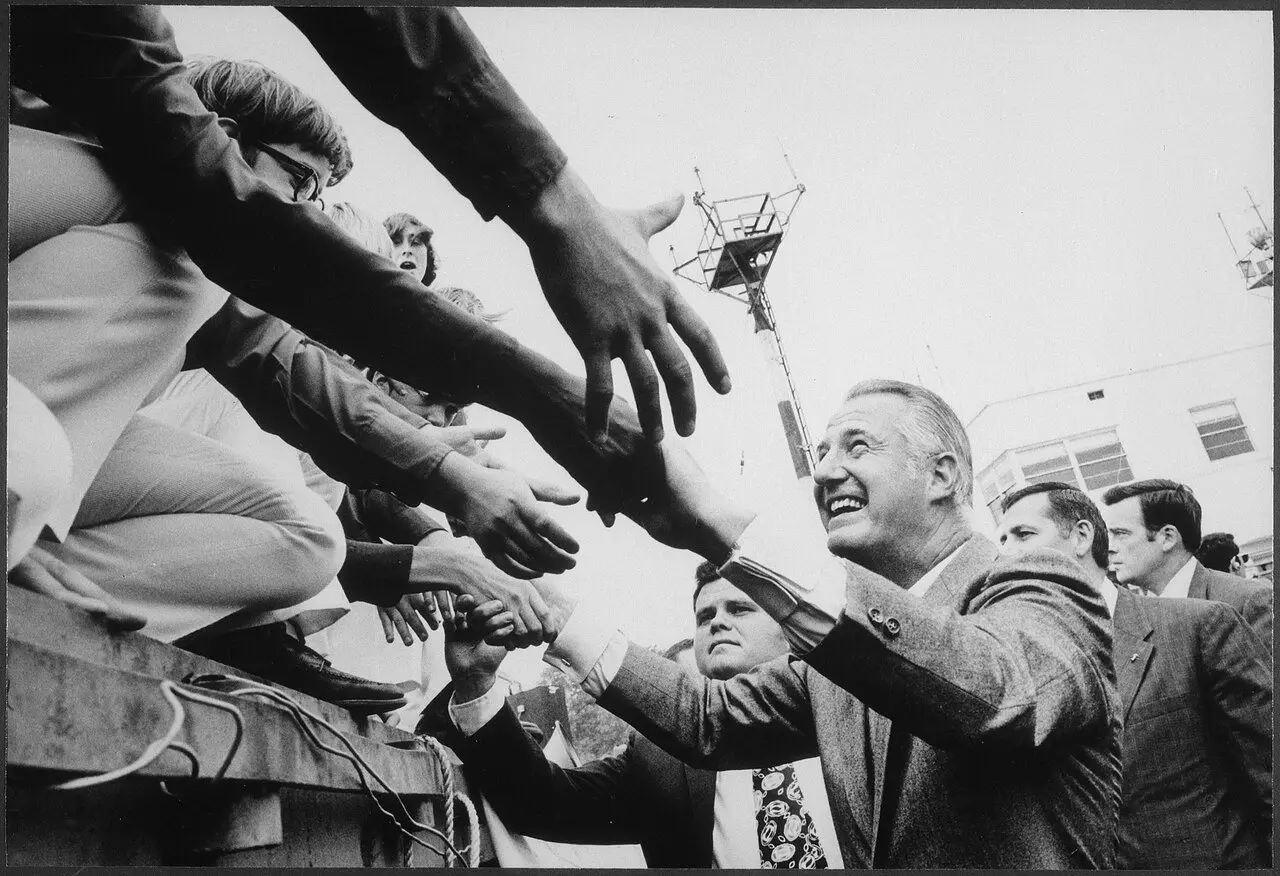
On the morning of October 10, 1973, the vice president of the United States walked into a federal courtroom in Baltimore and pleaded no contest to a criminal charge. By that afternoon, he was out of a job — and American history had a scandal to remember.
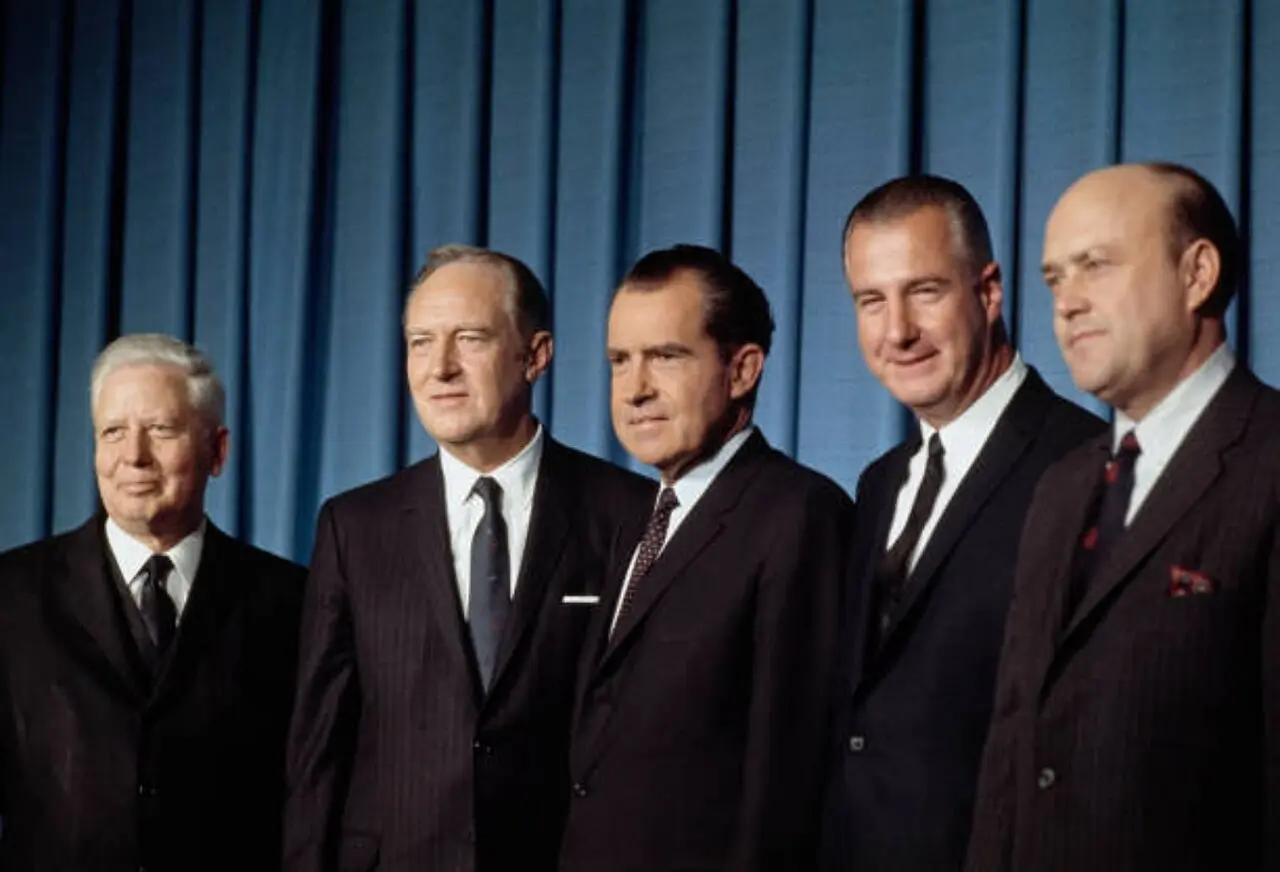
Spiro Agnew had been Richard Nixon's running mate in 1968, chosen to balance the ticket and re-elected in a landslide in 1972. A former Baltimore County executive and governor of Maryland, he became the fiery voice of what he called the "silent majority" — railing against the press and Vietnam War protesters with phrases like "nattering nabobs of negativism" that made him a hero to conservatives.
But while Agnew was denouncing corruption in others, the U.S. Department of Justice was building a case against him. Investigators uncovered extensive evidence that he had accepted more than $100,000 in bribes — payoffs connected to Maryland state contracts during his years as governor, with allegations that the kickbacks continued even after he became vice president. For a sitting vice president to face criminal charges was unheard of; Agnew fought the case for months, insisting he was innocent.
On October 10, the fight ended with a deal. In exchange for the government dropping the corruption charges, Agnew pleaded no contest to a single charge of federal income tax evasion — for failing to report income from 1967 — and resigned the vice presidency in the same day. He was fined $10,000 and sentenced to three years of probation. Maryland later disbarred him, and in 1983 he finally wrote the state a check for $268,482 — the amount courts said he had taken in bribes.
Agnew was only the second vice president ever to resign, after John C. Calhoun left in 1832 to take a Senate seat — and the first to resign while under criminal investigation. His departure triggered something the country had never used before: Section 2 of the 25th Amendment, which let President Nixon nominate House Minority Leader Gerald Ford to fill the vacancy. Ford was confirmed by Congress, becoming vice president.
Then came the twist that makes this story one of history's great what-ifs. Less than a year later, on August 9, 1974, Nixon himself resigned over Watergate, and Gerald Ford became president. Had Agnew stayed in office and weathered the investigation, it would have been Spiro Agnew — not Gerald Ford — taking the oath as the 38th president of the United States.
Agnew's fall still matters because it proved a principle under maximum pressure: no office is too high for the law to reach. A sitting vice president was investigated, charged, and forced from power — and the constitutional machinery handled the succession without a crisis. Ten months later, that same machinery would be tested again, with a president.
Photo: U.S. National Archives and Records Administration (NARA), public domain (via Wikimedia Commons).
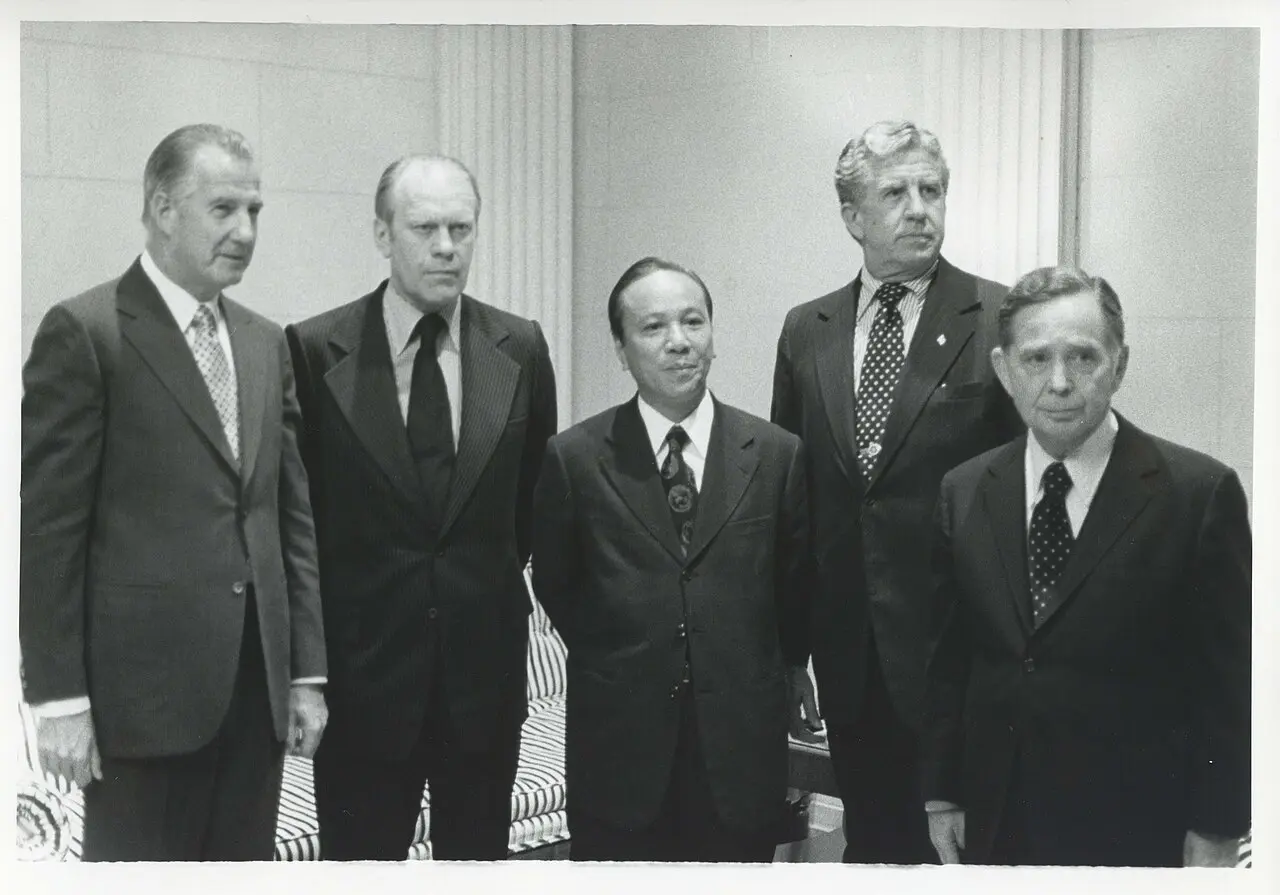
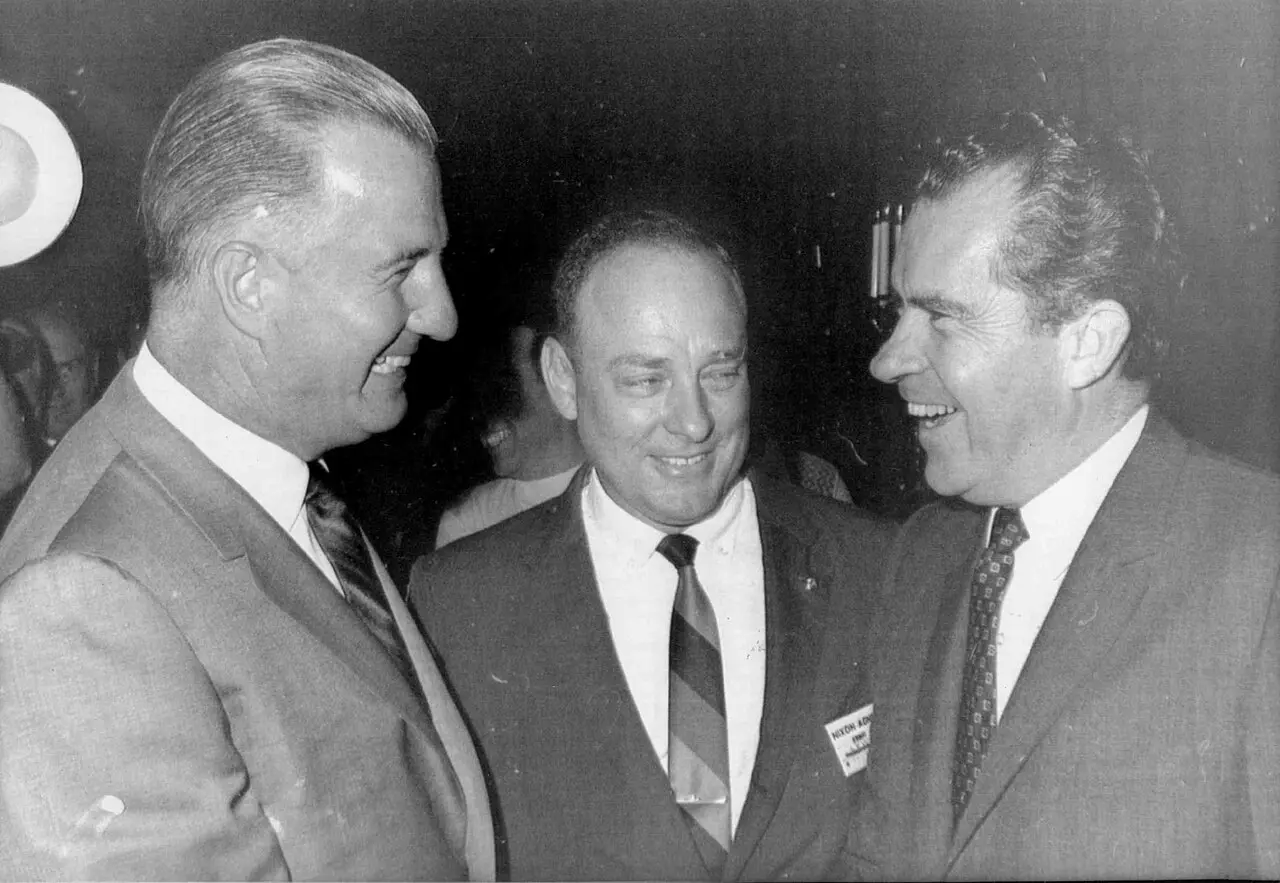
More images (via Wikimedia Commons): Spiro Agnew, Gerald Ford, President Thieu of Vietnam and Carl Albert, April 5, 1973 (Carl Albert Research and Studies Center, CC BY-SA 4.0); President-elect Nixon and Vice President-elect Agnew with advisers (UPI/Bettmann Archive, public domain); Richard Nixon and Spiro Agnew (Cactus4533, CC BY 3.0).