The Dog, the Hole, and 17,000 Years of Art
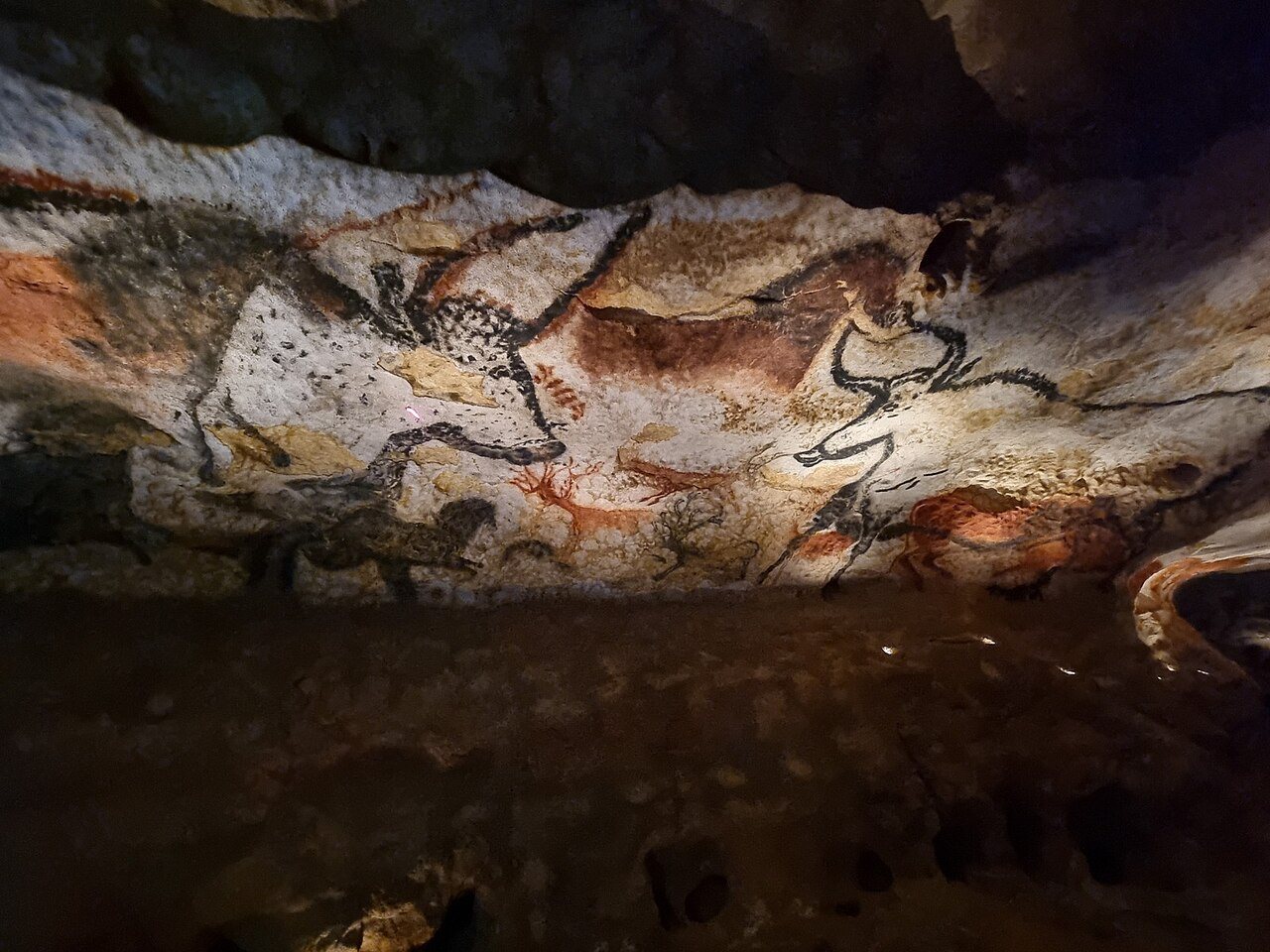
On September 12, 1940, four French teenagers climbed down into a hidden cave near Montignac and found its walls covered with Ice Age paintings — Lascaux.
Some of the greatest discoveries in history were not made by explorers with funding and fanfare. They were made by teenagers with a dog and a free afternoon.
It was September 1940, and France was in the middle of World War II. In the village of Montignac, in the rolling hills of southwestern France, 18-year-old Marcel Ravidat was out walking with his dog, Robot. The dog started nosing around a hole left by an uprooted tree — and Marcel realized the hole went down much farther than it should have.
He could not explore it alone, so he marked the spot and came back on September 12 with three friends: Jacques Marsal, Georges Agnel, and Simon Coencas. They widened the opening and lowered themselves down a shaft some 50 feet deep, landing in a long gallery. By the flickering light of a makeshift lamp, they walked forward — and stopped dead. The walls were covered with animals.
Bulls and horses, deer and ibex, painted in red, black, and yellow — some of them 17 feet long, all seeming to move in the lamplight. The boys had stumbled into a cave sealed off from the world for thousands of years, and its walls held one of the most extraordinary galleries of prehistoric art ever found.
They told their teacher, Léon Laval, who recognized the paintings as genuinely prehistoric. He alerted Abbé Henri Breuil, one of France's leading prehistorians, who arrived on September 21 and confirmed it: this was the real thing. The cave was named Lascaux, after the manor on whose land it lay.
Researchers would later count roughly 2,000 individual paintings and some 6,000 figures across the cave's chambers — the Great Hall of the Bulls, the Painted Gallery, the Shaft, the Chamber of Felines. The artists belonged to the Magdalenian culture and worked around 17,000 years ago, grinding ochre, charcoal, and manganese into pigments, building scaffolding to reach the ceilings, and painting by torchlight deep underground.
Lascaux opened to the public in 1948, and the crowds came — up to 1,200 visitors a day at the peak. But all those breathing, sweating bodies changed the cave's air, and the paintings began to deteriorate. In 1963 the original cave was closed to protect the art, and today visitors explore meticulous replicas nearby. In 1979, Lascaux joined the UNESCO World Heritage list.
Why does it matter? Before Lascaux, it was easy to picture our Ice Age ancestors as brutish survivors with no inner life. Lascaux proved otherwise. Thousands of years before the first city, before writing, before farming, human beings were already artists — observing animals with a naturalist's eye and painting them with breathtaking skill. And we know it only because four boys followed a dog to a hole in a hillside.
Photo: arzu çakır, public domain (via Wikimedia Commons).