
The Day the Revolution Beheaded a King
On January 21, 1793, Louis XVI was guillotined at the Place de la Révolution, ending a thousand years of unbroken French monarchy.
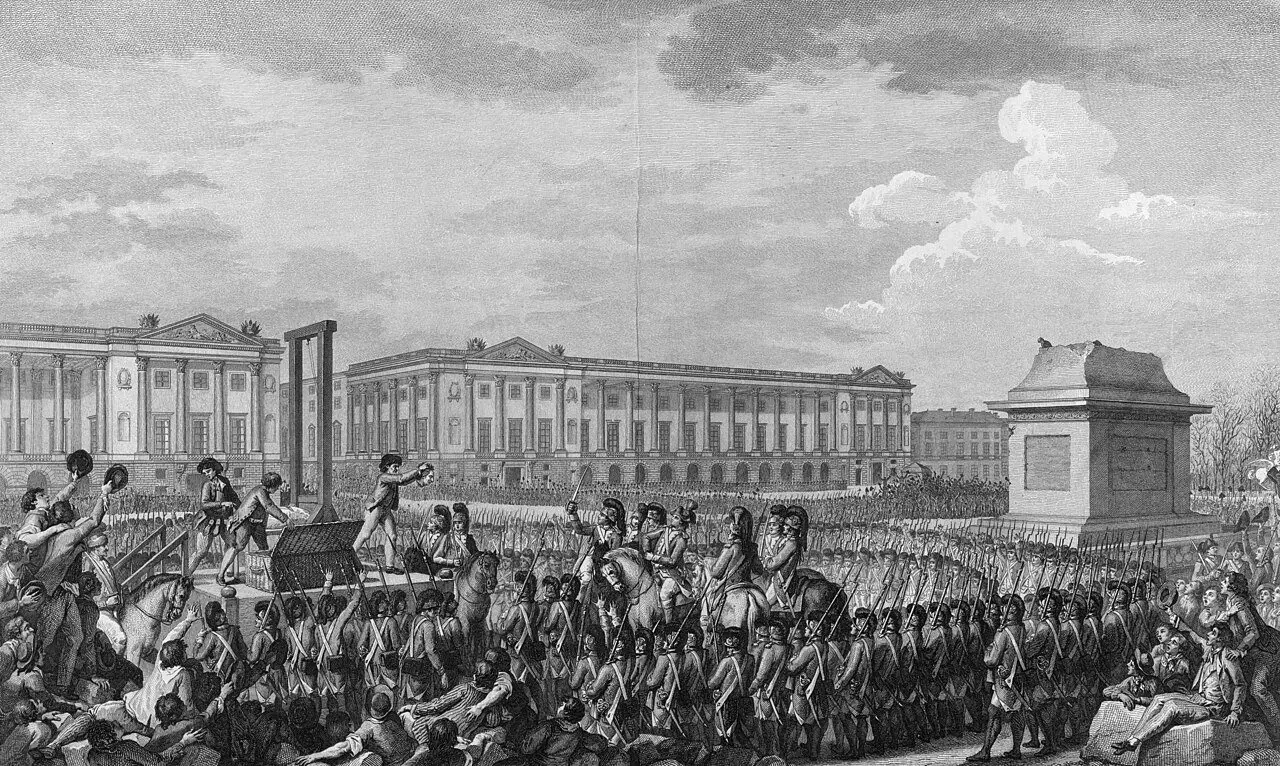
On a freezing January morning in 1793, Paris witnessed something no one alive had ever seen: a king, brought in a closed carriage through streets packed with soldiers, climbing the steps of a scaffold in the city's grandest square.
Louis XVI, 38 years old and king of France for nearly two decades, had not started out as a tyrant. A shy locksmith-inclined teenager when he inherited the throne in 1774, he meant well but ruled weakly as France's debts ballooned and bread prices soared. In desperation, he summoned the States-General in 1789, an assembly of nobles, clergy, and commoners that had not met in 175 years. The commoners seized the moment, declared themselves a National Assembly, and the French Revolution was born.
From there the monarchy unraveled fast. Louis and his wife Marie Antoinette tried to flee the country in 1791 and were caught at Varennes. In 1792 the monarchy was abolished and the royal family imprisoned. Then, in November, a hidden cabinet of the king's secret correspondence was discovered, proof that Louis had been scheming with foreign powers against the Revolution. He was put on trial for treason before the National Convention.
The Convention convicted him nearly unanimously. The death sentence, however, passed by the narrowest of margins, after days of anguished debate in which some deputies begged for imprisonment or exile instead. On the morning of January 21, after a coach ride of roughly 90 minutes through a Paris bristling with troops, Louis reached the Place de la Révolution.
The machine waiting for him was the guillotine, adopted the previous spring as France's official method of execution. It had been designed to deliver an equal death to rich and poor alike, no more lingering agony with the axe or the noose. History notes the bitter irony: the man who pulled the cord, Charles-Henri Sanson, had been the king's own royal executioner before the Revolution.
Louis spoke briefly to the crowd before he was silenced, then knelt at the machine. It was over in a moment. An aide lifted the severed head, and the huge crowd, so the reports say, roared. Nine months later, Marie Antoinette followed him to the same scaffold.
Why does it matter? The execution of Louis XVI ended more than a thousand years of unbroken monarchy in France and announced to the world that the Revolution could not be turned back. It shocked every royal court in Europe and, inside France, opened the door to the darkest phase of the Revolution, the Terror, when the guillotine would claim thousands more, including many of the men who had voted for the king's death.
The square where it happened still stands. Renamed the Place de la Concorde, it is today one of the most beautiful public spaces in Paris, watched over by an ancient Egyptian obelisk, a far gentler monument than the scaffold that once stood there.
Photo: Isidore Stanislas Helman after Charles Monnet, public domain (via Wikimedia Commons).