
The Day Britain First Saw an Invisible Airplane
On February 26, 1935, Robert Watson-Watt's secret Daventry Experiment proved that radio waves could detect an aircraft miles away — the birth of radar.
In the winter of 1935, Britain faced a frightening question: what if enemy bombers came in the night, and no one could see them coming? The Air Ministry had asked the country's best radio scientist about something straight out of science fiction — a "death ray" that could knock airplanes from the sky.
Robert Watson-Watt had a polite but firm answer: death rays were a fantasy. But he added a tantalizing alternative. What if you couldn't destroy an aircraft with radio waves — but you could find it with them? Metal reflects radio waves, he reasoned. Point a powerful beam at the sky, listen for the echo bouncing off a passing plane, and you would know an attack was coming long before anyone heard an engine.
The Air Ministry's air defense committee, led by Henry Tizard, was intrigued. Watson-Watt laid out the mathematics in a secret memo dated February 12, 1935, and the committee told him: prove it.
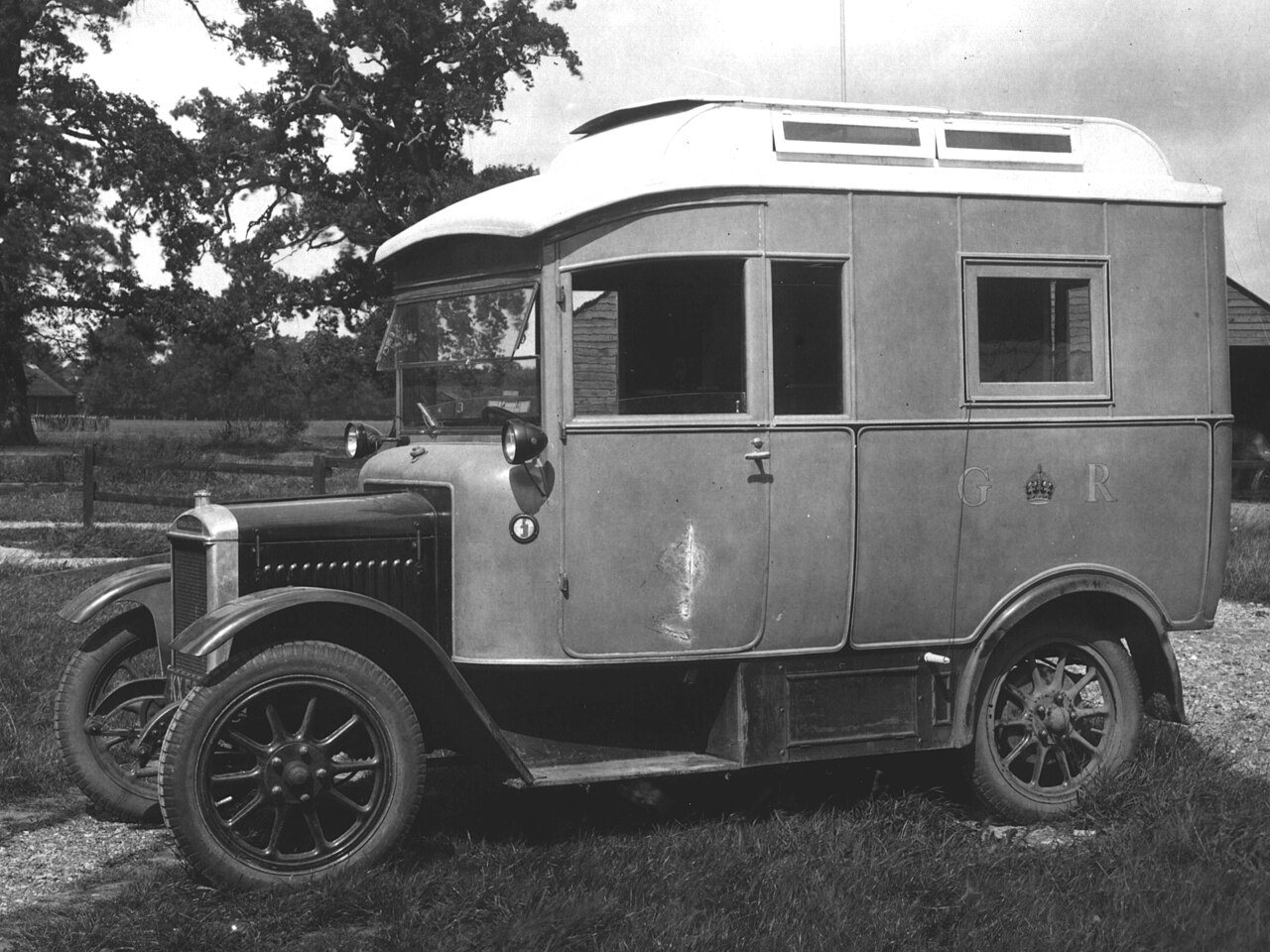
Two weeks later, in a muddy field near Daventry in Northamptonshire, the proof arrived. Watson-Watt and his assistant Arnold Wilkins parked their equipment in a van and pointed it toward the BBC's short-wave transmitter in nearby Daventry, which was broadcasting as usual on a 49-meter wavelength. Overhead, a Handley Page Heyford bomber lumbered back and forth at 5,000 feet.
Watson-Watt watched a flickering line on a cathode-ray tube. Every time the bomber crossed the beam, the trace jumped — the radio echo from the plane, reflected back and picked up at a distance of some eight miles. The detection was unmistakable. It was so secret that only three people witnessed it: Watson-Watt, Wilkins, and a single committee observer, A. P. Rowe. The experiment would become known as the Daventry Experiment.
The Air Ministry was convinced. Watson-Watt was put in charge of developing a radar defense network, and his patent followed that April. By 1939, a chain of radar stations guarded Britain's coasts. A year later, during the Battle of Britain, those stations gave the outnumbered Royal Air Force the warning it needed to meet the Luftwaffe in the skies — and hold it off.
Watson-Watt, a Scotsman born in Brechin in 1892, was knighted in 1942 for the work that arguably saved his country. The van whose radio receivers caught those first echoes still exists, preserved in the Science Museum in London — a reminder that the day Britain first "saw" an invisible airplane began in an ordinary field, with a borrowed BBC signal and a flickering green line.
Photo: Arnold Wilkins, public domain (via Wikimedia Commons).