The Ballet That Flopped: Swan Lake's Rough First Night
On March 4, 1877, Tchaikovsky's Swan Lake premiered in Moscow to a shrug — the composer died never knowing it would become the most famous ballet on Earth.
On March 4, 1877, the Bolshoi Theatre in Moscow raised its curtain on a brand-new ballet, billed as "The Lake of the Swans." The music was by a 36-year-old composer named Pyotr Ilyich Tchaikovsky — his first ballet, two years in the writing. The story was a dark fairy tale: Odette, a princess cursed by an evil sorcerer to live as a swan by day and a woman only by night, and Prince Siegfried, whose promised love might break the spell. The choreography was by Julius Reisinger. The audience's reaction was, to put it kindly, underwhelming.
By the standards of what it would become, the first Swan Lake was a failure. Critics found the production clumsy and uninspired, the orchestra struggled with the score's demands, and the dancing never caught fire. Tchaikovsky, who had poured some of his most beautiful music into the piece — the sweeping swan theme, the aching violin solos — watched his ballet sink into the repertory as a curiosity rather than a triumph.
He never got to see it redeemed. Tchaikovsky died in 1893, sixteen years after that Moscow premiere, with Swan Lake still regarded as a flawed work with a gorgeous score. But great music has a way of waiting for its moment.
The moment came in 1895 in St. Petersburg. The legendary choreographers Marius Petipa and Lev Ivanov created an entirely new production for the Imperial Ballet at the Mariinsky Theatre, with Tchaikovsky's score revised by Riccardo Drigo. This time everything aligned: the moonlit lakeside scenes, the corps de ballet moving as one flock of swans, the dual role of the pure Odette and her dark double Odile. The revival was a triumph — and it became the template. Nearly every production of Swan Lake staged anywhere in the world since has been built on the bones of that 1895 St. Petersburg version.
Today Swan Lake is quite simply the most famous ballet on Earth. Its music is recognized in seconds by people who have never seen a ballet; its imagery — the white tutus, the arched swan arms, the doomed lovers — belongs to the whole world. None of it would exist without a composer who kept writing beautiful music for a ballet the critics had dismissed.
Swan Lake's first night is a reminder that failure is often just a first draft. The 1877 audience saw a clumsy production; they could not hear what the music was waiting to become. Sometimes the work is right and the moment is wrong — and the bravest thing an artist can do is leave behind something good enough to be rediscovered.
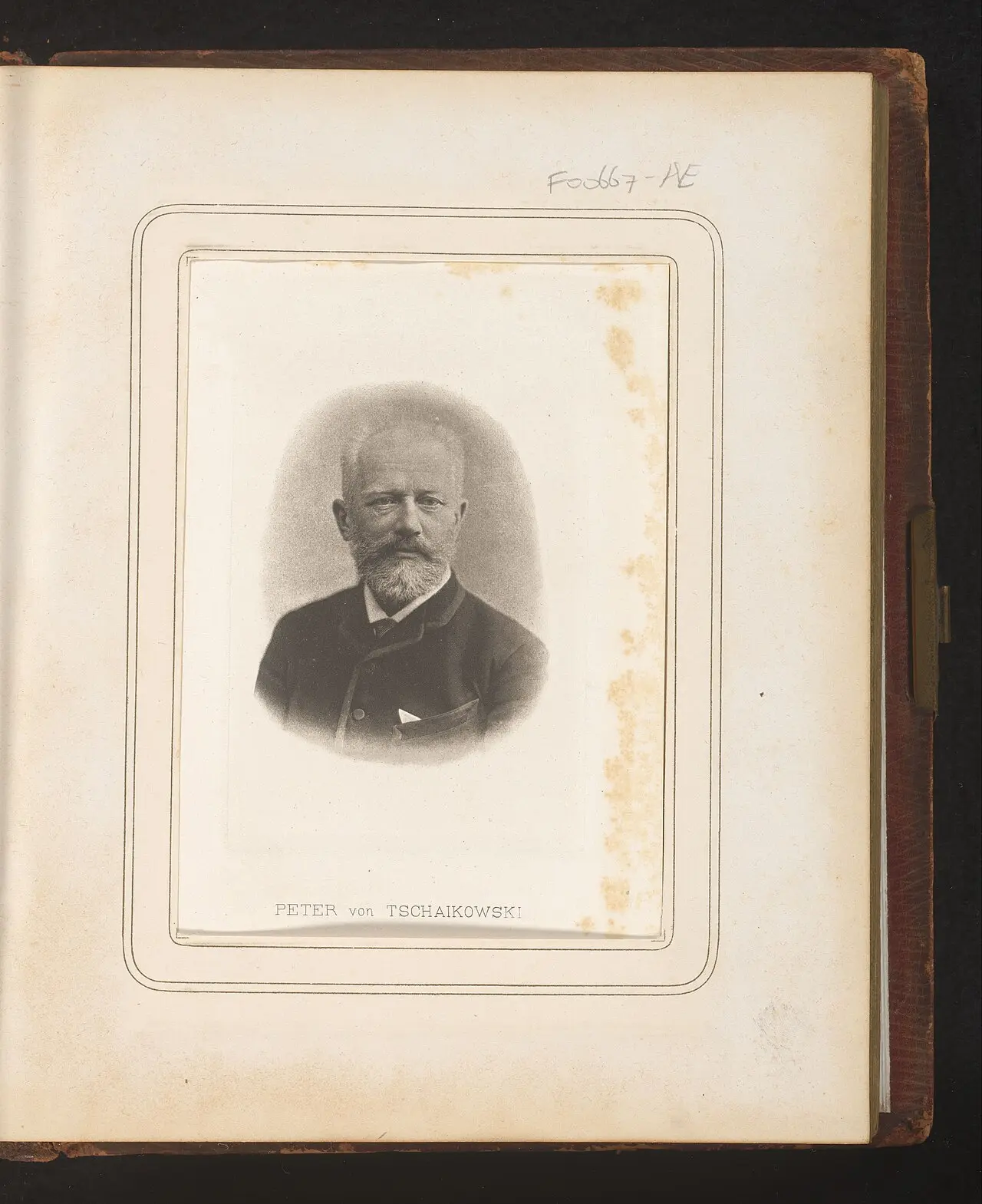
Photo: portrait of composer Pyotr Ilyich Tchaikovsky, Rijksmuseum, CC0, via Wikimedia Commons.