Nobody Showed Up: The First Day of the United States Congress
March 4, 1789 was the day America's new government was supposed to begin — but bad roads and worse weather meant almost no one made it to Federal Hall.
March 4, 1789, was supposed to be the birthday of the United States government. The Constitution had been ratified, the old Confederation Congress had set the date, and the new federal government was to begin operations that very day in New York City. There was just one problem: almost nobody showed up.
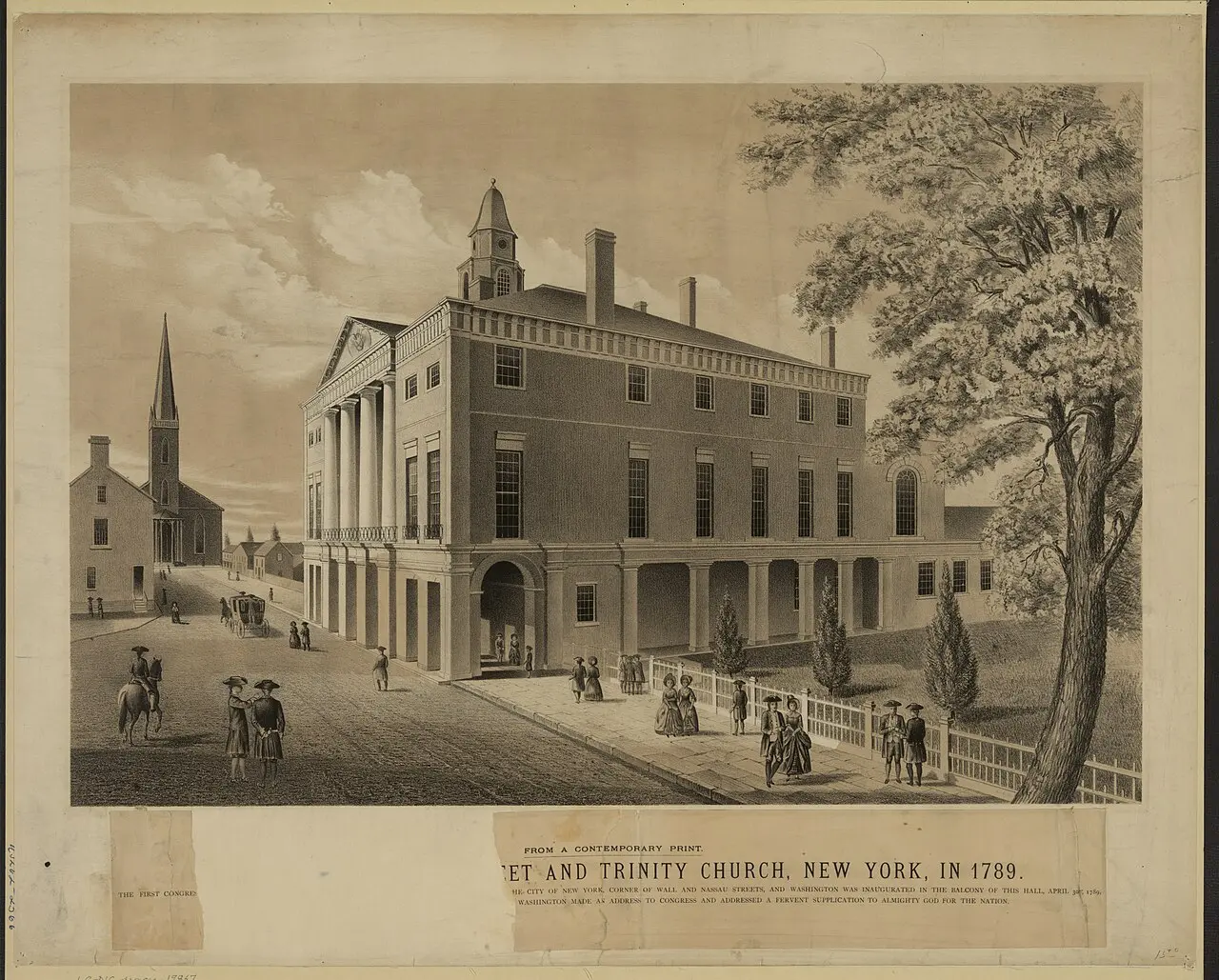
The stage was ready. The meeting place was Federal Hall on Wall Street — the old City Hall, lavishly remodeled for $65,000 by the French architect Pierre Charles L'Enfant into what was meant to be the proud seat of a new republic. New York was the nation's capital. The Constitution was the law of the land. All that was missing was the Congress itself.
Travel in 1789 was slow, the early-March weather was miserable, and some members-elect were in no hurry. The few founders who did reach New York on March 4 gathered briefly at Federal Hall in the morning, looked around at the empty chairs, and went home. For weeks the would-be legislature sat idle, waiting for enough colleagues to arrive to do business. James Madison rode in from Virginia on March 11. Others trickled in after him.
It was not until April 1 that enough representatives had arrived for the House to reach a quorum — with the arrival of two members from New Jersey and Pennsylvania — and choose its first Speaker, Frederick Muhlenberg of Pennsylvania. The Senate needed another week; on April 6, the two chambers finally met in joint session for their first official act: opening the electoral votes and confirming the obvious — George Washington as President, John Adams as Vice President.
And then, at last, they got to work — inventing the federal government as they went. Their first law set oaths of office for federal and state officials. They raised revenue with tariffs on imported goods, created the Departments of State, War, and the Treasury, established the federal court system with the Judiciary Act of 1789, and — on September 25, 1789, in that same hall — proposed the twelve amendments that would become the Bill of Rights. It was grueling, unglamorous work: members earned $6 a day, lodging in New York was expensive, and service meant months away from home and livelihood. A third of the senators would resign before the decade was out.
There is something wonderfully human about the whole episode. The government Americans revere in the abstract began in the most ordinary way possible: late, under-attended, and improvising. The founders had written a brilliant Constitution, but a constitution is only a blueprint. On a rainy March day in 1789, a handful of cold, tired men walked into an empty hall and started turning the blueprint into a country — one quorum, one committee, one law at a time. It is still running.
Photo: 1789 engraving of Federal Hall on Wall Street with Trinity Church, New York, public domain via Wikimedia Commons.