
Lincoln Takes the Oath on the Edge of Civil War
On March 4, 1861, Abraham Lincoln was sworn in as the 16th president at the unfinished U.S. Capitol, pleading for the Union weeks before the Civil War began.
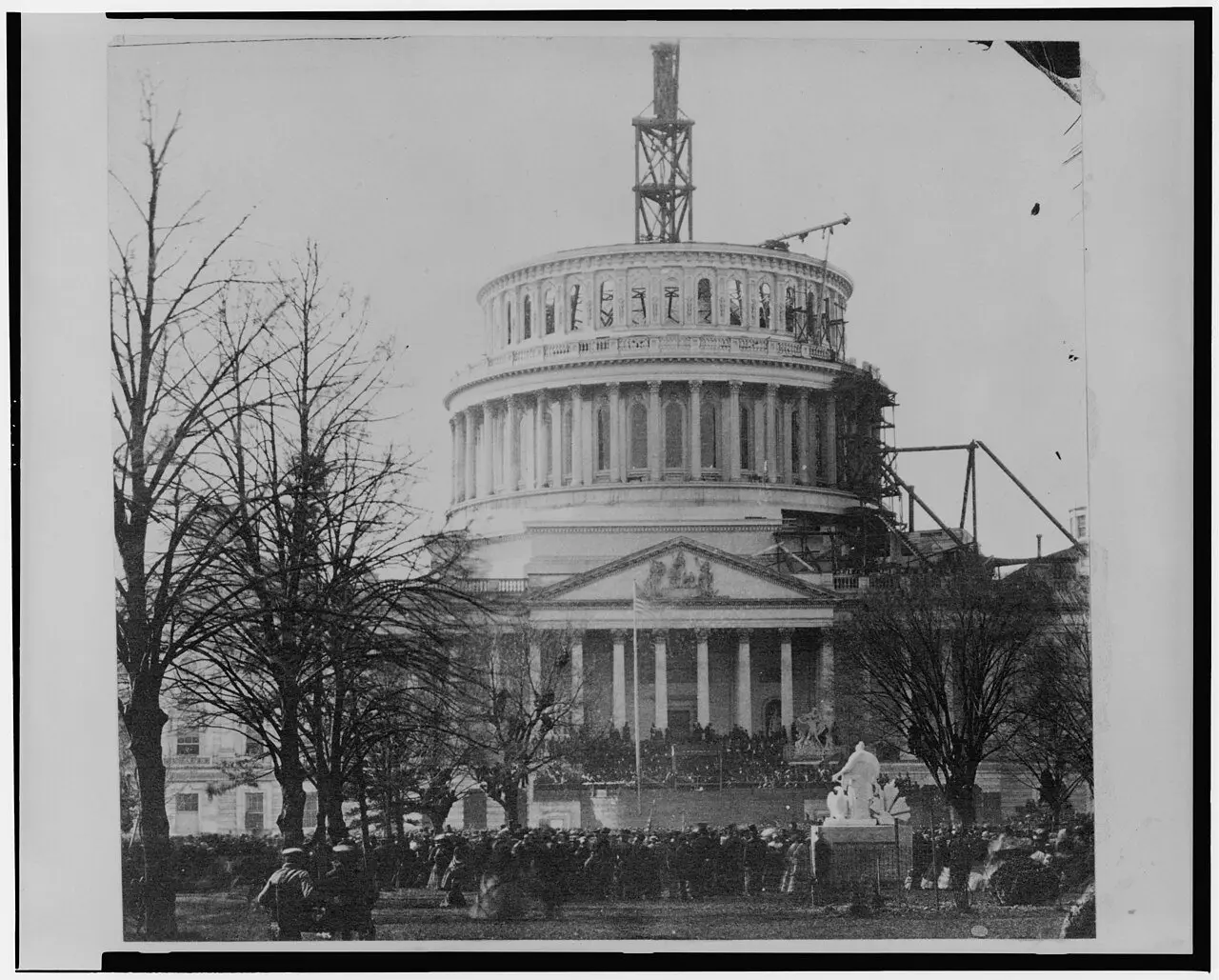
Washington felt like a city under siege. Seven Southern states had seceded. Rumors of assassination plots followed the president-elect everywhere, and General Winfield Scott's soldiers stood guard across the capital. Into this powder keg, on the morning of Monday, March 4, 1861, Abraham Lincoln rode to the Capitol in an open carriage beside outgoing President James Buchanan — refusing, against all advice, to hide behind closed doors.
Before a crowd gathered on the East Portico, beneath a Capitol dome still sheathed in scaffolding and wrapped in wooden construction frames, Chief Justice Roger B. Taney administered the oath of office, and Lincoln became the sixteenth president of the United States. He spoke under the watchful guard of riflemen posted around the Capitol grounds. A photographer captured the scene: the unfinished dome rising like a skeleton, the crowds massed on the lawn — the Republic's house, quite literally, half built.
The stakes could hardly have been higher. Lincoln had been elected in November 1860 on a platform opposing the expansion of slavery, and by March seven Southern states had seceded in response. Just two weeks earlier, Jefferson Davis had been inaugurated as president of the rival Confederate States of America. The Union Lincoln was about to lead was already broken in two.
Lincoln's inaugural address was aimed squarely at the South. He pledged to "hold, occupy, and possess the property and places belonging to the government," promised he would not be the first to use force, and vowed not to interfere with slavery where it already existed. And he closed with one of the great passages in American oratory: "We are not enemies, but friends. We must not be enemies. Though passion may have strained, it must not break our bonds of affection. The mystic chords of memory... will yet swell the chorus of the Union, when again touched, as surely they will be, by the better angels of our nature."
The plea did not hold. A little more than a month later, Lincoln's refusal to surrender Fort Sumter in South Carolina prompted Confederate guns to open fire on April 12 — the first shots of the Civil War, which would kill more than 600,000 Americans and end slavery itself.
Lincoln's first inauguration stands as one of the most dramatic transfers of power in American history: a leader taking the oath in an unfinished Capitol, in a half-empty Union, with war weeks away — and choosing, in that moment, to argue for peace with words that outlasted the war to come.
Photo: Library of Congress, public domain (via Wikimedia Commons).