Operation Vittles: The Berlin Airlift Takes Off
On June 26, 1948, the first American cargo planes took off for blockaded Berlin, launching Operation Vittles — the massive airlift that kept two million people alive for nearly a year.
On the morning of June 26, 1948, Brigadier General Joseph Smith stood on the runway of an airfield in Wiesbaden, Germany, and watched the first plane lumber off toward Berlin — the start of an undertaking the world had never seen.
Two days earlier, on June 24, the Soviet Union had cut every road, rail line, and canal into West Berlin, the western-held half of a city stranded deep inside Soviet-controlled territory. More than two million people suddenly faced the prospect of starvation. Some in Washington urged an armed convoy through the blockade; President Harry Truman worried that would trigger another world war. He chose a third option: feed the entire city from the sky.
The mission fell to the U.S. Air Forces in Europe, and Smith — who nicknamed it Operation Vittles because, as he put it, they were hauling grub — took charge. On June 26, 32 flights of twin-engine C-47 transports lifted off from Wiesbaden carrying 80 tons of supplies: powdered milk, flour, and medicine. It was a modest start to an operation nobody was sure could work — the Soviets, remembering Germany's failed airlift at Stalingrad, assumed it would fail.
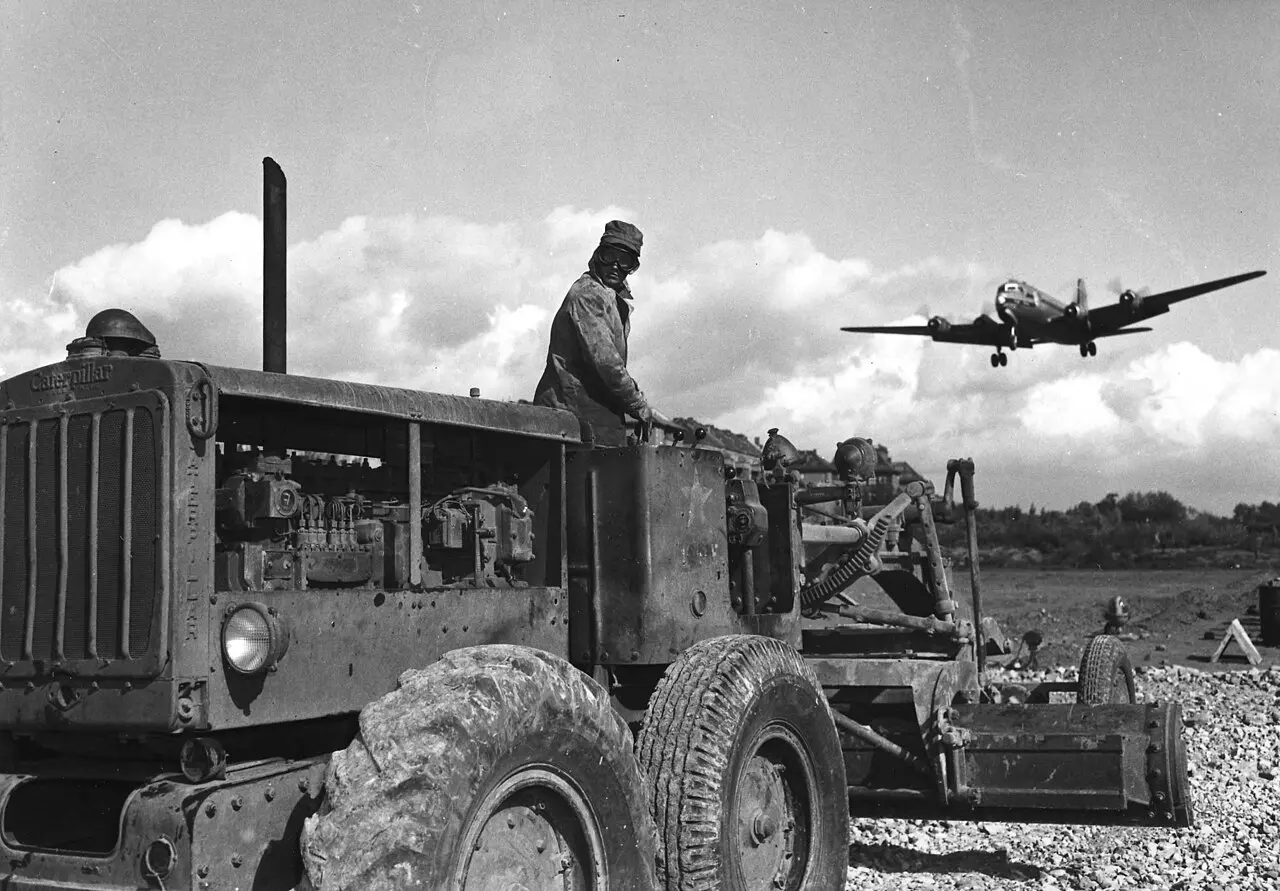
It did not fail. Reinforcements poured in: bigger four-engine C-54s, British transports and flying boats, and eventually a constant stream of aircraft landing at Berlin's Tempelhof Airport every few minutes, around the clock. By mid-July, an average of 2,500 tons of supplies was arriving daily. Pilots flew two or more round trips a day in worn-out wartime planes, and Gail Halvorsen — the legendary Candy Bomber — began dropping chocolate and gum to Berlin's children on tiny parachutes. By the time the Soviets lifted the blockade in May 1949, nearly 280,000 flights had delivered more than 2.3 million tons of food, coal, and medicine.
Lieutenant General William Tunner took command that July and ran the airlift with assembly-line precision — standardized speeds, turnaround times, and even a rule that pilots who missed their approach had to fly all the way back rather than circle and clog the sky. On Easter Sunday 1949, his crews staged the "Easter Parade": 1,398 flights delivering nearly 13,000 tons of supplies in a single 24-hour period, a feat that proved beyond doubt the blockade could never work.
Berliners did their part too. In the French sector, thousands of residents — men, women, and teenagers — built an entirely new airfield at Tegel in about 90 days, working around the clock with hand tools. The airlift cost dozens of airmen's lives in crashes along the way, but when the Soviets lifted the blockade on May 12, 1949, they had lost the first great confrontation of the Cold War.
The airlift was the first great confrontation of the Cold War, and it was won without firing a shot. It proved that logistics could be a weapon, wrote the playbook for every humanitarian airlift since, and turned enemies into friends — West Germans who had been at war with America three years earlier now remembered Americans as the people who had fed them.
Photo: U.S. Air Force, public domain (via Wikimedia Commons).