First Lightning Over the Kazakh Steppe
On August 29, 1949, the Soviet Union detonated its first atomic bomb at Semipalatinsk — ending America's nuclear monopoly and igniting the arms race.
At 7:00 on a Saturday morning, on a remote stretch of the Kazakh steppe, a steel tower vaporized in a flash brighter than the rising sun. The men watching from bunkers miles away had just witnessed the most consequential explosion in Soviet history — and they told no one.
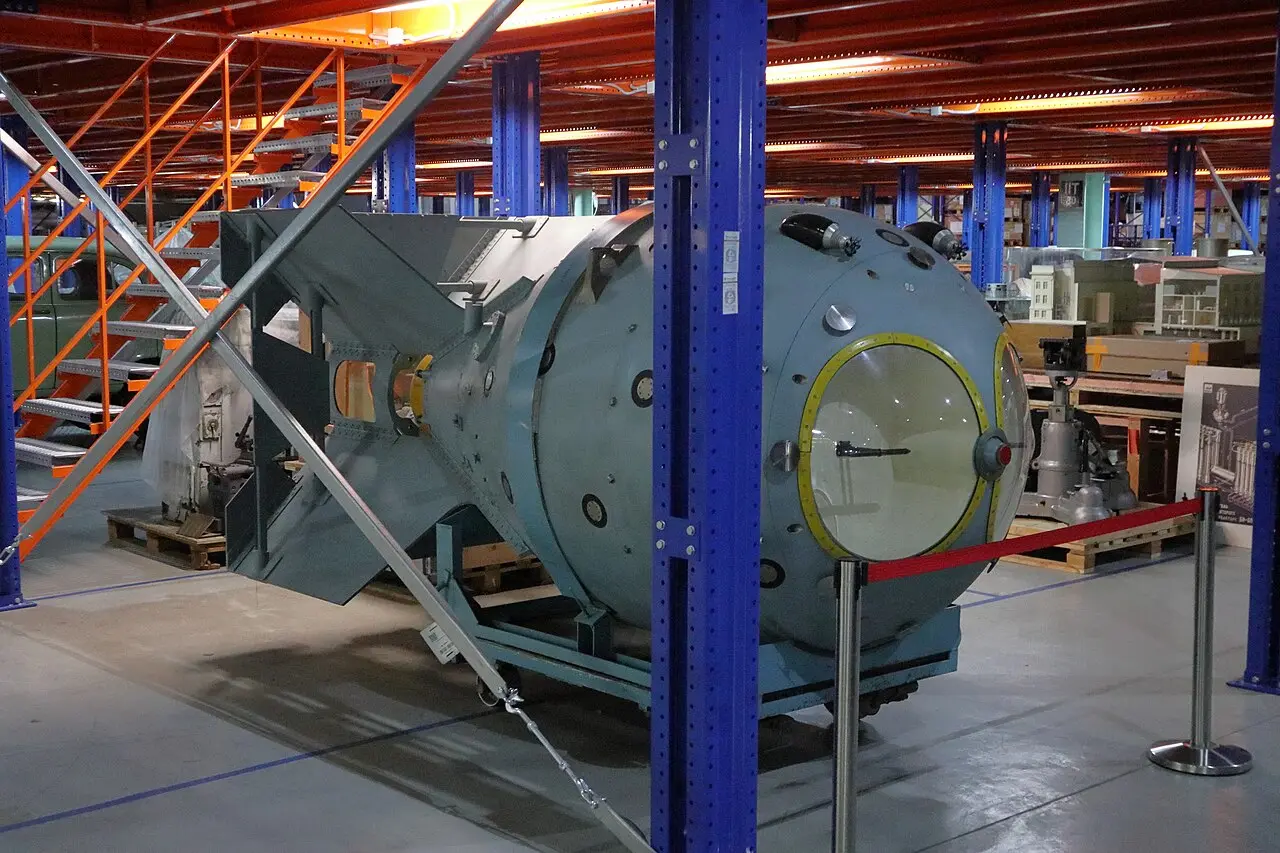
The device was called RDS-1, which the Soviets would later nickname "First Lightning." It was the product of a crash program that began the moment World War II ended, when Joseph Stalin ordered his scientists to match the American bomb. Physicist Yulii Khariton led the design work at a secret city called Arzamas-16, and the resulting weapon was closely modeled on the American Fat Man design — a head start made possible by highly effective Soviet espionage during the war.
On August 29, 1949, the bomb was hoisted on a tower at the Semipalatinsk Test Site and detonated. The yield was 22 kilotons — roughly comparable to the bomb that destroyed Nagasaki. In Washington, the Americans assigned the blast their own code name: Joe-1, after Joseph Stalin.
For nearly a month, the Soviets said nothing. Then, on September 3, an American weather plane flying from Japan to Alaska collected a filter paper that had been exposed for three hours at 18,000 feet. The radiation count was far above the threshold of significance. Analysis at Los Alamos confirmed the worst-kept fear: the Soviets had a plutonium bomb.
On September 23, President Harry Truman announced to the world that "an atomic explosion occurred in the U.S.S.R." Moscow denied it, suggesting the Americans had misidentified excavation work for a hydroelectric project. Nobody was fooled.
The monopoly was over — years before American intelligence had predicted the Soviets could manage it. Truman responded by ordering a crash program to build the "Super," the hydrogen bomb, and the nuclear arms race of the Cold War was on. From that morning on the steppe, every calculation of war and peace would be made in the shadow of two arsenals instead of one.
The speed of the Soviet program stunned Washington. The first plutonium had only been separated at the secret Mayak complex in mid-1949, and the weapon itself was assembled at the closed design bureau KB-11 in Arzamas-16, a city that did not appear on any map. American intelligence had estimated the Soviets were years away from a working bomb; they were wrong by years.
The test also settled, in the most dramatic way possible, the value of the Soviet Union's wartime espionage. The RDS-1 was such a close copy of the American Fat Man design that Beria himself reportedly instructed the designers to reproduce it exactly — a fact American analysts would confirm when they studied the fallout. The scientists who built it, led by Khariton, moved immediately to improved designs: by 1951 the Soviets had stockpiled 29 of the follow-on weapons.
For the Kazakh steppe, August 29, 1949 was the beginning of a long ordeal. Semipalatinsk would host 456 nuclear tests over the next four decades, and the fallout would sicken generations of nearby villagers — an estimated 1.5 million people were exposed over the years. The test site was finally closed by Kazakhstan's president on August 29, 1991, exactly forty-two years to the day after First Lightning.
But on that August morning, the world's strategic map had been redrawn in a single flash. America's atomic monopoly — the trump card of its postwar diplomacy — was gone, and the Cold War would henceforth be played with both sides holding the ultimate weapon.
Photo: Alexander Sigachyov, CC0 (via Wikimedia Commons).