December 8, 2010: The First Commercial Spacecraft to Orbit and Come Home
On December 8, 2010, SpaceX's Dragon capsule orbited Earth and splashed down safely -- a first for any private company.
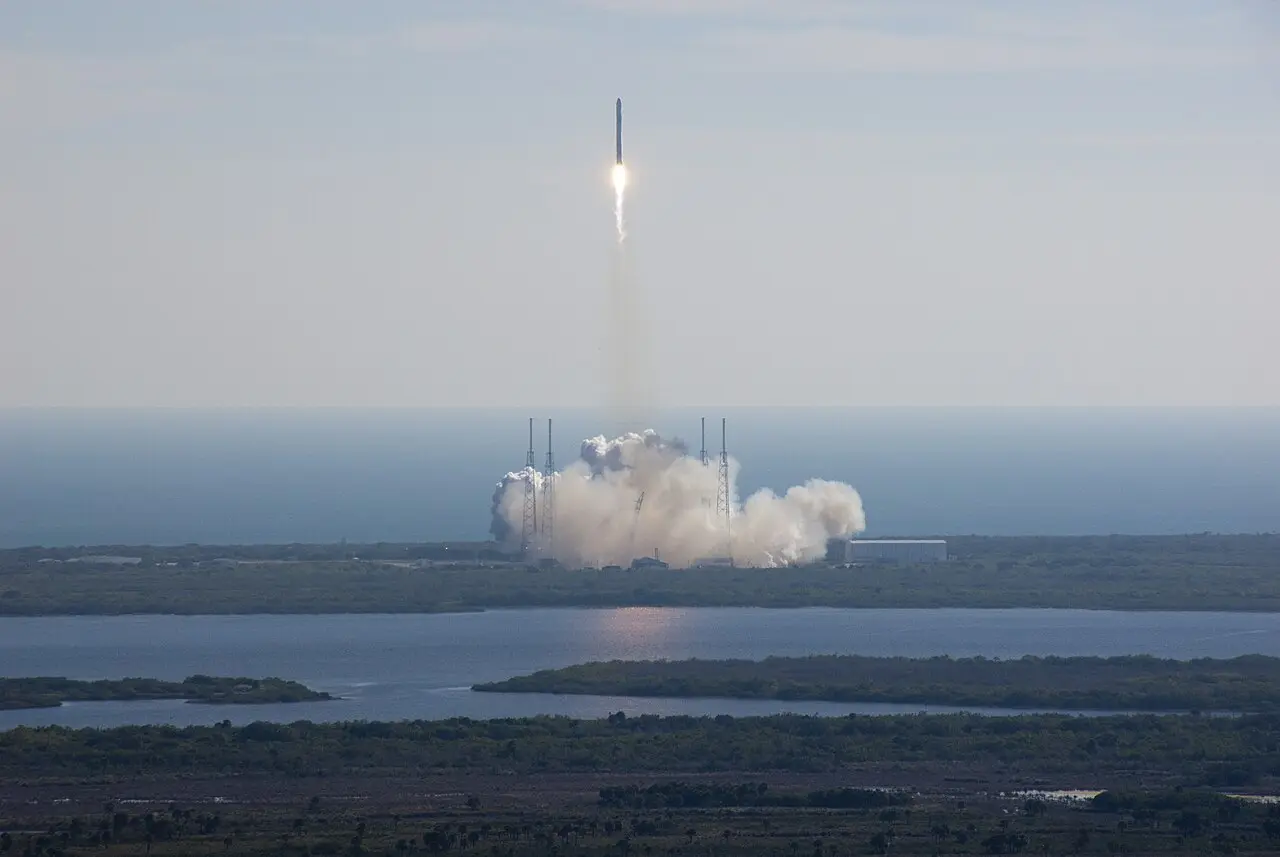
At 10:43 on a December morning, a private company did something only six governments had ever done.
On December 8, 2010, SpaceX's Falcon 9 rocket lifted off from Cape Canaveral's Launch Complex 40 carrying the Dragon spacecraft -- and three hours and nineteen minutes later, that capsule splashed down in the Pacific Ocean, recovered safely. It was the first time in history a commercial company had launched a spacecraft into orbit and brought it home.
The flight, called COTS Demo Flight 1, was only the second launch ever of the Falcon 9 and the first orbital flight of Dragon. It was also the first test flight of NASA's Commercial Orbital Transportation Services program -- a gamble that private companies, not just governments, could haul cargo to the International Space Station once the space shuttles retired. The Falcon 9's maiden flight had come that June, carrying only a boilerplate Dragon test article; December's flight was the real thing -- a fully working capsule, loaded with sensors, meant to prove it could navigate, communicate, and survive the fiery return.
Dragon circled Earth twice while engineers tested its maneuvering and heat shield, then fired its thrusters and fell back through the atmosphere, landing about 500 miles off the coast of Mexico. A recovery crew reached it within twenty minutes. It landed within about 800 meters of its target point -- well inside the designated recovery zone. The flight also tested fixes to the Falcon 9 itself: on the rocket's first flight, its first stage had developed an unplanned roll, and engineers wanted proof the problem was solved.
Until that day, recovering a spacecraft from orbit was a trick performed only by the United States, Russia, China, Japan, India, and the European Space Agency. SpaceX -- then a young startup -- had joined the club. A month earlier, the Federal Aviation Administration had issued the first re-entry license ever granted to a commercial vehicle, just for this flight. NASA Administrator Charles Bolden called it "the first in a new generation of commercial launch systems" and proof of "how government and industry can leverage expertise and resources to foster a new and vibrant space economy."
The demo worked so well that NASA let SpaceX skip ahead: in May 2012, a Dragon berthed at the space station, and regular cargo runs began that October. The little capsule that splashed down off Mexico in December 2010 was the ancestor of every commercial spacecraft flying today -- the moment spaceflight stopped being a governments-only enterprise.
Photo: NASA, public domain (via Wikimedia Commons).