
"What Hath God Wrought!" — The First Telegraph Message
On May 24, 1844, Samuel Morse tapped out 'What hath God wrought!' from the U.S. Capitol to Baltimore — the first official message on the first U.S. telegraph line.
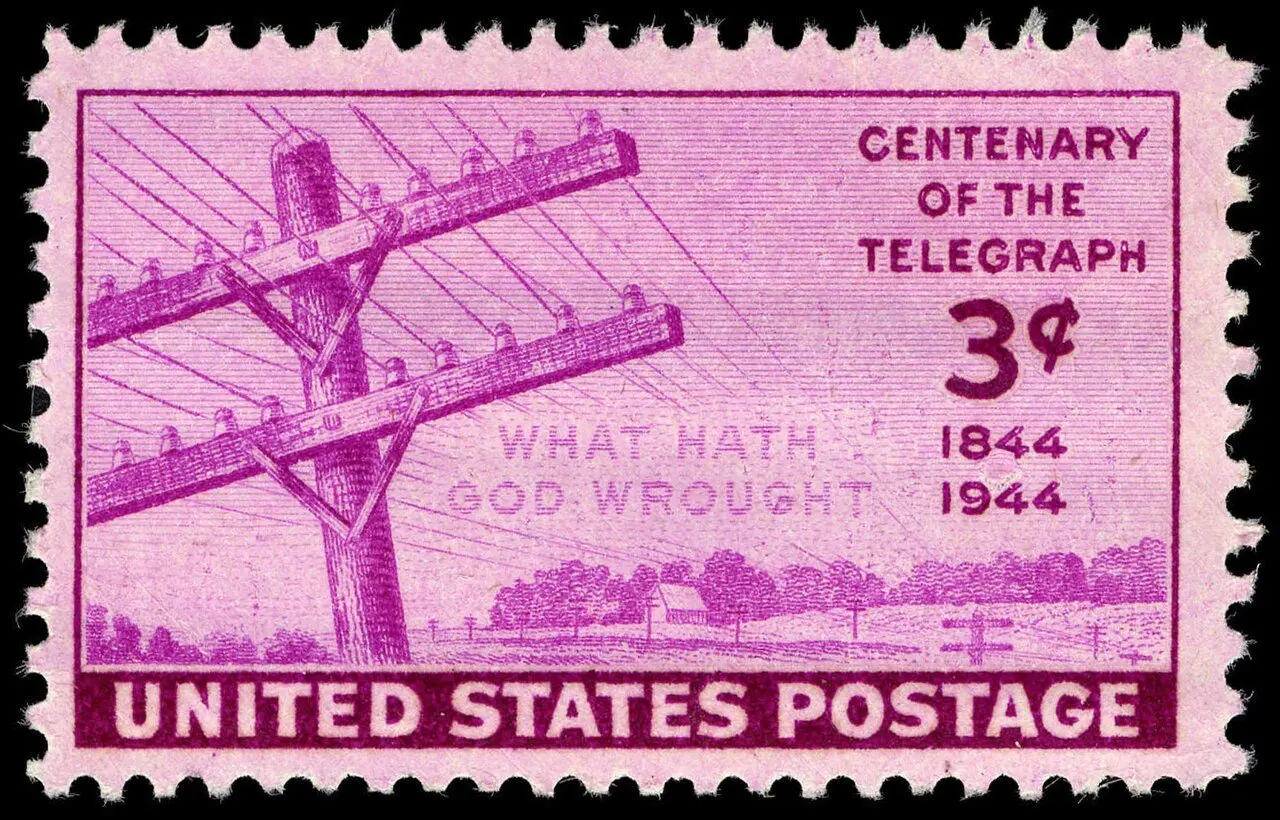
On the morning of May 24, 1844, a crowd of congressmen packed into the Supreme Court chamber inside the U.S. Capitol in Washington, D.C., to watch a 53-year-old art professor do something no one had ever done: send a message 38 miles in an instant.
The professor was Samuel Finley Breese Morse, and the room was the headquarters of the experiment that would change how the world communicates. Years earlier, Congress had been skeptical — one representative had jokingly proposed funding research into mesmerism alongside Morse's request — but on March 3, 1843, Congress appropriated $30,000 to build an experimental telegraph line between Washington and Baltimore. Morse, his partner Alfred Vail, mechanic Ezra Cornell, and scientist Leonard Gale spent the next year stringing wire along poles (an underground cable had failed) between the two cities.
The line had already shown what it could do. On May 1, 1844, with the wire only partly finished, news of the Whig Party's nomination of Henry Clay for president was tapped from the party's convention in Baltimore to the Capitol in Washington — the first time in history that news had traveled faster than a horse or a train could carry it.
Now came the formal demonstration. Morse sat before his instrument in the Supreme Court chamber. A young woman named Annie G. Ellsworth, the daughter of the commissioner of patents and a friend of Morse's, handed him a slip of paper with a message she had chosen from the Bible: "What hath God wrought!" — from the Book of Numbers, chapter 23, verse 23. Morse tapped out the dots and dashes. Forty miles away, in Baltimore's Mount Clare railroad depot, Alfred Vail received the message and immediately flashed the same words back. The demonstration was a triumph. The outgoing paper tape — with Morse's penciled letters under each code character, traced over in heavy ink by Annie Ellsworth herself — is preserved today at the Library of Congress, which received it in 1922 from Ellsworth's daughter.
The telegraph's power was proven almost at once. Two days later, on May 25, the Democratic National Convention in Baltimore wanted to know whether Senator Silas Wright in Washington would accept the vice-presidential nomination alongside James K. Polk. The telegraph carried the offer and Wright's refusal in minutes — though the delegates refused to believe the machine until a human messenger arrived the next day to confirm it. It was a perfect symbol of the age: the future had arrived, and nobody quite trusted it yet.
Within a decade, telegraph lines webbed the continent. The Magnetic Telegraph Company linked New York, Philadelphia, Baltimore, and Washington, and a wire soon ran from Washington across the South to New Orleans. In 1851 Hiram Sibley founded what became the Western Union Telegraph Company, which consolidated the industry into a near-monopoly by 1866.
Morse's achievement matters because it was the first time in human history that information moved independently of a physical traveler. News, prices, orders, and warnings could cross a continent in minutes instead of days — binding together a sprawling republic and, eventually, the globe. Every text message, every live broadcast, every instant headline descends in a straight line from that morning in 1844, when an artist turned inventor asked a simple question of the ages — and the answer came back from forty miles away, in seconds.
Photo: Bureau of Engraving and Printing, public domain (via Wikimedia Commons).