Three Minutes in the Denmark Strait: The Loss of HMS Hood
On May 24, 1941, a shell from the German battleship Bismarck struck HMS Hood's ammunition magazine in the Denmark Strait, and the pride of the Royal Navy sank in three minutes with 1,415 men.
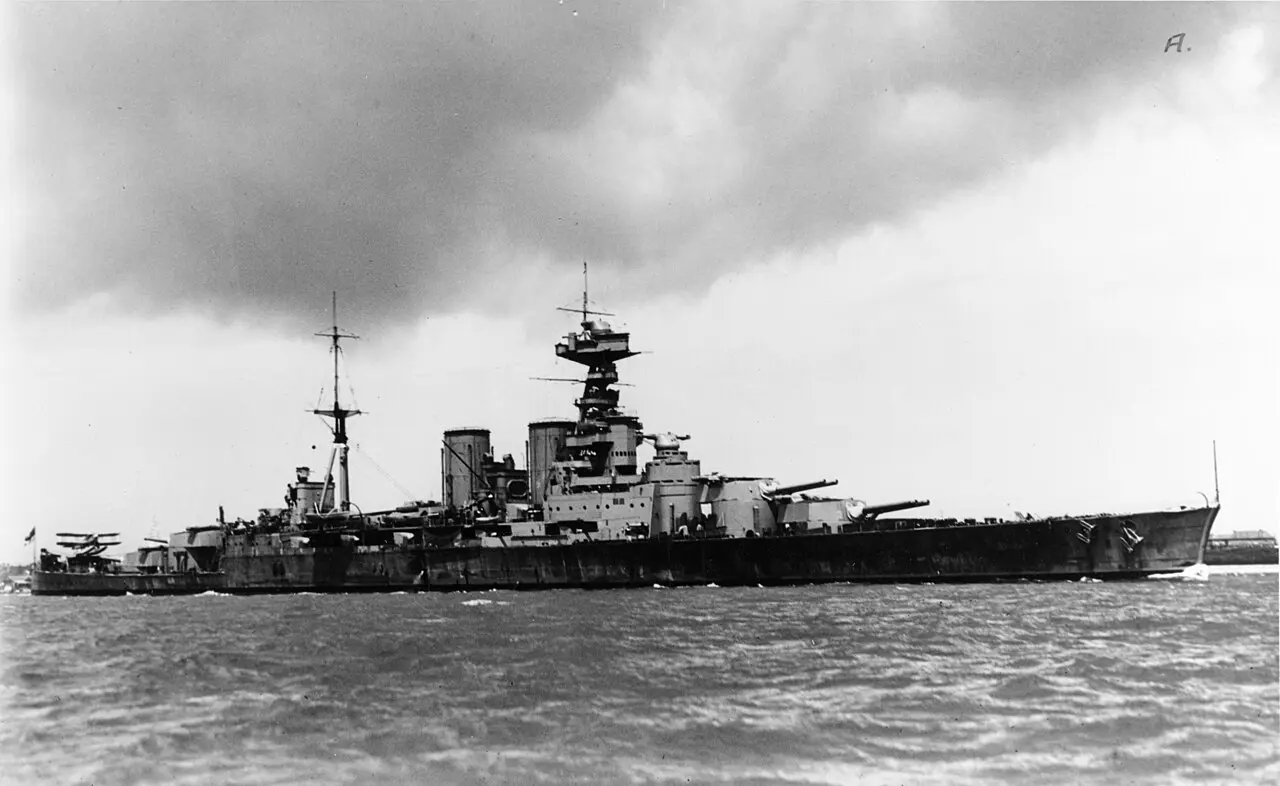
Shortly before 6 a.m. on May 24, 1941, in the gray waters of the Denmark Strait between Greenland and Iceland, the pride of the Royal Navy died. A 15-inch shell from the German battleship Bismarck plunged into HMS Hood and detonated one of her after magazines. A pillar of flame shot skyward. The great ship broke in two — and three minutes later she was gone, taking 1,415 men with her. Only three survived.
For two decades between the wars, Hood had been the most powerful warship in commission anywhere in the world: some 42,000 tons, eight 15-inch guns, capable of 32 knots. She was the visible symbol of British sea power, the ship crowds came to see. But she was a battlecruiser — built for speed, with thin deck armor designed for the gunnery ranges of the First World War. By 1941, guns fired farther, and the armor that shielded her magazines from plunging shellfire had never been upgraded. Plans to modernize her were canceled when the war began.
Bismarck and the heavy cruiser Prinz Eugen were attempting to break out into the Atlantic to ravage Allied convoys. Vice-Admiral Lancelot Holland, flying his flag in Hood, raced with the new battleship Prince of Wales to intercept them. The two British ships opened fire around 5:52 that morning; the Germans answered minutes later. Holland knew Hood's weakness and tried to close the range quickly, where her thin deck armor would matter less. He almost made it.
At about 6:00 a.m., as the British ships turned to bring their full broadsides to bear, a shell from Bismarck struck Hood's after magazine. The resulting explosion destroyed much of the ship from amidships to the stern; she broke apart, the stern sinking first and the bow following minutes later. Of the 1,418 men aboard, only three were pulled from the freezing water two hours later by the destroyer Electra.
The shock in Britain was profound: the worst single-ship disaster in the Royal Navy's history. Prince of Wales, damaged herself, withdrew — but not before her shells struck Bismarck and ruptured her fuel tanks, leaving an oil slick that would help seal the German battleship's fate. Three days later, Bismarck was sunk. Hood's wreck still lies in the Denmark Strait, undisturbed as a war grave.
Hood's end was a lesson written in steel: speed and firepower mean nothing without protection. In three minutes on a May morning, the most famous warship in the world became a tomb for 1,415 men — and a reminder that even the mightiest ships are, in the end, fragile.
Photo: U.S. Navy, public domain (via Wikimedia Commons).