Two Minutes That Remade a Nation: The Gettysburg Address
On November 19, 1863, Abraham Lincoln delivered the 271-word Gettysburg Address in under three minutes, redefining what the Civil War was really about.
The headline speaker that day talked for two hours and used more than 13,000 words. The man who followed him used 271. Nobody remembers the first speech.
The Battle of Gettysburg, fought July 1–3, 1863, was the deadliest of the Civil War — more than 50,000 Union and Confederate casualties in three days of slaughter across the Pennsylvania hills. Charged by Governor Andrew Curtin with caring for the Union dead, an attorney named David Wills bought 17 acres of pasture and set about building a proper cemetery. The dedication was scheduled for November 19.
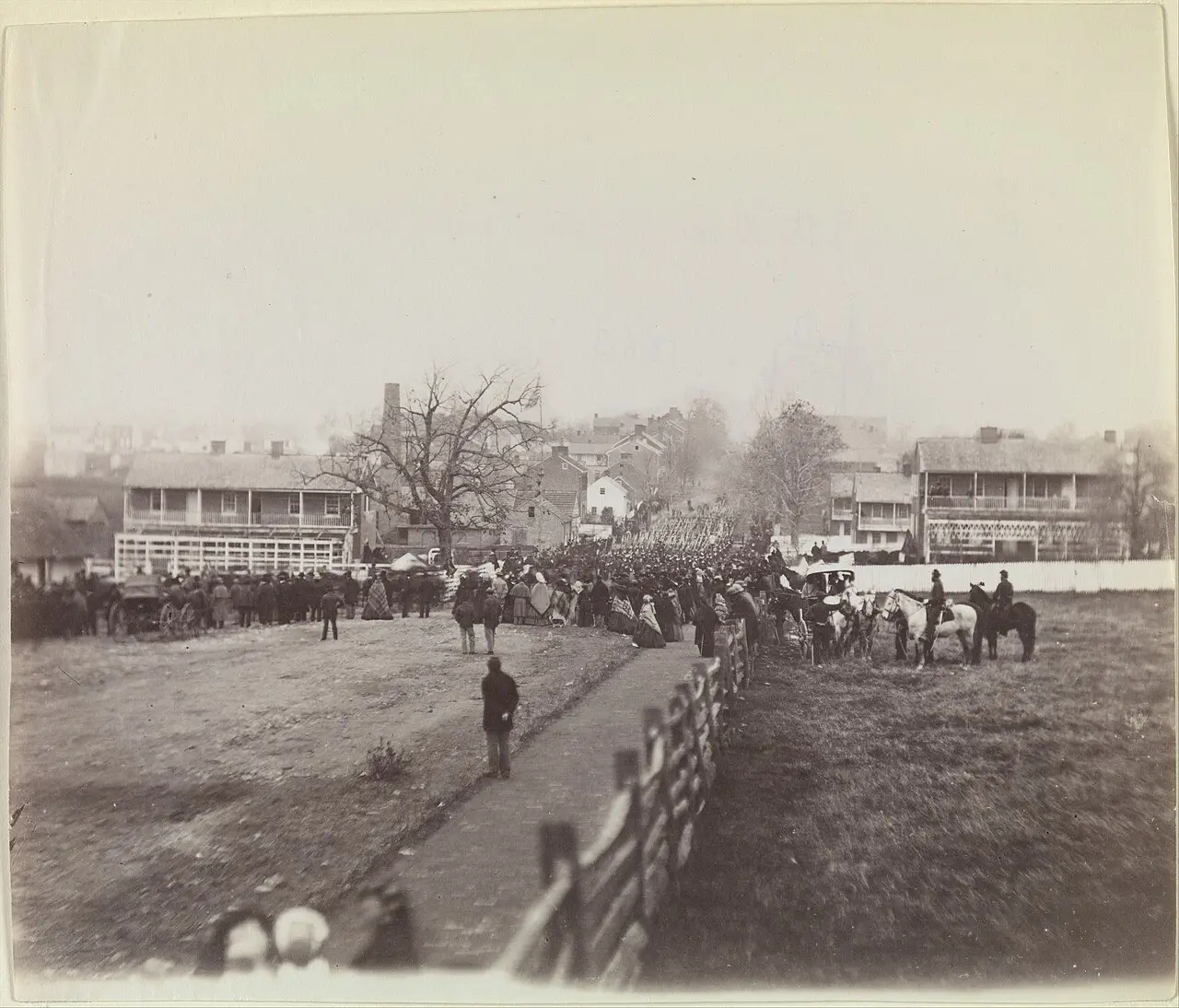
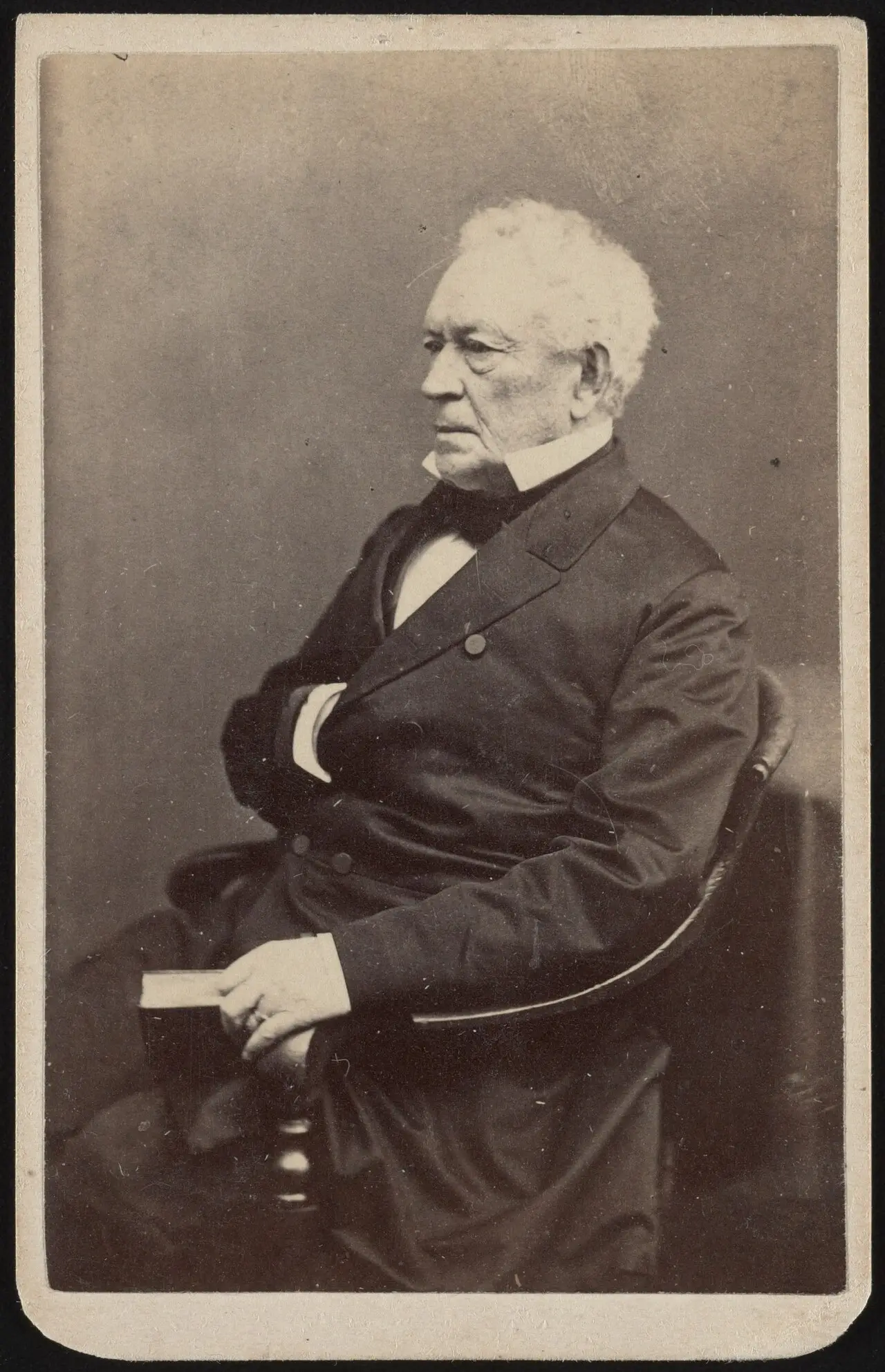
The star attraction was Edward Everett, the most celebrated orator of the age. Lincoln was invited as an afterthought, asked to offer "a few appropriate remarks" barely two weeks before the ceremony. On a chilly November afternoon, before a crowd of some 15,000, Everett delivered his two-hour oration — and then the President rose to speak.
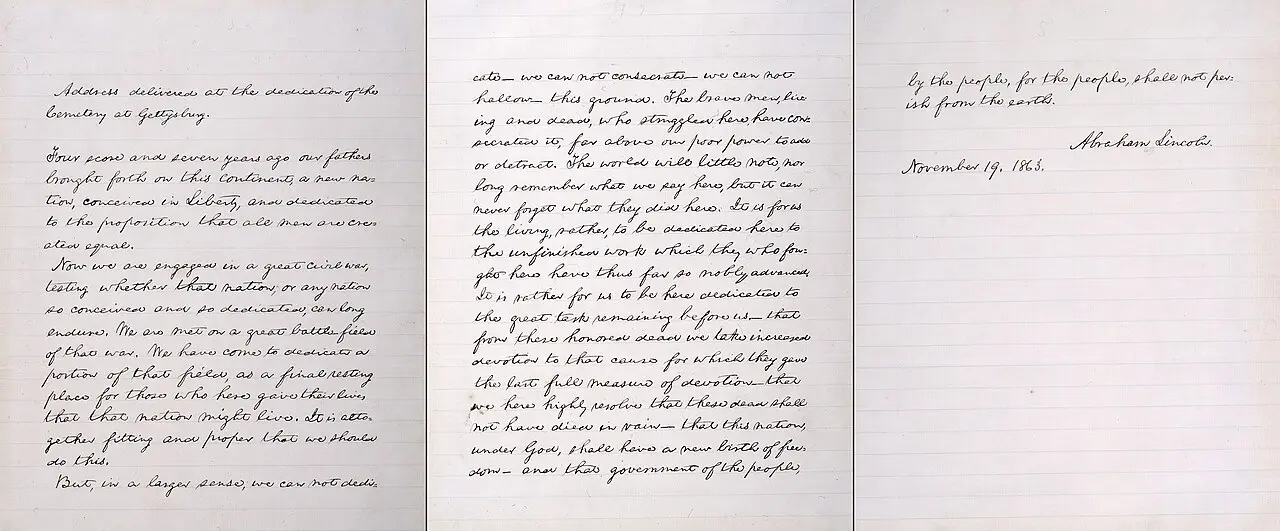
"Four score and seven years ago our fathers brought forth on this continent, a new nation, conceived in Liberty, and dedicated to the proposition that all men are created equal." In two or three minutes he was done. He had been rewriting the speech that very morning at Wills's house, and he was already feeling ill — historians believe he may have been coming down with a mild case of smallpox. His address was so brief that the photographers never got their picture: it was over before they could prepare.
The newspapers gave the day's headlines to Everett. But Everett knew what had happened. He wrote to Lincoln afterward: "I should be glad, if I could flatter myself that I came as near to the central idea of the occasion, in two hours, as you did in two minutes."
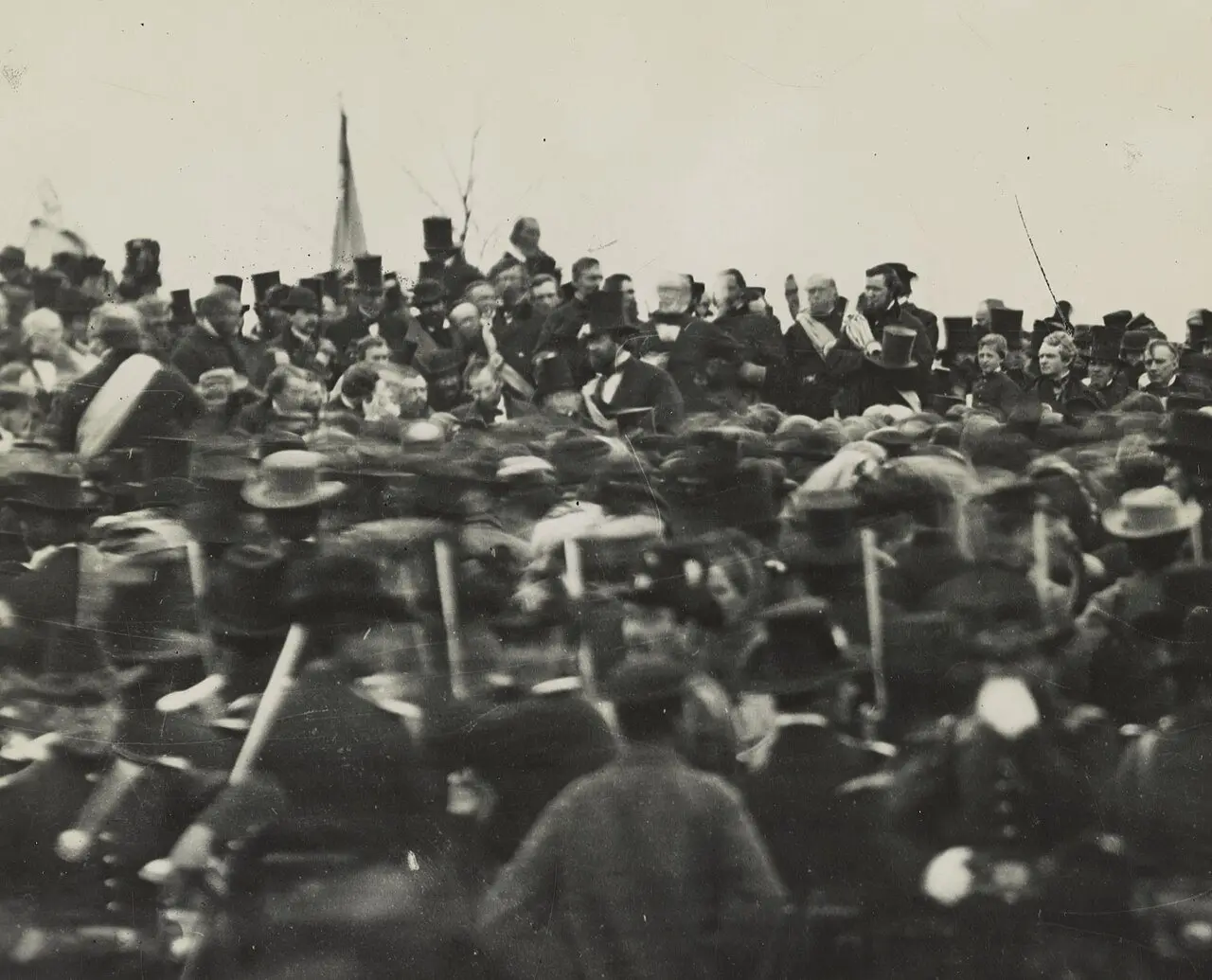
Lincoln's "little speech" reframed the entire war — no longer merely a fight to save the Union, but a struggle for freedom and equality, ending with the promise "that government of the people, by the people, for the people shall not perish from the earth." Of the five handwritten copies Lincoln made, the last — the Bliss copy — became the standard text. David Bachrach's photograph, taken at Gettysburg that same day, is one of only two confirmed photographs of Lincoln at the dedication.
Nearly 160 years later, schoolchildren still learn it by heart — proof that the shortest speech of the day was the one that never ended.
Photo: David Bachrach, public domain (via Wikimedia Commons).
More images (via Wikimedia Commons): the procession to the cemetery dedication at Gettysburg, November 19, 1863 (Isaac G. Tyson, CC0); the Bliss copy of the Gettysburg Address and a portrait of Edward Everett (public domain).