Three Peaks on the Horizon: Columbus Sights Trinidad
On July 31, 1498, after weeks becalmed in the doldrums, Columbus sighted three green peaks rising from the sea — and named the island Trinidad for the Holy Trinity.
For weeks the wind had died, the water was running low, and the crew was losing heart. Then, on the last day of July 1498, three green peaks rose out of the sea.
Christopher Columbus was on his third voyage to the New World, having sailed from Spain on May 30, 1498, with six ships. South of the Cape Verde Islands his fleet had been caught in the doldrums — the windless belt near the equator — and lay becalmed for days in brutal heat, the men suffering and the stores dwindling. Before leaving, Columbus had made a private vow: the first land he sighted on this voyage would be named for the Holy Trinity.
On July 31, the lookout's cry went up. Dead ahead, rising from the ocean, were not one but three distinctive peaks — the hills the island's people would one day call the Trinity Hills. Columbus took it as a sign that his vow had been heard. He named the island Trinidad — La Isla de la Trinidad — and claimed it for the Spanish crown. It was the first recorded European sighting of the island.
But the island was no discovery to the people already living there. Trinidad had been home to Carib and Arawak peoples for thousands of years — communities with villages, farms, canoes, and trade routes stretching across the region. The "first sighting" of July 31 was first only in European records. From the shore, the tall ships must have been as strange a sight to them as the three peaks were to the sailors.
What followed the sighting is the harder part of the story, and an honest telling of this date has to include it. Spanish colonization brought forced labor, violence, and European diseases against which the island's peoples had no defense. Within generations, the Indigenous world Columbus sailed into was devastated — a catastrophe that no feat of navigation can excuse or outweigh.
July 31, 1498 matters because it filled in another piece of Europe's map of the world and set Trinidad on the long course — Spanish, then British, then independent — that made it the nation it is today. Remembering the date honestly means holding both truths at once: the sailor's vow, kept at the sight of three peaks — and the peoples who were already home when the sails appeared.
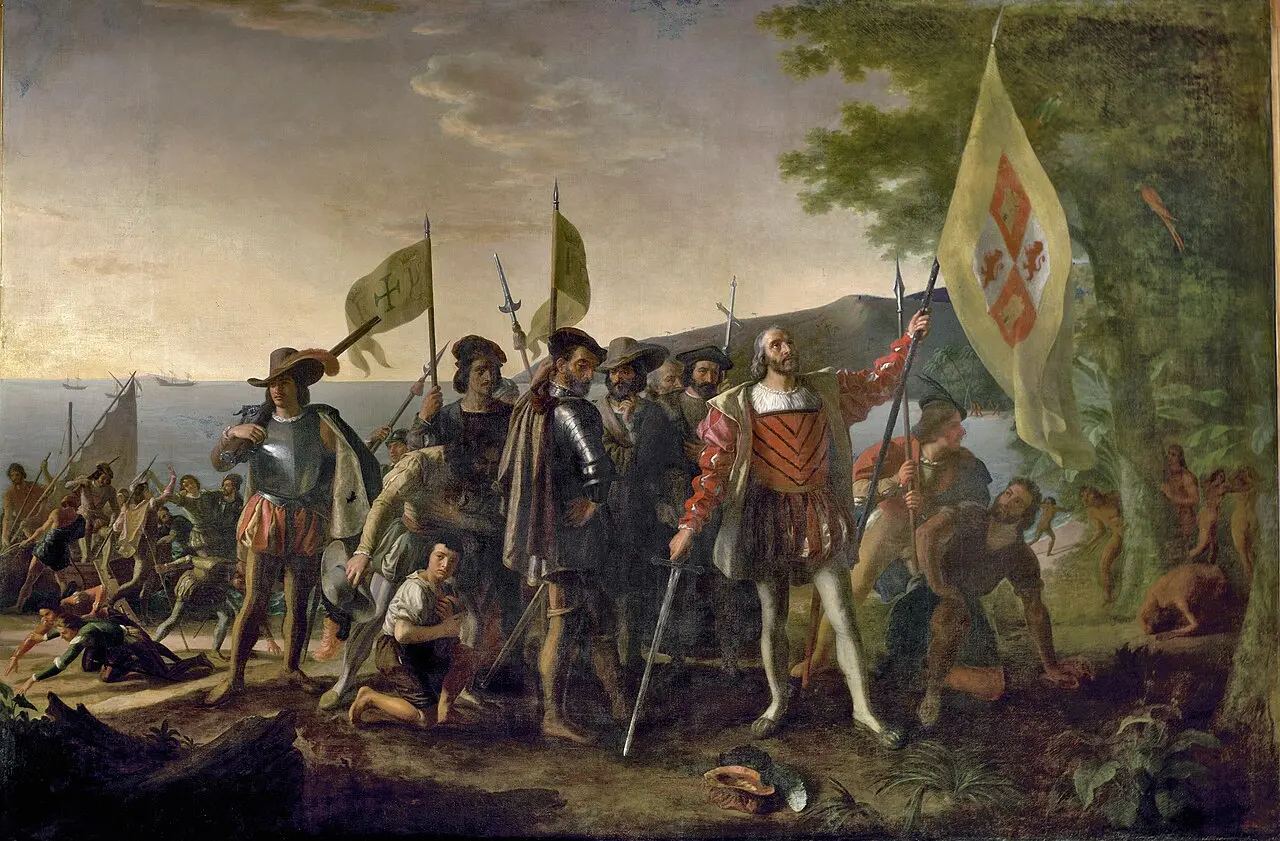
The image is John Vanderlyn's 1847 painting 'Landing of Columbus' — please note it depicts Columbus's 1492 landing at San Salvador, not the 1498 sighting of Trinidad described here. Public domain.