The Writer Who Turned the Pillory Into a Stage
On July 31, 1703, Daniel Defoe stood in the pillory at Temple Bar for the third straight day — punished for a satire, and already turning his punishment into legend.
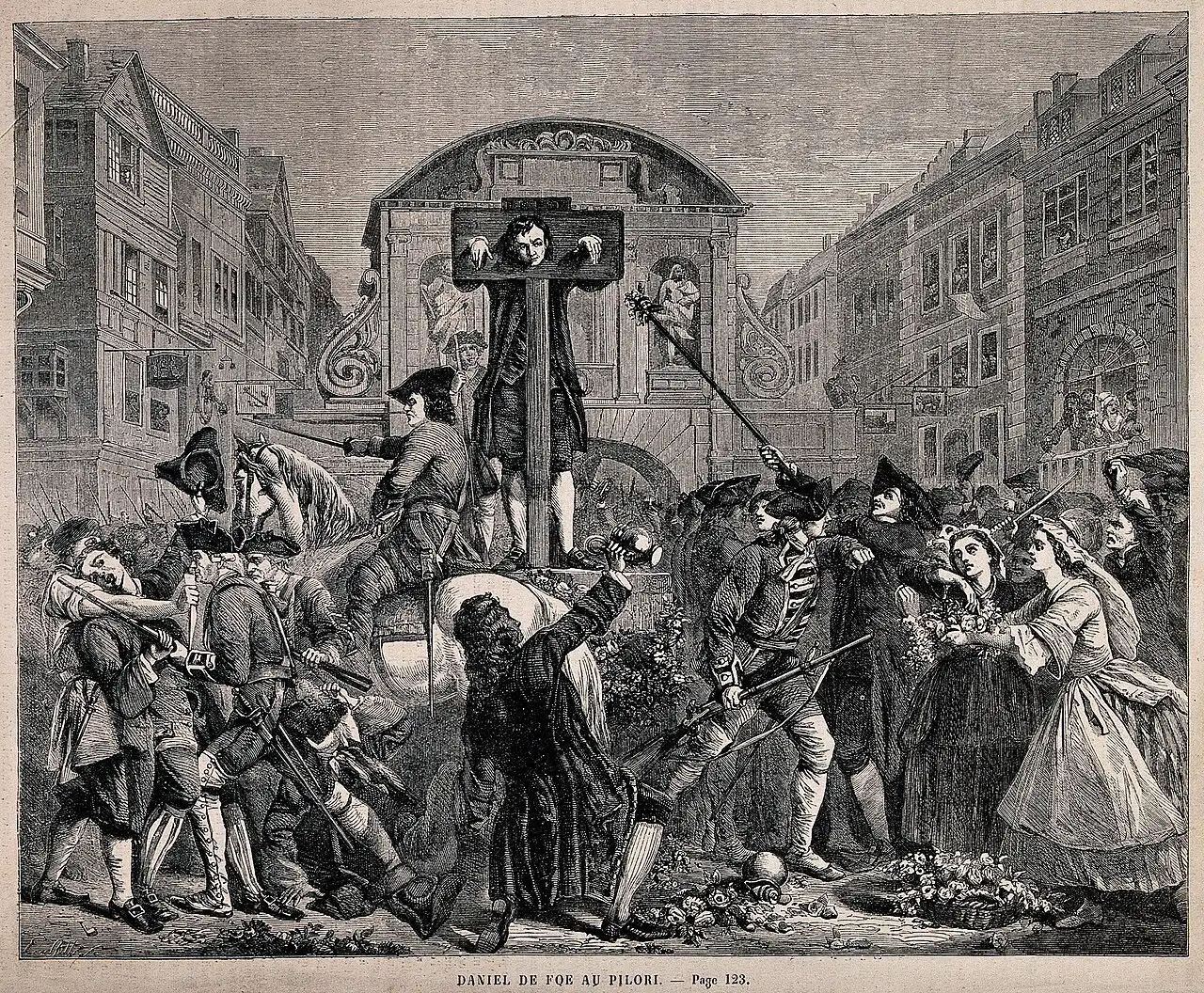
The government locked his head and hands in a wooden frame to shut him up. It made him famous instead.
Daniel Defoe was 43 years old in the summer of 1703: a pamphleteer, a bankrupt businessman, and a Protestant Dissenter with a dangerous gift for irony. His crime was a pamphlet called The Shortest Way with the Dissenters, which proposed — with a completely straight face — that England's Dissenters be hanged or banished. It was satire, but so deadpan that High Church Tories applauded it before the horrifying realization dawned that the joke was on them. The authorities were not amused. Defoe was arrested for seditious libel, fined 200 marks, and thrown into Newgate Prison.
In Newgate, awaiting his punishment, Defoe did what writers do: he wrote. His Hymn to the Pillory was a mocking poem about the very punishment awaiting him — and it was printed and hawked on London's streets, so that by the time he faced the crowds, they already knew his verses. Then came the sentence: three days in the pillory. July 29 at the Royal Exchange, July 30 in Cheapside, and on July 31, 1703, the third and final day at Temple Bar, with a sign over his head announcing his crime.
The pillory was designed for humiliation. The victim stood locked in place for hours while the mob was expected to pelt him with rotten food, dead animals, and stones. Legend says Defoe's crowds did the opposite — that they threw flowers, cheered him, and drank his health. Scholars doubt the flowers really flew quite like the story says, but the legend stuck because the crowds genuinely seemed to be on his side; the punishment was becoming a public relations disaster for the government.
Defoe didn't rot in prison, either. Robert Harley, the ministry's great fixer, saw a talent worth buying rather than breaking: Defoe was released to become a pamphleteer and intelligence agent for the government he had mocked. Sixteen years after the pillory, he published a novel about a shipwrecked sailor that would make him immortal: Robinson Crusoe.
The pillory was supposed to end Daniel Defoe. Instead it made him — an early landmark in the long fight over what a writer may say, and a standing reminder that punishing authors for their words has a habit of amplifying the words. The bankrupt pamphleteer in the wooden frame became the father of the English novel.
The image is a 19th-century wood engraving of Defoe in the pillory, soldiers holding back the crowd — depicting the famous legend that onlookers threw flowers instead of stones. Wellcome Collection, licensed CC BY 4.0.