The Widow Who Wouldn't Campaign — and Became Governor
On January 5, 1925, grieving widow Nellie Tayloe Ross was inaugurated as governor of Wyoming — the first woman ever elected governor of a U.S. state — without having campaigned a single day.
She refused to campaign. She was still in mourning, and the idea of stumping for votes weeks after burying her husband seemed unthinkable. So on January 5, 1925, Nellie Tayloe Ross walked into the Wyoming statehouse in Cheyenne and took the oath of office as the first woman governor in the history of the United States — elected without ever asking a single voter for support.
Two years earlier, her husband, William Ross, had been elected governor of Wyoming on a progressive platform of tax cuts, aid for struggling farmers, and banking reform. In October 1924, barely a year and a half into his term, he died from complications following an appendectomy. The state Democratic Party, desperate for a candidate with just weeks to go before the special election, turned to his 48-year-old widow. Forty-five minutes before the filing deadline, Nellie said yes.
She did not lift a finger for herself. Friends and supporters campaigned in her place, and U.S. Senator John B. Kendrick told crowds how fitting it was that Wyoming — the "Equality State," the first government in the world to grant women the vote, back in 1869 — should be the first to elect a woman governor. On November 4, 1924, Nellie Ross won easily: 43,323 votes to her opponent's 35,275, a wider margin than her husband had managed. Sympathy played its part, but so did politics — her Republican opponent's oil-business ties looked toxic with the Teapot Dome scandal still in the headlines.
Governing was harder than winning. Ross took office in the middle of drought, farm and ranch failures, and a wave of bank failures that wiped out families' life savings. She carried forward her husband's program — spending cuts, state loans for farmers and ranchers, banking reform, stronger protections for women, children, and miners — and urged Wyoming to ratify a proposed federal amendment banning child labor. She governed for a single two-year term, losing her 1926 re-election bid to Frank Emerson, and she blamed her defeat partly on her refusal to campaign and her support for Prohibition.
But Nellie Ross was just getting started. She became a national Democratic leader — vice chair of the Democratic National Committee and head of its women's division — and at the 1928 convention she even received votes for the vice-presidential nomination. In 1933, President Franklin D. Roosevelt named her Director of the United States Mint, the first woman ever to hold the job. She served through the Great Depression, World War II, and the Korean War, retiring in 1953 as the longest-serving Mint director in American history. She lived to be 101, dying in 1977.
Fifteen days after Ross took office, Texas inaugurated Miriam Ferguson as its governor — the second woman in the job. But Nellie Tayloe Ross was first, and first matters. When she was sworn in that January day in Cheyenne, the idea that a woman could lead a state was a novelty fit for the front page. Today, women govern states across the country as a matter of course. Every one of them walks a road that Nellie Ross opened — without ever campaigning for it.
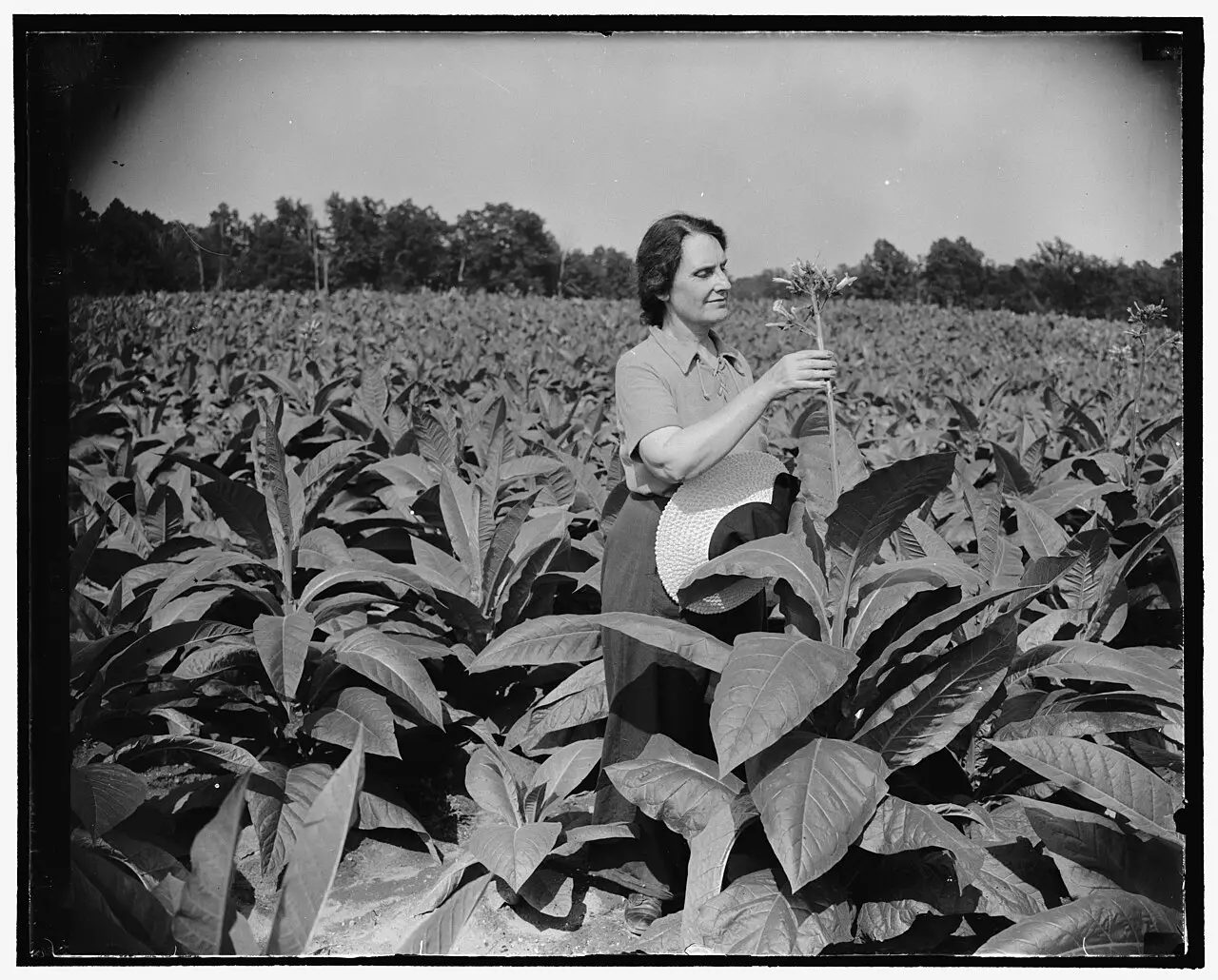
Photo: Harris & Ewing, public domain (via Wikimedia Commons / Library of Congress). A 1938 photograph of Ross at her Maryland farm, taken while she was Director of the U.S. Mint — illustrative of her later career rather than her governorship.