The Two-Pound Phone Call That Started It All
On April 3, 1973, Motorola engineer Martin Cooper made the first public call from a handheld cell phone on a New York sidewalk.
On the morning of April 3, 1973, a Motorola engineer named Martin Cooper walked onto Sixth Avenue in New York City carrying a brick — and made history with it.
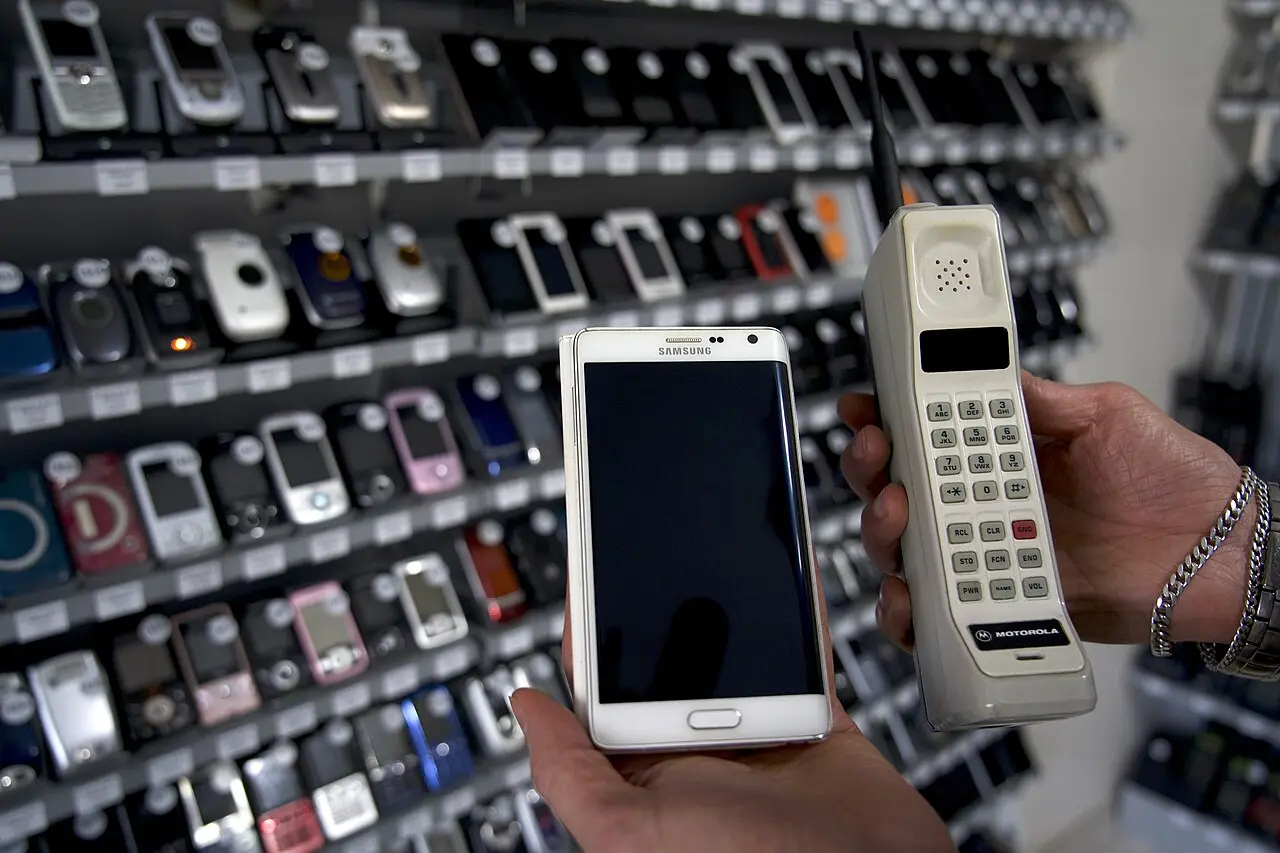
The "brick" was a prototype handheld cellular telephone, built by Cooper's team in just 90 days. It weighed about two and a half pounds, stood nine inches tall, offered roughly 20 minutes of talk time, and needed 10 hours to recharge. It was called the DynaTAC — short for Dynamic Adaptive Total Area Coverage.
Cooper had gathered reporters near a base station on Sixth Avenue, between 53rd and 54th Streets, to show off what Motorola believed was the future: a phone assigned not to a place, a desk, or a car — but to a person. The handset talked to a base station mounted on the roof of what is now the Alliance Capital Building, which was in turn wired into AT&T's telephone network. Then he dialed a number.
He called his rival. On the other end was Joel Engel, the head of research at AT&T's Bell Labs in New Jersey — the man leading the competing effort to build a portable phone. By Cooper's own later account, he told Engel he was ringing just to check whether the call sounded good — and that he was calling from a real handheld portable phone.
Then Cooper did something that stopped New Yorkers in their tracks: he kept walking. "As I walked down the street while talking on the phone," he later recalled, "sophisticated New Yorkers gaped at the sight of someone actually moving around while making a phone call." In 1973 there were no cordless phones and no cell phones at all — the idea of a conversation that moved with you was science fiction.
It took a decade for the future to arrive in stores. Motorola poured more than $100 million into development, and the commercial DynaTAC 8000X finally went on sale for $3,995 — a plaything for the wealthy that would later become a pop-culture icon. But the call on Sixth Avenue had already proved the concept.
Why it matters: every smartphone in every pocket descends from that two-and-a-half-pound prototype. Forty years to the day after the call, Cooper was named the 2013 Marconi Prize recipient. And on the call's 50th anniversary in 2023, the 94-year-old Cooper returned to New York to reenact it — this time with the whole world listening in.
Photo: Umut Çolak, public domain (via Wikimedia Commons).