
The Titanic Sails From Southampton
On April 10, 1912, the Titanic departed Southampton on her maiden voyage to New York, five days before the iceberg that made her a legend.
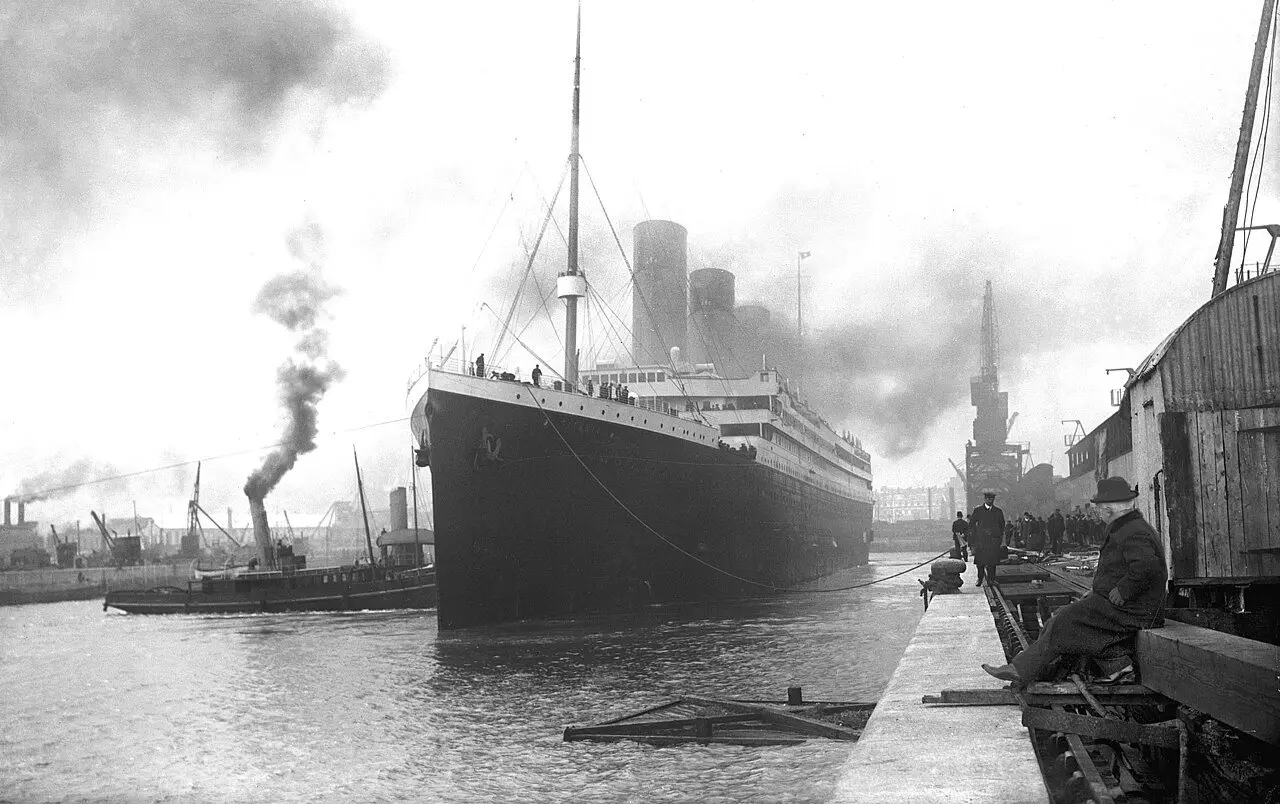
Shortly after noon on Wednesday, April 10, 1912, tugboats nudged the RMS Titanic away from her berth in Southampton, England, as crowds watched from the docks. The White Star Line's newest liner — the largest and most luxurious passenger ship of her day — was beginning her maiden voyage to New York.
The morning had been a choreographed rush. Passengers arrived by special boat train from London's Waterloo station at 9:30, and 920 of them boarded at Southampton — 179 in First Class, 247 in Second, 494 in Third. Third-class passengers, the most numerous, boarded first and were inspected for ailments that might get them refused entry to the United States; first-class passengers were personally greeted by the ship's 62-year-old captain, Edward J. Smith, the most senior commander in the White Star Line.
Disaster nearly struck within minutes. As the enormous liner passed the moored ships SS City of New York and Oceanic, her displacement lifted the smaller vessels on a bulge of water and dropped them into a trough. The New York's mooring cables snapped, and her stern swung toward the Titanic. Only quick work by the tug Vulcan — and Captain Smith's order of "full astern" — averted a collision by about four feet. The delay cost the Titanic the better part of an hour.
From there the voyage went smoothly, at first. The Titanic called at Cherbourg that evening to take on more passengers, reached Queenstown, Ireland, around midday on April 11, and then turned west into the open Atlantic for the long run to New York.
Four nights later, at 11:40 p.m. on April 14, a lookout spotted an iceberg dead ahead. The glancing blow buckled the hull below the waterline; by 2:20 a.m. on April 15, the Titanic was gone. More than 1,500 of the roughly 2,240 people aboard died in the freezing Atlantic — one of the worst peacetime maritime disasters in history.
Why it matters: the loss shocked the world into action. Within two years, nations adopted the first International Convention for the Safety of Life at Sea, requiring enough lifeboats for everyone aboard and continuous radio watch — and established the International Ice Patrol, which still monitors Atlantic icebergs today. The ship that sailed from Southampton in triumph on April 10 became, five days later, the reason ocean travel would never be so careless again.
Photo: Unknown author, public domain (via Wikimedia Commons).