The Great Gatsby Hits the Shelves
On April 10, 1925, Scribner's published F. Scott Fitzgerald's The Great Gatsby — a commercial flop that became America's most beloved novel.
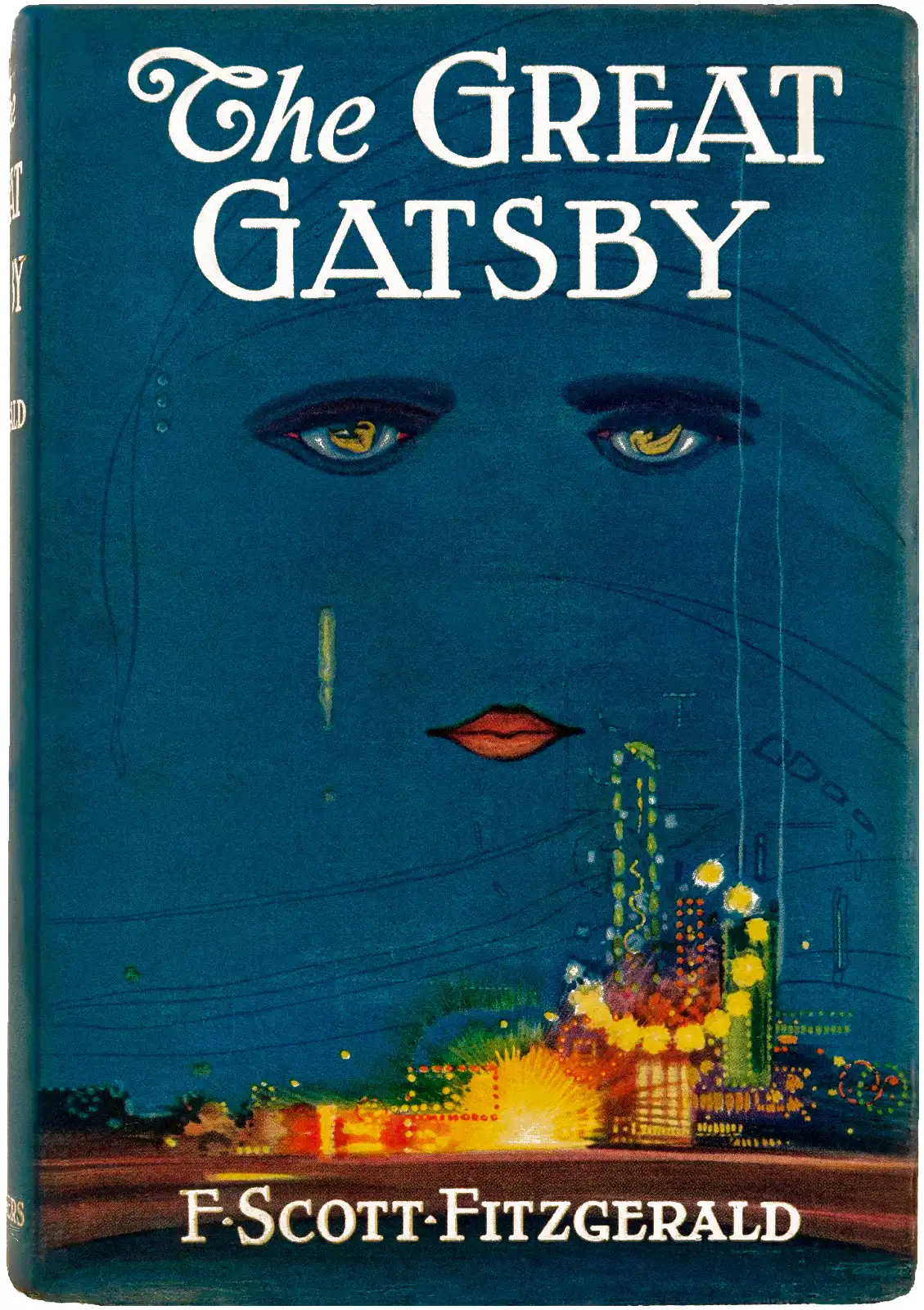
The most famous book cover in American literature was painted before the novel was finished — and when the book finally reached stores, almost nobody bought it.
On April 10, 1925, Charles Scribner's Sons published The Great Gatsby, F. Scott Fitzgerald's third novel. It was a slim volume, barely 50,000 words, selling for two dollars. Fitzgerald's editor, Maxwell Perkins, had shepherded the manuscript through drafts; what neither man could have guessed was that the book's jacket would outlive them both in the public imagination. The artist, Francis Cugat, had painted the now-iconic cover — disembodied eyes and lips floating over a glittering, midnight-blue cityscape — before Fitzgerald finished writing. Fitzgerald was so taken with it that he reportedly told Perkins he had "written it into the book."
The novel itself tells of Jay Gatsby, a mysterious millionaire throwing lavish parties in a Long Island mansion, all to win back Daisy Buchanan, the married woman he loves. Set in the roaring, reckless world Fitzgerald himself had named the Jazz Age, the book was a glittering portrait of money, longing, and illusion.
It flopped. The first printing ran to about 20,870 copies, and they did not fly off the shelves. Reviews were mixed — some critics admired the prose, others found the story thin. Scribner's ordered a second printing of only 5,000 copies that August, and the book never sold out its first edition during Fitzgerald's lifetime. He had taken a $5,000 advance against royalties he would never earn out. In 1940 he died believing himself a failure, his greatest work a commercial disappointment.
And yet. Within a generation, The Great Gatsby was reborn — taught in classrooms, adapted for stage and screen, and argued over by millions of students who have all stared at that same blue cover and those same watchful eyes. The novel that barely sold became the defining portrait of an era and one of the most beloved books in American literature.
It matters because it is the rare second act in literary history: proof that a book's worth is not decided in its first season. Fitzgerald wrote the Jazz Age into being, and then, a century later, his own book refused to stay buried — a reminder that the verdicts of the marketplace are not the verdicts of time.
Photo: Dust jacket art by Francis Cugat, public domain (via Wikimedia Commons). (Note: the original scan is 1129 pixels wide, just under the 1200px guideline; it was kept because it is the iconic first-edition jacket.)