The Soviet Puzzle That Conquered the World
On June 6, 1984, Soviet researcher Alexey Pajitnov completed the first playable Tetris — a game of falling blocks that would conquer the world.
In 1984, behind the Iron Curtain, a young Soviet computer researcher built a game out of brackets and blank spaces. It had no color, no sound, and no levels. Within months, it was shutting down workplaces across Moscow. Within a decade, it was one of the most-played games in history.
Alexey Pajitnov worked at the Dorodnitsyn Computing Centre of the Soviet Academy of Sciences in Moscow, researching speech recognition and artificial intelligence. In his spare time, he loved puzzles — especially pentominoes, the childhood game of fitting geometric shapes together. On a Soviet Electronika 60 computer, he wondered if he could turn that idea into a game. Twelve pentomino pieces proved too complicated to juggle, so he simplified to tetrominoes — seven shapes made of four blocks each. He named the game Tetris, from "tetra," meaning four, and tennis, his favorite sport.
Because the Electronika 60 had no graphical interface, Pajitnov drew the falling pieces with nothing but spaces and brackets. Then came the masterstroke: at first the playfield filled up in twenty seconds and the game died. So he made every completed line disappear. That single decision — the vanishing line — turned a cluttered puzzle into an endless, hypnotic loop of stacking, clearing, and starting over.
On June 6, 1984, the first playable version was complete. Pajitnov showed it to colleagues, and they were hooked instantly — the game tore through the Academy, then through every Moscow institute with a computer, until bosses started banning it to get people working again. Sixteen-year-old programmer Vadim Gerasimov ported it to the IBM PC with color and a scoreboard, and from there copies spread westward, floppy disk by floppy disk, out of the Soviet Union.
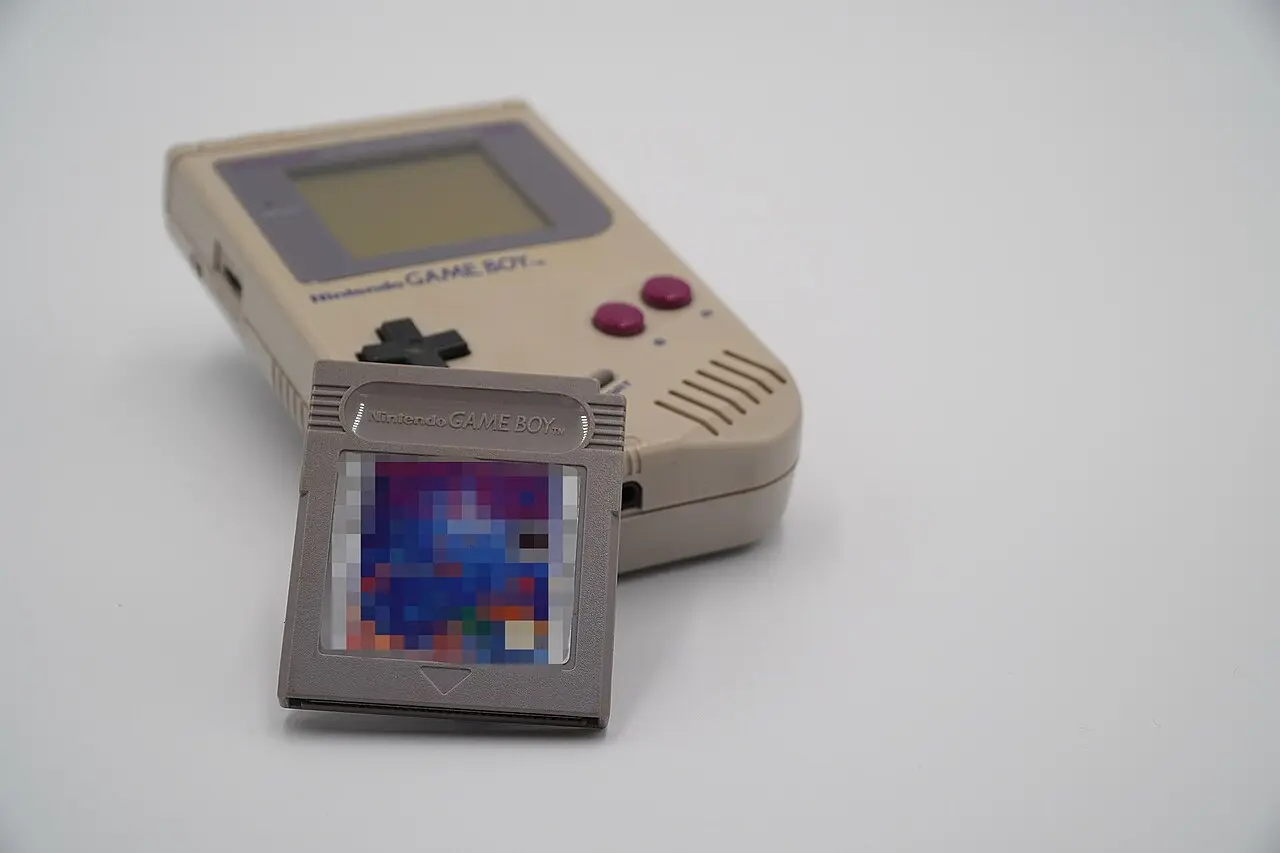
The rest is spy-novel history. Under Soviet law, the game belonged to the state, and the agency Elektronorgtechnica (Elorg) controlled the rights, battling Western companies over licenses while Pajitnov — who had created it — earned nothing from it for twelve years. The rights finally returned to him in 1996. By then Tetris had ridden the Nintendo Game Boy into tens of millions of pockets under the tagline "From Russia with Fun!"
Why does a game of falling blocks matter? Because Tetris proved that genius needs no graphics, no budget, and no marketing — just one perfect idea. The puzzle born on a primitive Soviet computer in 1984 still ships on nearly every platform on Earth, and World Tetris Day is celebrated every June 6. All because one researcher asked what would happen if the lines disappeared.
Photo: Sammlung der Medien und Wissenschaft, CC BY 4.0 (via Wikimedia Commons).