
The Signature That Opened America's Doors
On April 11, 1968 — one week after Martin Luther King Jr.'s assassination — President Lyndon B. Johnson signed the Fair Housing Act, banning racial discrimination in most American housing.
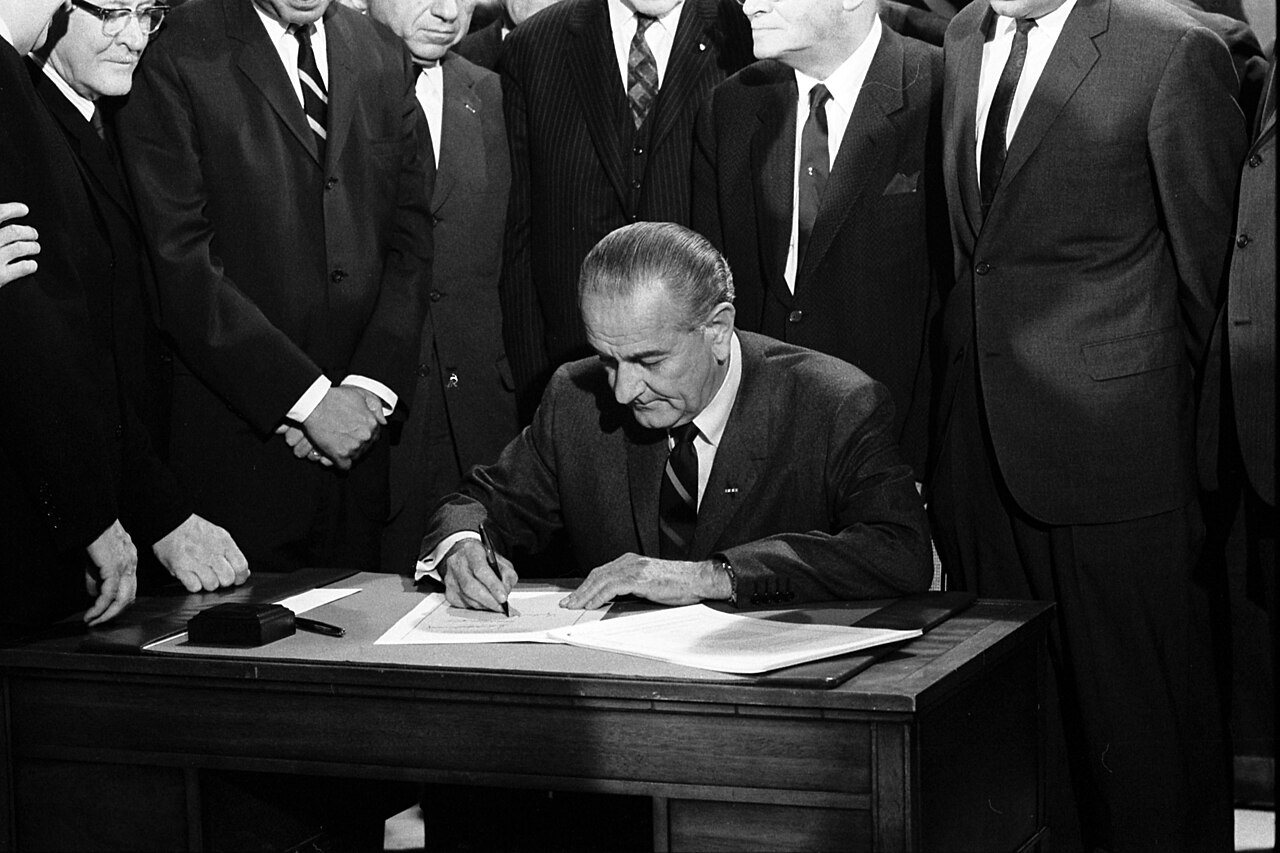
The capital was still smoldering. Seven days earlier, on April 4, 1968, an assassin's bullet had killed Dr. Martin Luther King Jr. in Memphis, and grief had curdled into rage in cities across America. Washington itself burned — soldiers patrolled streets lined with ash, and troops still ringed the U.S. Capitol when the House of Representatives took up a bill that had been stuck in Congress for two years.
On April 10, the House passed it, 250 to 172. The very next day, April 11, President Lyndon Baines Johnson picked up a pen. With that signature, the Civil Rights Act of 1968 became law — and its housing provisions, known as the Fair Housing Act, made it illegal for the first time, with real federal enforcement, to discriminate in the sale, rental, or financing of housing because of race, color, religion, or national origin.
The law attacked something the great civil rights victories of 1964 and 1965 had left largely untouched: where Americans were allowed to live. For decades, banks had drawn red lines around Black neighborhoods and refused to lend inside them, deeds carried clauses forbidding sale to Black families, and landlords and real estate agents quietly steered minorities away from white blocks. The new act was designed to end discrimination in roughly 80 percent of the nation's housing — a staggering reach for a single signature.
Johnson, the president who had pushed through the landmark civil rights laws of 1964 and 1965, knew exactly what the moment demanded. "Fair housing for all — all human beings who live in this country — is now a part of the American way of life," he said. True to presidential tradition, he handed out the pens he had used to sign; one of them now rests in the Smithsonian's National Museum of American History, on loan from the LBJ Presidential Library. The photograph above captures the scene: Johnson at the desk, members of Congress crowded behind him, on the very day the law was born.
It was the last great law of the civil rights movement's heroic era. But a signature is a beginning, not an ending. The act was expanded over the years — sex was added as a protected category in 1974, disability and family status in 1988 — and its promise is still being fought for. Walter Mondale, one of the bill's Senate cosponsors, would later call fair housing "unfinished business," pointing to neighborhoods that remain segregated and discrimination that persists in subtler forms.
Still, April 11, 1968, stands as the day the federal government finally declared that the American dream of home could not be reserved for some. In a week of fire and funerals, a pen moved across paper — and a door that had been shut for generations was forced open a crack. Every family since then that has been able to rent or buy where they choose owes something to that signature.
Photo: Warren K. Leffler / U.S. News & World Report, public domain (via Wikimedia Commons, courtesy of the Library of Congress). Taken on April 11, 1968.