
The Shot in St. Peter's Square
On May 13, 1981, Pope John Paul II was shot in St. Peter's Square and survived; his public forgiveness of the gunman and devotion to Our Lady of Fátima defined the event's legacy.
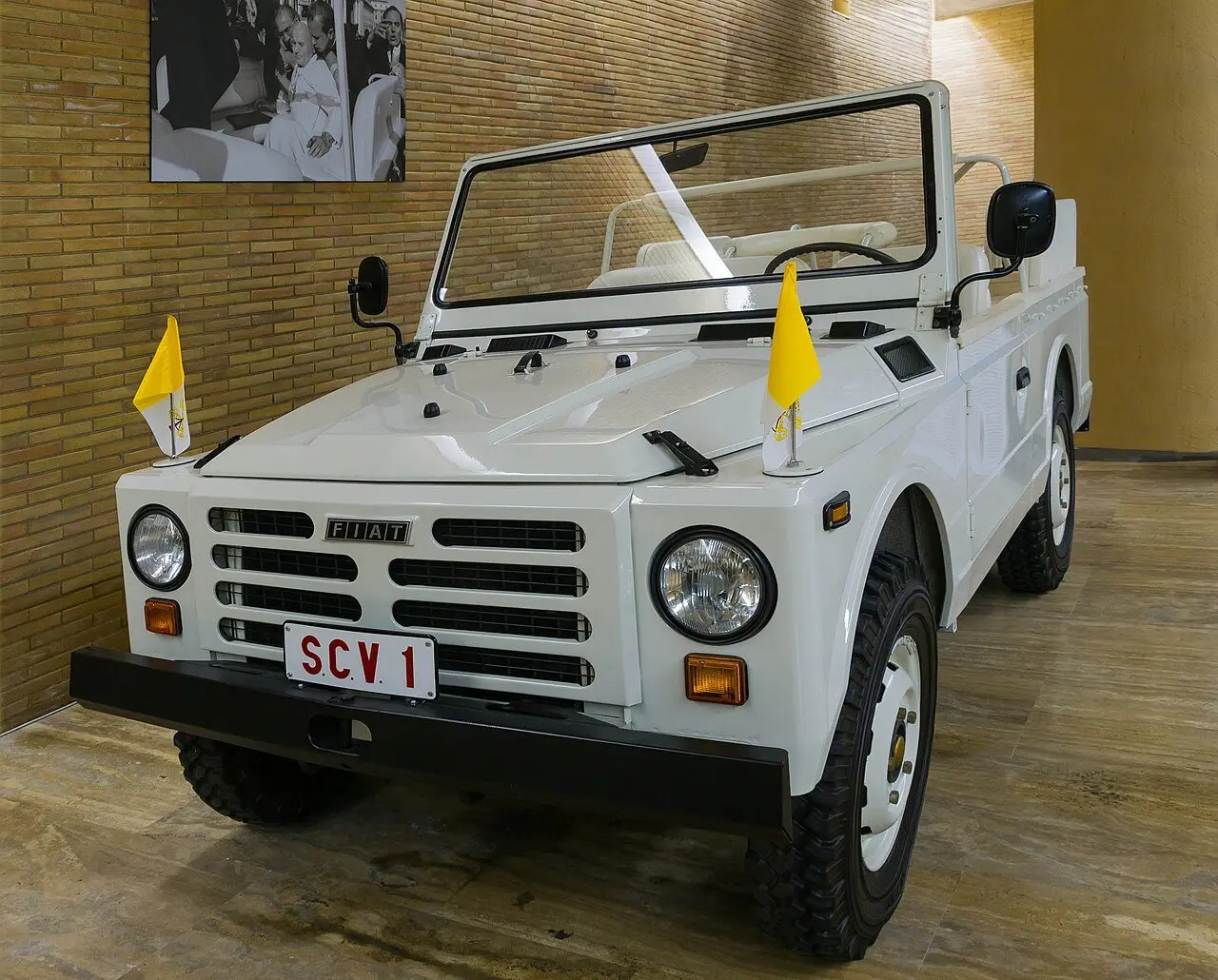
At 5:17 in the afternoon on May 13, 1981, Pope John Paul II was riding slowly through St. Peter's Square in an open white vehicle, blessing the crowd of some 20,000 people gathered for his weekly audience. He had just bent down to lift a small girl into his arms and return her to her parents. Seconds later, gunshots cracked across the square.
Turkish gunman Mehmet Ali Ağca had fired from about ten feet away with a 9mm Browning pistol. Two bullets struck the Pope — in the abdomen, the hand, and the arm — and two bystanders were also wounded. John Paul II collapsed into the arms of his secretary, Stanisław Dziwisz, his white cassock soaked with blood, and was rushed to Rome's Gemelli hospital. Surgeons operated for five hours. One bullet had missed his aorta by centimeters. He survived — barely.
The date was no coincidence to the Pope. May 13 was the Feast of Our Lady of Fátima, the 64th anniversary of the day in 1917 when, in Catholic tradition, the Virgin Mary first appeared to three shepherd children in Fátima, Portugal. John Paul II was convinced she had spared his life. "One hand fired, and another guided the bullet," he would say. In 1982 he traveled to Fátima to give thanks, and the bullet removed from his body was later set into the crown of the Fátima statue.
But the most remarkable part of the story is what the Pope did next. From his hospital bed, he forgave his attacker — and said so publicly, calling Ağca "the brother who shot me." On Christmas Day 1983, he walked into Ağca's prison cell and spoke with the man who had tried to kill him, face to face. Ağca was sentenced to life in prison in Italy; in 2000, at the Pope's request, President Carlo Azeglio Ciampi pardoned him, and he was deported to Turkey.
The motive for the shooting has never been fully settled. The Pope was a fervent anti-communist and a champion of Poland's Solidarity movement, and theories of a wider conspiracy — involving Bulgarian intelligence and the KGB — were investigated for years without conclusive proof. Ağca himself gave shifting, contradictory accounts.
What is certain is the legacy. John Paul II, canonized as a saint in 2014, went on to lead the Church for nearly 24 more years, traveling the world and playing a role in the peaceful end of the Cold War. And the image that endures from that May afternoon is not the gunman, but the victim's answer to him: mercy, offered freely and in public, to the man who pulled the trigger.
Photo: Jebulon, CC0 (via Wikimedia Commons).