The Ship That Sailed Between Two Oceans
On August 15, 1914, the steamship Ancon made the first official transit of the Panama Canal, opening a shortcut that redrew world trade.
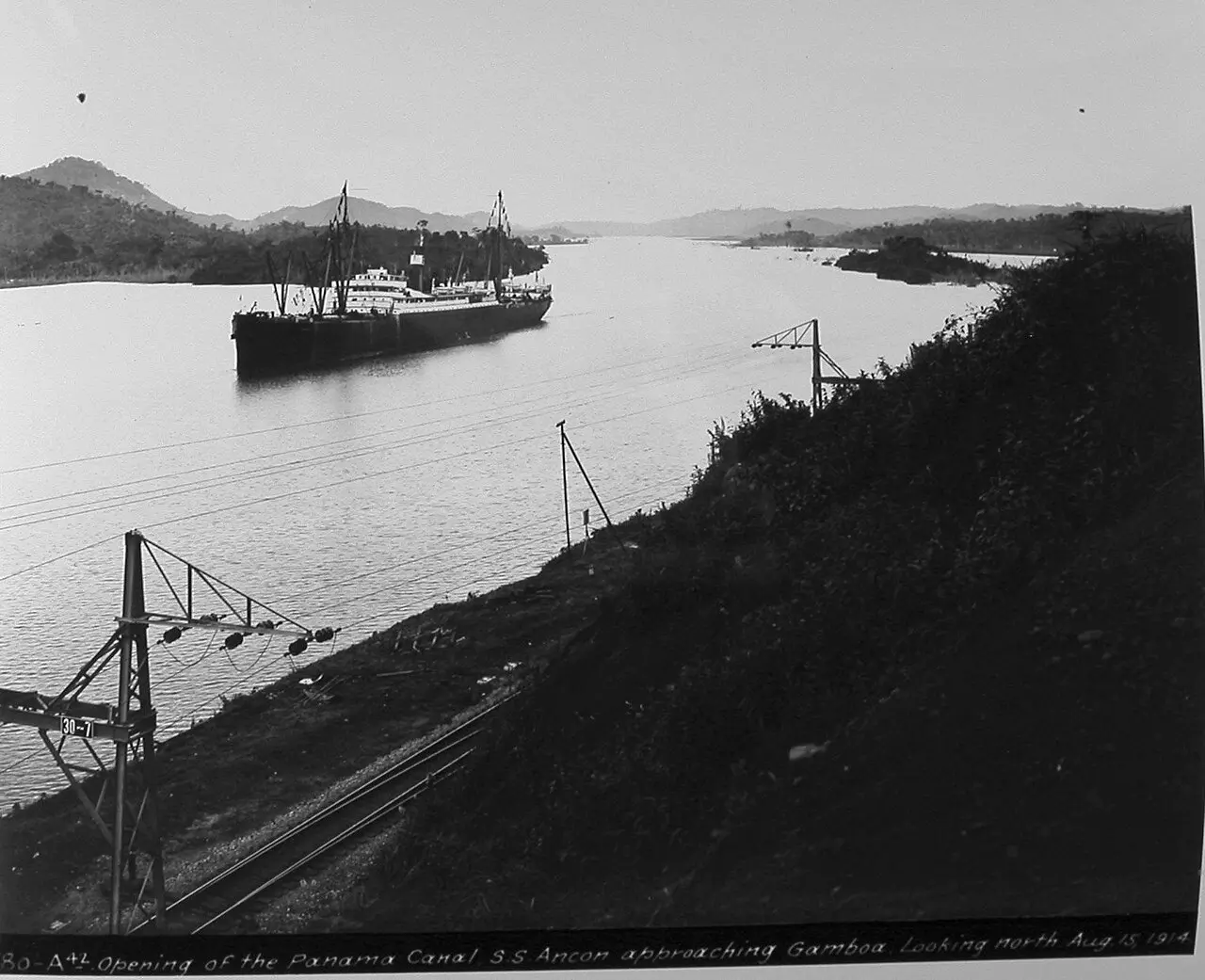
At dawn on August 15, 1914, a steamship named Ancon pointed its bow into history.
The Ancon was no glamorous vessel — a former Boston cargo liner bought to haul cement and workers to the great ditch being dug across Panama. But on that morning she carried the president of Panama and the American ambassador, and behind her on a railroad car rode the man who had finished the canal, chief engineer George Washington Goethals, stopping at every lock to make sure his machine worked. Piloted by Captain John A. Constantine, the canal's first pilot, the Ancon steamed from the Atlantic to the Pacific in under ten hours. The Panama Canal was open for business.
The transit was the first official one — her sister ship Cristobal had slipped through quietly on August 3 with a load of cement, and an old French crane boat had worked its way across in stages during construction. But August 15 was the day the canal formally opened.
There was supposed to have been a grand celebration. But Europe had gone to war two weeks earlier, and the great international festivities were canceled. The opening became a modest local affair — one ship, one ditch, and a very quiet triumph.
The quiet belied the scale of what had been accomplished. France had tried first and failed catastrophically; the United States bought the French holdings in 1902 and started over. Goethals — second in his West Point class of 1880, a builder of locks and dams — drove the project through jungle, landslides, and disease to completion in 1914 at a cost of nearly $500 million, the largest American engineering project ever attempted.
The payoff was immediate. Before the canal, ships traveling between the Atlantic and Pacific had to round Cape Horn at the tip of South America — one of the most dangerous ocean passages on earth. The canal sliced nearly 8,000 miles off the journey through far safer waters, and at the dawn of the First World War, the world's shippers seized on it at once.
The canal the Ancon opened that day would carry the commerce of a century — and in 1999, the United States would hand it to Panama, the nation it cuts in two. But August 15, 1914, belongs to a cement-hauler turned history-maker, and the ten hours in which two oceans became neighbors.
Photo: Panama Canal Company, public domain (via Wikimedia Commons).