The Queen Switches On the Atomic Age
On October 17, 1956, Queen Elizabeth II opened Calder Hall in Cumbria — the world's first commercial nuclear power station.
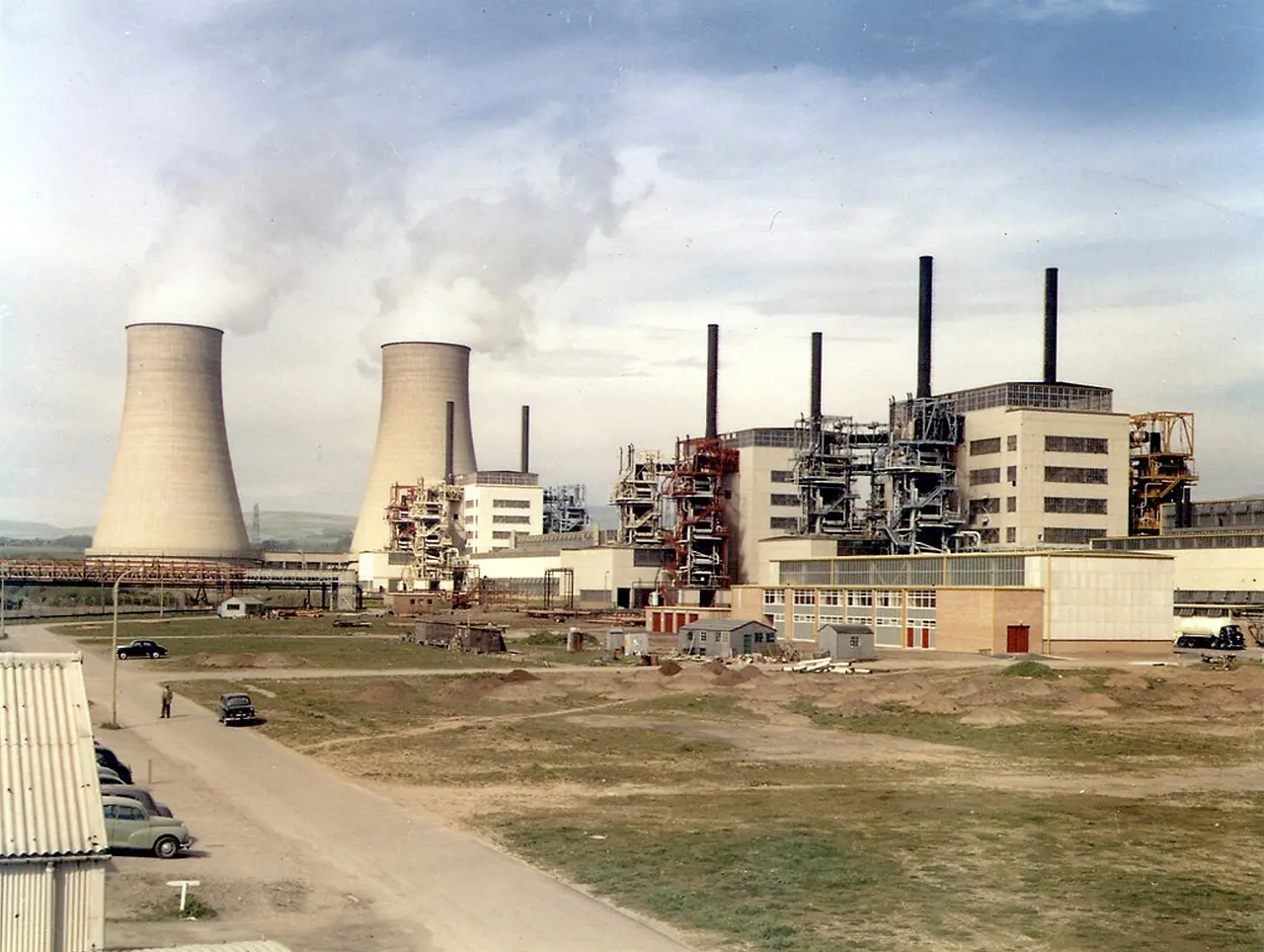
On a gray October day in 1956, Queen Elizabeth II traveled to a windswept corner of Cumbria, in England's northwest, to do something no monarch had ever done: open the atomic age. Before her stood four squat concrete reactors and four great cooling towers — Calder Hall, the world's first power station built to generate electricity from nuclear energy on an industrial scale.
The setting was deliberately unglamorous. Calder Hall rose on the site of a former wartime explosives factory at Windscale, later renamed Sellafield, far from the cities its power would serve. Construction had begun only three years earlier, in 1953, in a crash program driven by a Britain still haunted by postwar coal shortages and blackouts. The engineers worked at a pace that seems startling today — the first reactor was feeding electricity into the national grid by August 1956, and the small town of Workington, fifteen miles away, became the first community on earth to light its homes with nuclear power.
What the Queen opened that day, however, carried a secret in its very design. Calder Hall's four Magnox reactors — so called because their uranium fuel rods were clad in a magnesium alloy — had a dual purpose, encoded in the project's classified codename: PIPPA, short for Pressurised Pile Producing Power and Plutonium. The plutonium was the point, at least at first. Britain was building its independent nuclear deterrent, and Calder Hall's reactors were designed to produce weapons-grade plutonium for the bomb program; the electricity sold to the grid was, in the beginning, essentially a useful byproduct of making bomb material.
That duality was the signature of the early atomic age. The same year Calder Hall opened, the world was still basking in the optimism of President Eisenhower's "Atoms for Peace" vision — the belief that the terrible power unlocked at Hiroshima could be redeemed by lighting cities and powering industries. British officials spoke of electricity "too cheap to meter," and Calder Hall was exhibited to the world as proof that the atom could be a servant, not just a weapon. Dozens of dignitaries and engineers from other countries came to study it, and its basic design became the template for a whole generation of British reactors.
Calder Hall outlasted everyone's expectations. Designed for a working life of twenty years, it kept running for nearly forty-seven, finally shutting down on March 31, 2003 — by which point it had generated enough electricity to power England and Wales for three months straight. Its four cooling towers, long a landmark of the Cumbrian coast, were demolished with explosives in 2007 before crowds of spectators, and the slow, painstaking work of decommissioning the radioactive site will continue well into the next century.
The legacy of October 17, 1956, is complicated, as legacies of firsts tend to be. Calder Hall proved that nuclear power could work at scale — and also proved that "atoms for peace" and "atoms for war" were never as separate as the slogans suggested. Every debate we still have about nuclear energy — its promise of abundant clean power, its wastes that outlive civilizations, its entanglement with weapons — was already present in that Cumbrian field on the day the Queen cut the ribbon.
The atomic age didn't begin with a bang that day. It began with a ceremony, a speech, and the quiet hum of turbines — and the world has been arguing about it ever since.
Photo: UK government agencies, Open Government Licence v3.0 (via Wikimedia Commons) — Calder Hall nuclear power station shortly after its opening.