
The Night Prince William Sound Turned Black
Just after midnight on March 24, 1989, the tanker Exxon Valdez ran aground on Bligh Reef, spilling nearly 11 million gallons of crude into Alaska's pristine waters.
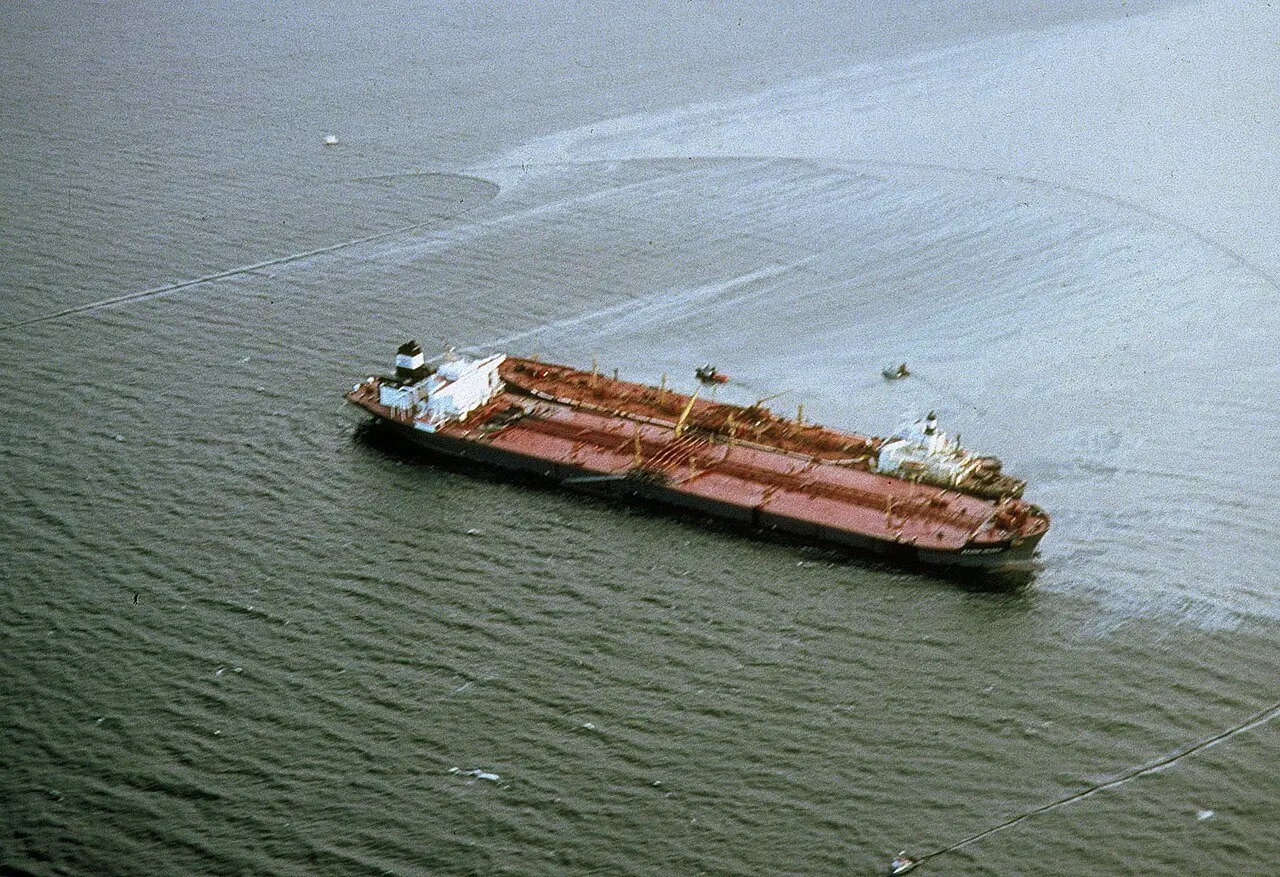
At 12:04 a.m. on March 24, 1989, the supertanker Exxon Valdez, outbound from the port of Valdez with some 53 million gallons of Prudhoe Bay crude and bound for California, struck Bligh Reef in Alaska's Prince William Sound. The vessel — commanded by Captain Joseph Hazelwood — had been traveling outside the normal shipping lanes in an attempt to avoid ice. Within six hours, roughly 10.9 million gallons of oil had poured from eight ruptured tanks into one of the most biologically rich marine environments in North America.
The region is home to salmon, sea otters, seals, and seabirds in enormous numbers, and Prince William Sound supports a commercial fishing industry — all of it in the oil's path.
The setting made a bad spill catastrophic. Prince William Sound is remote, reachable only by boat, helicopter, or plane, and the spill response plans that existed on paper proved painfully hard to carry out. Oil spread southwest with the currents, eventually coating more than a thousand miles of coastline. Tens of thousands of animals died — sea otters, harbor seals, and seabirds in staggering numbers — and the region's fishing communities saw their livelihoods collapse. At the height of the response, more than 11,000 personnel, 1,400 vessels, and 85 aircraft were at work, making it the largest oil spill response in U.S. history to that point.
The legal fallout was historic as well. In February 1990, the Justice Department indicted Exxon and its shipping subsidiary on multiple criminal counts; in October 1991, the company pleaded guilty and agreed to a settlement with the federal government and the state of Alaska covering criminal fines, civil penalties, and cleanup and restoration costs.
And the spill rewrote American law: Congress passed the Oil Pollution Act of 1990, tightening liability, requiring double hulls on tankers, and building the national response system that still governs spills today. Scientists have tracked the Sound's recovery for decades — U.S. Geological Survey research through 2013 found the sea otter population consistent with full recovery from the spill, while pockets of oil lingered in some beaches far longer. The Exxon Valdez remains the second-largest oil spill in U.S. waters, after the 2010 Deepwater Horizon disaster — and the disaster that forced the country to treat oil transport as an environmental risk that could not be left to chance.
Photo: Exxon Valdez Oil Spill Trustee Council, Public domain (via Wikimedia Commons).