The Night La Bohème Premiered in Turin
Puccini's La Bohème premiered at Turin's Teatro Regio on February 1, 1896, to a chilly reception from the critics — then went on to become one of the most beloved operas ever written.
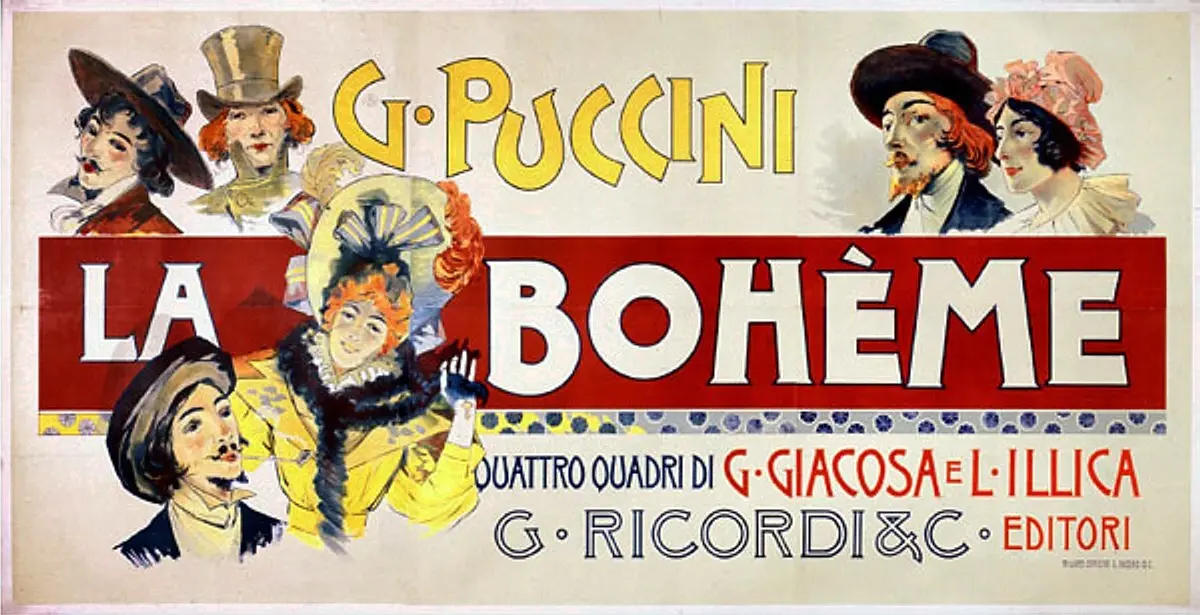
On February 1, 1896, one of the most beloved operas ever written had its world premiere — and the critics shrugged. Giacomo Puccini's La Bohème opened that night at the Teatro Regio in Turin, Italy, conducted by the young Arturo Toscanini. The audience was polite. The reviewers were not. One of the great masterpieces of Western music began its life as a disappointment.
Puccini was no longer the starving artist he wrote about. His previous opera, Manon Lescaut, had made his name in 1893 and earned him a comfortable advance and a country villa. From that secure perch, between 1893 and 1895, he composed an opera about the very life he had escaped: the bohemian world of poor young artists in Paris around 1830. The libretto, by Luigi Illica and Giuseppe Giacosa, was drawn from Henri Murger's popular stories of Parisian bohemian life. Its characters — the poet Rodolfo, the painter Marcello, the musician Schaunard, the philosopher Colline, the flirtatious Musetta, and the doomed seamstress Mimì — loved, laughed, froze in their garret, and faced death with a tenderness that still undoes audiences.
Opening night drew a glittering crowd, but the glittering reviews never came. The critic Carlo Bersezio wrote in La Stampa the next day that the opera "will not leave a great trace in the history of our lyric opera tradition." It was the audience, not the critics, that began the work's long rescue: ordinary listeners kept coming back, and kept weeping at Mimì's death. A rival La bohème by Ruggero Leoncavallo premiered the following year and is almost never performed; Puccini's version conquered the world.
The vindication was complete and then some. Fifty years after the premiere, in 1946, Toscanini — the same conductor who had led opening night — conducted La Bohème on American radio with the NBC Symphony Orchestra. That broadcast remains the only recording ever made of a Puccini opera by its original conductor. Today the opera sits permanently in the top tier of the world's most performed works, its arias — "Che gelida manina," "O soave fanciulla," "Quando m'en vo'" — among the most recognized melodies on earth.
La Bohème endures because Puccini wrote about people the opera world usually ignored: young, broke, and gloriously alive. He had been one of them not long before, and he never forgot what the cold garret felt like. The critics of 1896 heard a trifle. The audiences of every year since have heard their own youth — and their own goodbyes.
Image: Adolfo Hohenstein, public domain (via Wikimedia Commons)