Four Students, One Lunch Counter: The Greensboro Sit-In
On February 1, 1960, four Black college freshmen sat down at a segregated Woolworth's lunch counter in Greensboro, North Carolina, and sparked a protest movement that helped end legal segregation in America.
At 4:30 on a Monday afternoon in February 1960, four college students walked into a Woolworth's in downtown Greensboro, North Carolina, bought some toothpaste and school supplies, sat down at the lunch counter — and changed American history by refusing to get up.
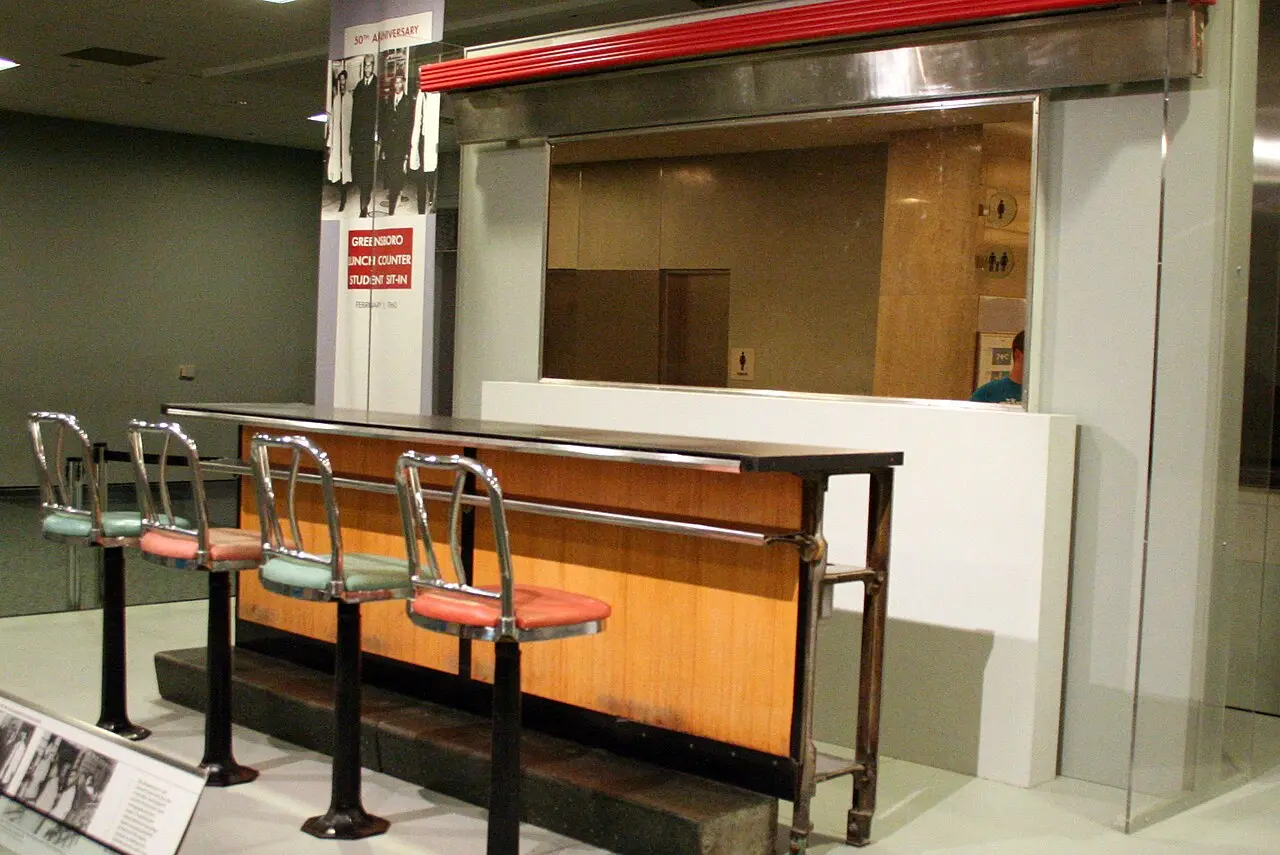
The four — Ezell Blair Jr., David Richmond, Franklin McCain, and Joseph McNeil — were freshmen at North Carolina A&T, then known as the Agricultural and Technical College of North Carolina. Segregation ruled the South: Black customers could buy goods at Woolworth's, but the 66-seat, L-shaped stainless steel lunch counter at 132 South Elm Street served white customers only. The students' logic was simple and unanswerable: if the store would take their money at one counter, it should serve them at another.
Each young man ordered a cup of coffee and a donut with cream. The waitress refused, saying the counter did not serve Black customers. Blair pointed out he had just been served two feet away; she replied that Black customers ate at the other end. Store manager Clarence Harris asked them to leave. They stayed. His supervisor told him the students would soon give up, leave, and be forgotten. Instead, the four sat in their seats until the store closed that night, then walked back to campus and began recruiting classmates to join them the next morning.
What happened next stunned the South. Within days, students were staging sit-ins in Charlotte, Durham, and Winston-Salem. Within weeks, the tactic had spread across the region, drawing hundreds of young protesters — Black and white — into a disciplined, nonviolent campaign that filled lunch counters, jails, and newspaper front pages. Woolworth's held out for six months. Then, on July 25, 1960, the Greensboro lunch counter was desegregated, and counters across the South began to follow.
The Greensboro Four became a model for a new kind of civil-rights activism: youth-led, peaceful, and impossible to ignore. Their protest fed the momentum that carried the movement through the Freedom Rides and the March on Washington to the Civil Rights Act of 1964, which finally outlawed segregation in public accommodations. A section of that very lunch counter now sits in the Smithsonian's National Museum of American History, and Congress has formally honored the four students' courage.
What those four teenagers proved is that history does not always turn on speeches or legislation. Sometimes it turns on a cup of coffee — and the stubborn refusal to accept that some seats are not for you.
Photo: RadioFan, CC BY-SA 3.0 (via Wikimedia Commons)