The Mold That Changed Medicine
On September 28, 1928, a messy scientist came back from vacation to find a strange mold on a forgotten petri dish — and the age of antibiotics began.
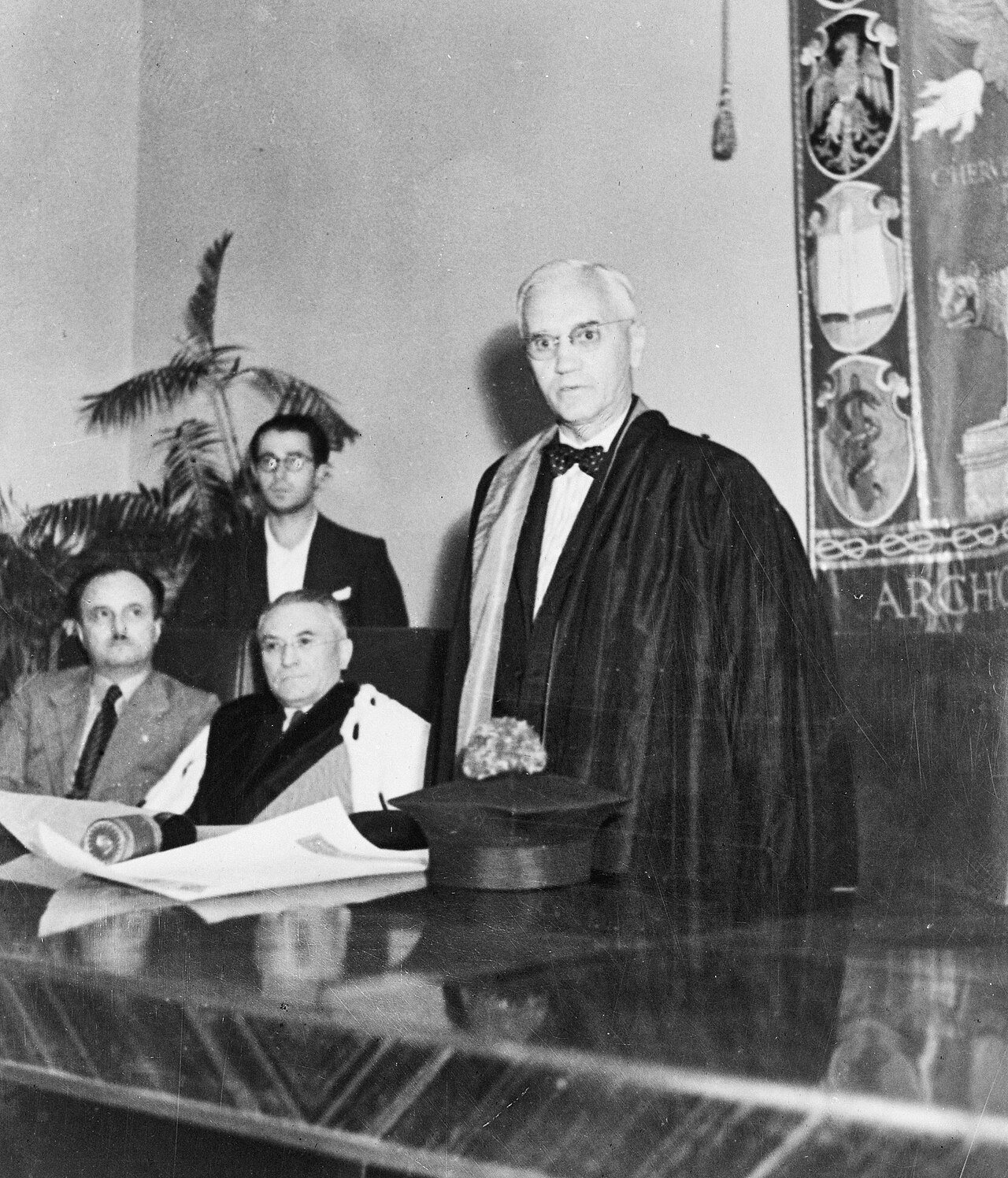
Alexander Fleming was, by all accounts, not a tidy man. His laboratory bench at St Mary's Hospital in London was a cheerful chaos of petri dishes and half-finished experiments — a habit that drove his tidy research scholar, V. D. Allison, to distraction. That messiness would end up saving hundreds of millions of lives.
Fleming was already a respected bacteriologist. He had served with the Royal Army Medical Corps in World War I, watching soldiers die of infected wounds, and in 1921 he had discovered lysozyme, an enzyme in nasal mucus that killed some bacteria. He was hunting for something stronger — something that could kill the dangerous ones.
In September 1928, Fleming returned from a family holiday in Suffolk and examined a stack of petri dishes of staphylococci — the bacteria behind boils, blood poisoning, and deadly wound infections — left sitting on his bench. One dish held something odd: a patch of fuzzy mold, and around it a clear zone where the staphylococci had simply died. His former assistant Merlin Pryce watched him lean in and utter the immortal words of every great discovery: "That's funny."
Fleming grew the mold in pure culture and identified it as a Penicillium — confirmed by the mycologist Charles J. La Touche, whose room sat directly below Fleming's laboratory (as researchers established decades later). The mold's broth killed staphylococci and the bacteria behind scarlet fever, pneumonia, meningitis, diphtheria, and gonorrhea. After months of calling the stuff "mold juice" or "the inhibitor," Fleming gave it a proper name on March 7, 1929: penicillin — "to avoid the repetition of the rather cumbersome phrase 'mold broth filtrate,'" he wrote in the British Journal of Experimental Pathology.
You would think the world would beat a path to his door. It didn't. When Fleming presented his findings in early 1929, the room greeted him with near-silence. He couldn't make enough of the substance, couldn't purify it, and even with help from biochemists, the chemistry beat him. Through the 1930s, penicillin languished — famous in papers, useless in hospitals.
Then came Howard Florey and Ernst Chain at Oxford. In 1940 and 1941 their team purified penicillin and proved it could cure infections in living people — just as World War II was filling hospitals with wounded men. Mass production ramped up with American help, and by D-Day in 1944, penicillin was protecting Allied soldiers from infections that had killed millions in earlier wars. The three men — Fleming, Florey, and Chain — shared the 1945 Nobel Prize in Physiology or Medicine.
Before antibiotics, a scratch, a tooth infection, or a difficult childbirth could be a death sentence. Antibiotics have since made modern surgery, organ transplants, and chemotherapy possible. And it all began with a man too untidy to clean his bench before a holiday — and curious enough to ask why a mold had murdered a ring of bacteria. As his colleague Allison once put it, had Fleming been as tidy as he thought he was, he would never have made his great discoveries.
Photo: Unknown author, CC BY-SA 3.0 nl (via Wikimedia Commons).