The Day Europe First Saw California
On September 28, 1542, Juan Rodríguez Cabrillo sailed into San Diego Bay and became the first European to set foot on the West Coast of the United States.
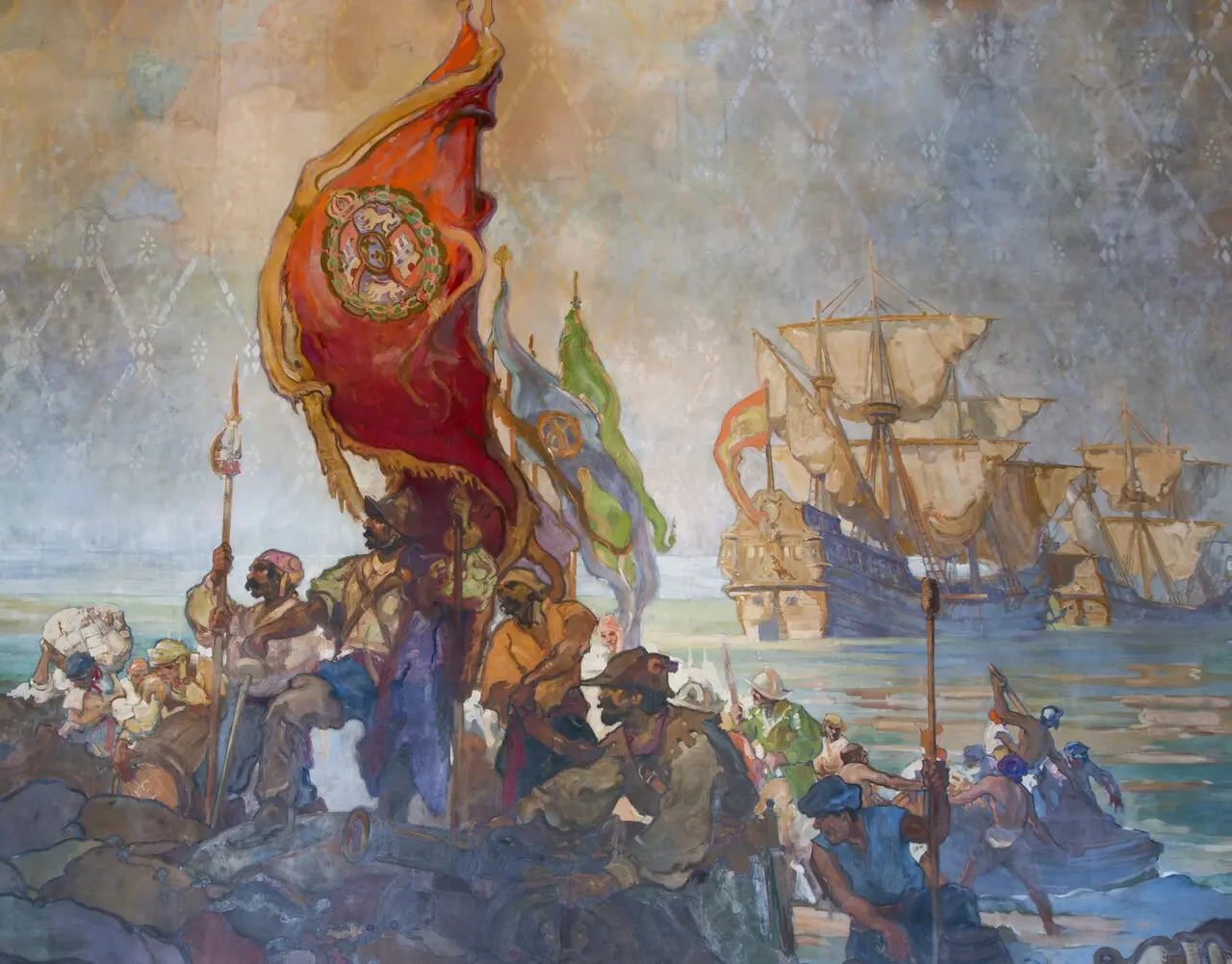
The Kumeyaay people had fished the waters of San Diego Bay for thousands of years. Then, on a September afternoon in 1542, something appeared on the horizon that no one living there had ever seen: tall ships under full sail, flying a flag from across the ocean.
The man who brought them was Juan Rodríguez Cabrillo. Born in 1499 in either Spain or Portugal — the question is still debated among historians — he had sailed with Hernán Cortés in the conquest of Mexico and then grown rich mining gold in Guatemala. In 1542, the Viceroy of New Spain handed him three ships and an extraordinary mission: sail north up a coastline no European had ever mapped, claim what he found for the King of Spain, and look for the fabled strait to China.
He left the Mexican port of Navidad on June 27 with the 200-ton galleon San Salvador as his flagship, the smaller La Victoria, and a little lateen-rigged vessel called San Miguel. By August 1 he had reached Cedros Island, and by the end of the month his ships had passed Baja Point into what the expedition's own records called uncharted waters, where no Spanish ships had been before.
On September 28, Cabrillo's fleet nosed into a magnificent, sheltered harbor — present-day San Diego Bay. He went ashore, took possession of the land for Spain, and named the bay San Miguel. It was the first time a European expedition had set foot on the West Coast of what would become the United States. (Spaniards had touched Baja California before, which is why the careful wording matters: this was the first landing on the American West Coast itself.)
Cabrillo did not stop there. Sailing north, he reached Santa Catalina Island on October 7 and named it San Salvador after his flagship; San Clemente Island became Victoria, after his third ship. He anchored in San Pedro Bay on October 8 — calling it the Bay of Smokes for the fires he saw burning on shore — and in Santa Monica Bay the next day. By October 18 he had rounded Point Conception, carefully recording the names of the Chumash villages along the coast as he went.
He never made it home. Wintering in the Channel Islands, Cabrillo was injured in a fall, and according to the ship's log he died of his complications on January 3, 1543. His second-in-command, Bartolomé Ferrelo, took the fleet and pushed farther north before turning back.
The landing put California on the map — literally. For the next two centuries, Spanish charts of the Pacific coast began with Cabrillo's voyage. In 1913 President Woodrow Wilson proclaimed the headland at Point Loma a national monument in his honor, and on the 450th anniversary — September 28, 1992 — the U.S. issued a commemorative stamp in San Diego.
It is worth remembering that Cabrillo "discovered" nothing that wasn't already home to someone. But his September landing opened the door to the Spanish era in California — its missions, its presidios, and the place-names that still line the coast — and it all began with three small ships and a harbor no European had ever seen.
Photo: detail from Daniel Sayre Groesbeck's mural of Cabrillo's landing at the Santa Barbara County Courthouse, photographed by Carol M. Highsmith, public domain (via Wikimedia Commons).