The Man Who Said No: Vasily Arkhipov and Black Saturday
On October 27, 1962, Soviet officer Vasily Arkhipov refused to authorize a nuclear torpedo — on the most dangerous day of the Cold War.
On the most dangerous day of the most dangerous crisis of the Cold War, the fate of the world came down to a vote. Three men voted. Two said yes. One said no.
The day was October 27, 1962 — "Black Saturday," the thirteenth day of the Cuban Missile Crisis. Above the waves, the crisis was spiraling: an American U-2 spy plane had been shot down over Cuba, killing its pilot; another U-2 had strayed deep into Soviet airspace; Cuban anti-aircraft batteries were firing at American reconnaissance jets. In Washington, the Joint Chiefs were pressing President Kennedy to invade Cuba. The world was closer to nuclear war than it had ever been, or has been since.
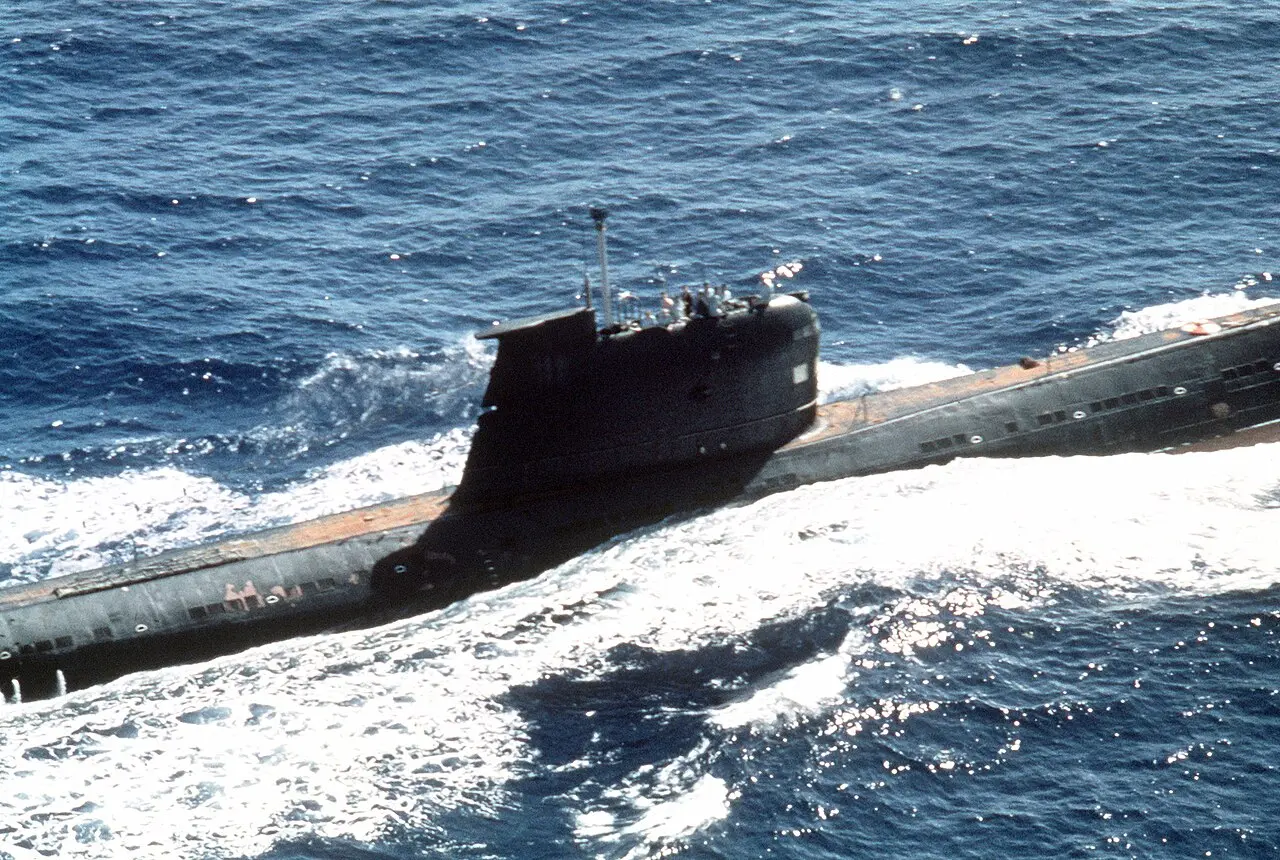
Below the waves, it was worse. The Soviet submarine B-59 — a diesel-electric Foxtrot-class boat — was lurking in the Caribbean near Cuba, one of four Soviet subs sent to the region. It carried conventional torpedoes and one weapon the Americans hunting it knew nothing about: a nuclear-armed torpedo with roughly the explosive power of the bomb that destroyed Hiroshima.
For days, eleven U.S. Navy destroyers and the aircraft carrier USS Randolph had been tracking B-59. The Americans began dropping small signaling depth charges — practice charges, intended as a non-lethal signal for the submarine to surface and identify itself. Washington had even notified Moscow of the procedure. But the message never reached B-59. Deep underwater, cut off from Moscow for days, the crew heard only explosions hammering their hull.
Inside the boat, conditions were nightmarish. The batteries were nearly dead. The air conditioning had failed. Temperatures climbed, carbon dioxide built up, and men were fainting at their stations. Captain Valentin Savitsky, convinced his submarine was under attack and that war had already begun above, ordered the nuclear torpedo prepared for launch.
Soviet protocol was the only thing standing between that order and catastrophe. On most Soviet submarines, the captain and the political officer could authorize a nuclear launch between them. But B-59 carried an extra officer: Vasily Arkhipov, 36, chief of staff of the submarine flotilla, who happened to be aboard. On this boat, three men had to agree — and Arkhipov refused.
What followed was hours of furious argument in a crippled, overheated submarine. Savitsky and the political officer, Ivan Maslennikov, wanted to fire. Arkhipov held his ground: they had no confirmation that war had begun, and he would not authorize a nuclear weapon on a guess. He had seen a nuclear accident up close the year before, aboard the submarine K-19, and he knew exactly what these weapons meant. In the end, his refusal prevailed. Savitsky stood down, and B-59 surfaced among the American warships to recharge its batteries before being ordered home.
The Americans who photographed the surfacing submarine had no idea how close they had come. If Arkhipov had been assigned to any of the other three submarines that day, the outcome might have been very different. The whole episode stayed classified for decades; the West only learned Arkhipov's name in 2002, four years after his death. Historians now call him "the man who saved the world" — an exaggeration, perhaps, but not by much. On Black Saturday, the most important decision of the Cold War was made by a man the world had never heard of, who simply refused to fire.
Image: A Soviet-built Foxtrot-class submarine — the same class as B-59 — running on the surface, photographed by the U.S. Navy; public domain (via Wikimedia Commons).