City Hall to Harlem in 15 Minutes: New York's Subway Opens
On October 27, 1904, New York's first subway opened to the public — and Mayor McClellan liked the controls so much he refused to give them back.
At 2:35 on the afternoon of October 27, 1904, the mayor of New York City hijacked a train — and loved every minute of it.
The train was making the very first run of the brand-new subway, and George B. McClellan Jr. had been granted the ceremonial honor of starting it from the glittering new City Hall station. According to the New York Times, he was supposed to hand the controls to an IRT motorman after a dignified few minutes. Instead, the mayor drove the train all the way to 103rd Street. When someone asked whether he wanted the motorman to take over, he reportedly declared, "No, sir! I'm running this train!"
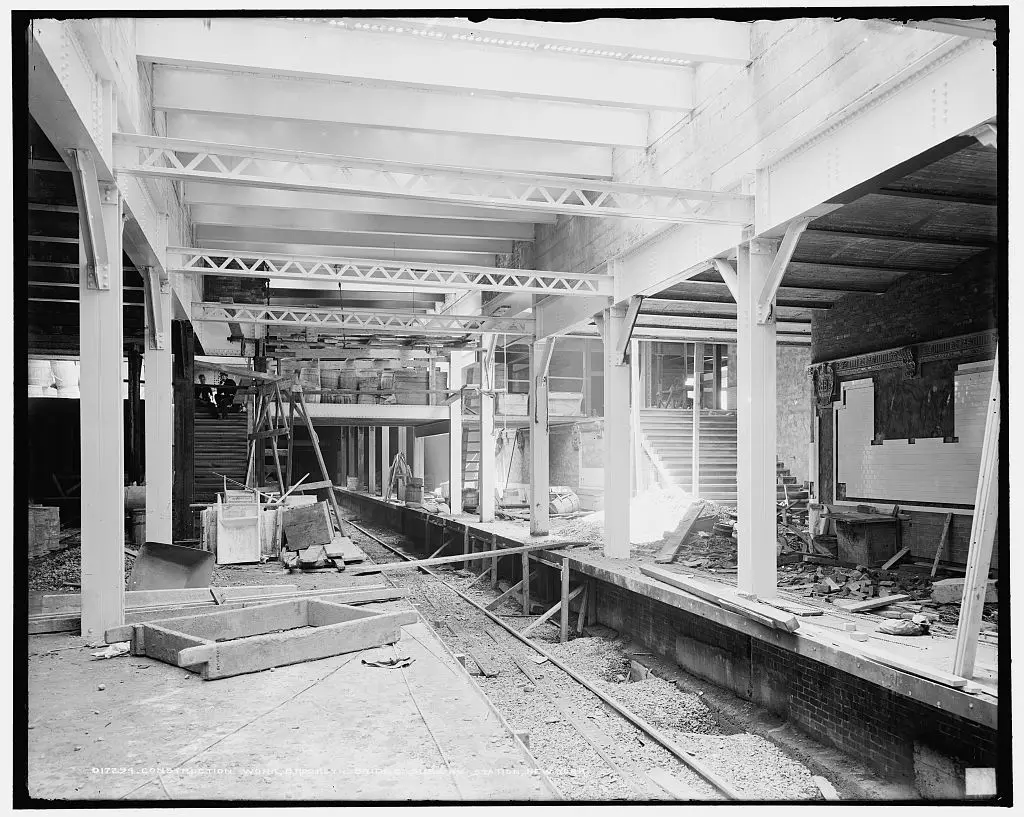
The line he was running had been decades in the making. London had operated underground trains since 1863, and Boston had opened America's first subway in 1897, but New York — then the largest city in the United States — still moved its millions on congested streets and elevated railways that blotted out the sun. City planners knew the answer lay beneath the pavement; what they needed was someone willing to pay for it. That someone was financier August Belmont Jr., who backed the company that won the right to build the line.
The result was the "Manhattan Main Line": 9.1 miles of track and 28 stations, running from City Hall in lower Manhattan up through Lafayette Street and Park Avenue to Grand Central Terminal, then west along 42nd Street to Times Square, and north under Broadway to 145th Street in Harlem. It was sold to New Yorkers with a bold slogan: "City Hall to Harlem in 15 minutes."
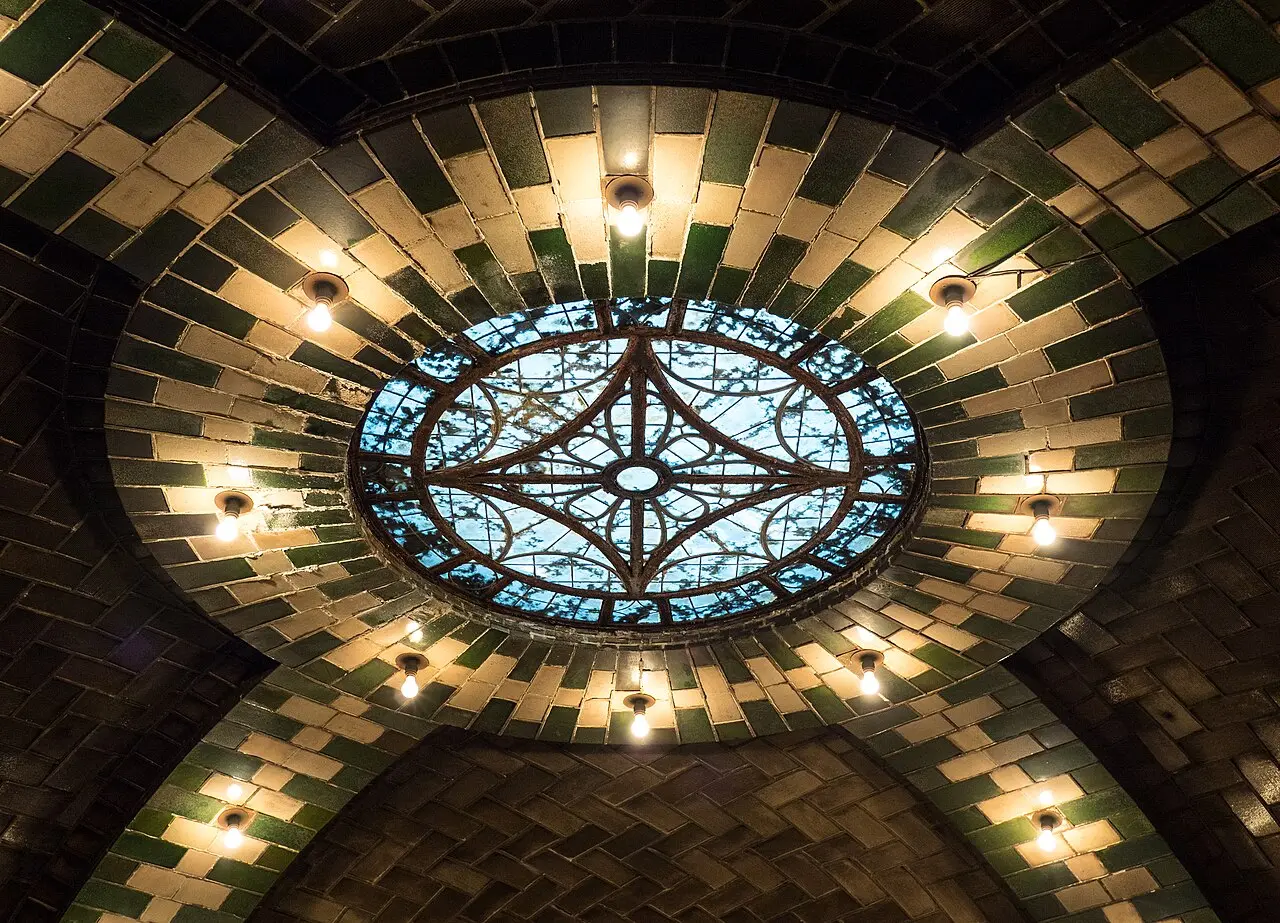
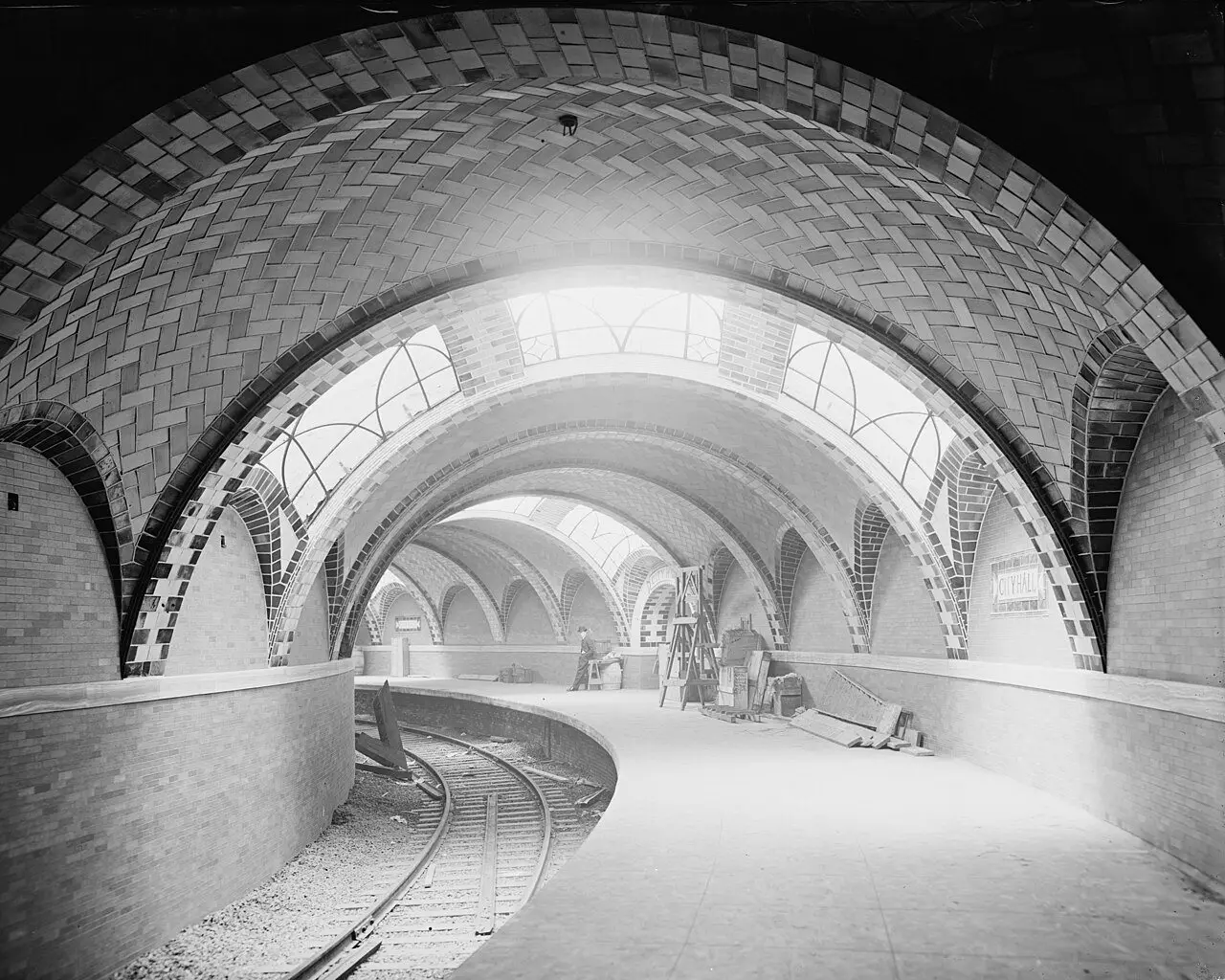
The City Hall station itself was the showpiece — a curved platform beneath arched Guastavino tile vaults, lit by skylights, with commemorative plaques honoring the men who had designed and financed the system. It was never meant for rush hour. It was meant for awe.
At 7 p.m. that evening, the subway opened to the public, and New Yorkers poured in. More than 100,000 of them paid a nickel each for their first ride beneath the city. The fare would stay a nickel for decades, and the line kept growing — to the Bronx in 1905, Brooklyn in 1908, and Queens by 1915.
Today the New York City subway is one of the largest transit systems in the world, with hundreds of stations and one of the only subway networks anywhere that runs around the clock, 24 hours a day. It made modern New York possible — the dense neighborhoods, the far-flung commutes, the city that never sleeps because its trains never stop. Every one of those millions of daily rides began on a Thursday afternoon in 1904, when a mayor seized a throttle and a city went underground.
Photo: Unknown photographer, public domain (via Wikimedia Commons).
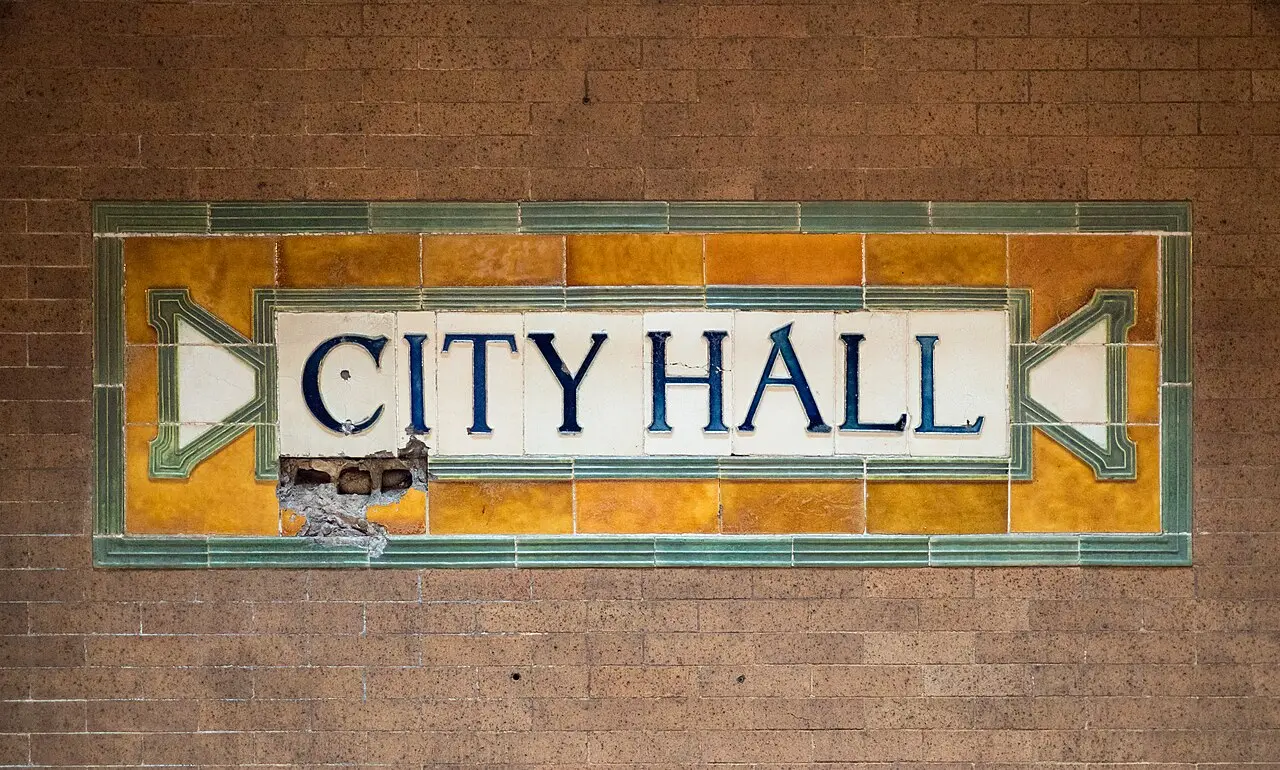
More images (via Wikimedia Commons): the Brooklyn Bridge station under construction, 1904 (Detroit Publishing Company, public domain); the skylight and the tiled "City Hall" sign in the abandoned City Hall station (Rhododendrites, CC BY-SA 4.0).